

The Graphene Frontier: Redefining Material Science
An Industry-Leading Deep Dive into the 2D Miracle
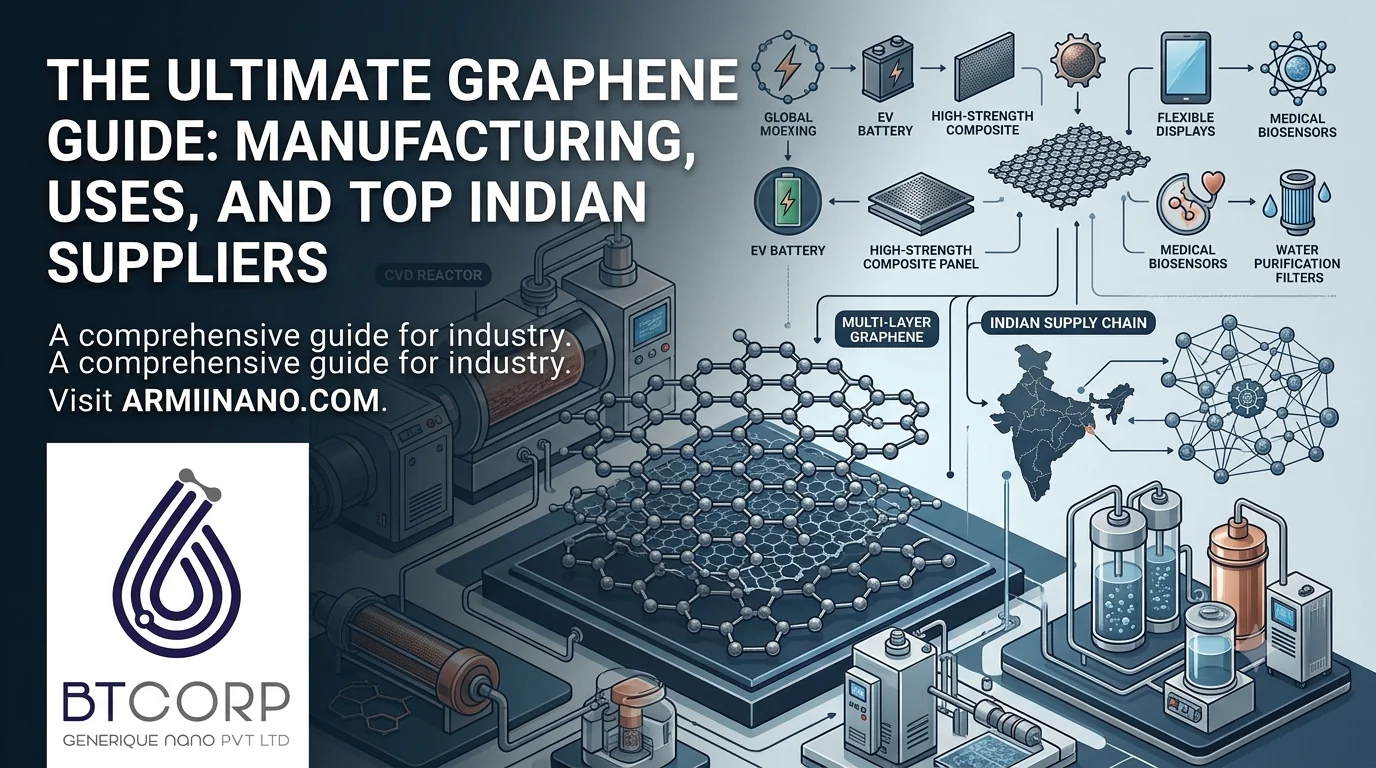
Understanding graphene requires looking beyond its atomic thinness. Despite being the thinnest material ever isolated by human science, it boasts a tensile strength roughly two hundred times greater than steel. When coupled with electrical mobility that puts traditional silicon-based components to shame, it becomes clear why industry leaders like BTcorp Generique Nano are aggressively investing in its functionalization. As we navigate a global economy demanding higher performance, extreme sustainability, and cleaner technological solutions, graphene represents the bridge to a greener future. It is not just about raw power; it is about the precision of nano-formulations that allow us to enhance everything from high-performance solar panels to the very paints that protect our infrastructure from corrosive decay.
This guide serves as a beacon for researchers, procurement managers, and visionary manufacturers. We are moving past the initial “hype” cycle and entering the industrial era of graphene. As we dissect the sixty distinct applications of this material, explore the technical complexities of manufacturing techniques like Chemical Vapor Deposition and Liquid Phase Exfoliation, and map the supply ecosystem within India, you will gain the clarity needed to leverage this technology. Whether you are seeking high-grade powder, specialized dispersions, or ready-to-use nano-coatings, the path forward is defined by molecular precision. Join us as we explore the structure, the potential, and the practical implementation of the most transformative material of our time.
Decoding the Molecular Marvel: What is Graphene?
At the fundamental core of modern nanotechnology lies graphene—a material that behaves less like traditional matter and more like a bridge between the quantum world and industrial reality. At its atomic level, graphene is a two-dimensional (2D) allotrope of carbon, structured as a single layer of carbon atoms arranged in a perfect hexagonal honeycomb lattice. If you were to visualize graphite—the substance found in pencils—as a stack of millions of these layers, graphene is essentially the “unit cell” isolated into a solitary, breathtakingly thin plane.
Despite being only one atom thick, making it the thinnest substance ever isolated by humanity, graphene possesses a structural integrity that defies convention. It is roughly 200 times stronger than structural steel by weight. This paradoxical strength stems from the robust $sp^2$-hybridized covalent bonds that link each carbon atom to its three neighbors. These bonds form an incredibly rigid network, distributing mechanical stress across the entire lattice, which allows the material to be bent, stretched, and twisted without losing its structural integrity.
⬡ ⬡ ⬡
⬡ ⬡ ⬡
Fig 1.2: Schematic representation of the sp2-hybridized honeycomb lattice.
The Pillars of Graphene Performance
To understand why graphene is revolutionizing industry, we must look beyond its thinness and focus on its performance parameters:
- Mechanical Strength: The high Young’s modulus of graphene grants it unmatched resilience. It serves as a reinforcement agent that can transform standard polymers into high-performance composites capable of handling extreme loads.
- Electrical Conductivity: Graphene exhibits “ballistic transport,” meaning electrons travel through its lattice with virtually zero scattering. This allows it to move electricity with efficiency that far surpasses traditional silicon-based semiconductors.
- Thermal Conductivity: In an era where micro-electronics generate immense heat, graphene acts as an ultra-efficient thermal spreader, dissipating energy across its surface rapidly to prevent overheating.
- Surface Area: Graphene boasts one of the highest surface-to-volume ratios of any material. This “playground” at the molecular level allows for rapid chemical interaction, making it indispensable for sensors, high-capacity batteries, and effective filtration membranes.
- Transparency: Unlike traditional conductive metals that are opaque, a single layer of graphene is 97.7% transparent to visible light. This makes it a critical building block for flexible touchscreens, high-efficiency solar cells, and advanced optoelectronic devices.
Graphene is not just a scientific novelty; it is a platform technology. By incorporating it into manufacturing processes, we are enabling products that are not just incrementally better, but fundamentally transformed. We are moving toward an era where infrastructure, electronics, and energy storage are defined by the precision of carbon at the nano-scale.
60 Detailed Uses of Graphene
Discover the ultimate Industrial Application Guide to Graphene, the revolutionary material reshaping global manufacturing. This resource provides a detailed analysis of 60 transformative uses of graphene across key sectors, including automotive engineering, electronics, renewable energy, and biomedical technology. Explore how graphene’s high strength-to-weight ratio, superior electrical conductivity, and thermal stability are solving critical manufacturing bottlenecks. From strengthening infrastructure to advancing next-gen EV batteries, our comprehensive 60-point roadmap offers actionable technical insights to help researchers and innovators stay ahead in the future of material science.
Manufacturing Graphene: From Lab to Industrial Scale
The shift from “Scotch-tape” discovery to the “tonnage” production era.
The Scalability Challenge
The transition of graphene from academic research to global industrial supply chains is arguably one of the most significant process engineering feats of the last decade. In the early 2000s, graphene was painstakingly produced by mechanical exfoliation—peeling layers from graphite using adhesive tape. While this produced pristine samples for Nobel-worthy research, it was never viable for industrial production. Today, manufacturers have pivoted to “Top-Down” and “Bottom-Up” manufacturing strategies to meet global demands in batteries, composites, and coatings.
1. Chemical Vapor Deposition (CVD)
CVD is the “Gold Standard” for high-end electronics. In this process, hydrocarbon gases (like methane) are introduced into a heated chamber containing a metal catalyst substrate, such as copper or nickel foils.
At high temperatures, the hydrocarbon decomposes, and carbon atoms deposit onto the metal surface, forming a continuous, uniform monolayer of graphene. This process is essential for creating high-performance semiconductors, sensors, and flexible transparent electrodes where defect density must be kept to an absolute minimum.
2. Liquid Phase Exfoliation (LPE)
For bulk industrial applications, LPE is the workhorse. This “Top-Down” approach involves taking large graphite flakes and subjecting them to high shear forces within a specialized solvent environment.
Using ultrasound (sonication) or high-speed shearing, the van der Waals forces holding the graphite layers together are overcome. The result is a high-volume dispersion of graphene flakes. This method is exceptionally cost-effective and is the primary production route for graphene-enhanced concrete, conductive inks, and anti-corrosion marine paints.
3. Chemical Reduction of Graphene Oxide (GO)
This process bridges the gap between chemical synthesis and industrial utility. Graphite is first treated with powerful oxidizing agents (like the Hummers’ method) to create Graphene Oxide (GO). GO is highly hydrophilic and dispersible in water, which makes it perfect for chemical functionalization.
Once the GO is processed, it is “reduced” (RGO) using heat or chemical agents to strip away the oxygen atoms and restore the conductive carbon lattice. This method is highly scalable and allows for the custom tuning of the graphene’s chemical properties, vital for battery electrode manufacturing.
The Industrial Imperative: Quality Control
Layer Count
Procurement is defined by layer count. “Few-layer” graphene provides a balance of cost and mechanical strength, whereas “monolayer” is reserved for high-performance electronic circuitry.
Defect Density
Measured via Raman spectroscopy, the “ID/IG ratio” defines the structural integrity. High-purity industrial graphene requires rigorous monitoring of sp3 (defect) to sp2 (pristine) carbon ratios.
Ultimately, selecting the right grade (Pristine, GO, or RGO) is a decision that impacts the final cost and performance of the end product. Industrial suppliers must provide comprehensive material characterization to ensure that the material behaves predictably within a customer’s proprietary formulation.
The Indian Graphene Ecosystem: A Global Supply Powerhouse
India is transitioning from an emerging research hub to a critical, industrial-scale supplier of advanced nanomaterials.
Visualizing India’s Global Export Footprint
Representing the strategic flow of high-purity Graphene from Indian production facilities to global industrial partners.
1. The Rise of the Indian Nanotech Hub
Over the last decade, India has witnessed a tectonic shift in its industrial landscape. What began as scattered academic research across premier institutions like the Indian Institutes of Technology (IITs) and CSIR laboratories has successfully matured into a robust, industry-ready ecosystem. Today, India is not merely a consumer of high-tech materials; it is an established manufacturer.
This transition has been driven by a unique confluence of factors: favorable governmental policies on “Make in India” initiatives, a growing pool of material science PhDs, and private capital investment in specialized manufacturing facilities. Indian suppliers are increasingly compliant with global standards (ISO, REACH), making them dependable partners for international supply chains.
Cost-Effectiveness
The optimized manufacturing overheads in India offer a compelling pricing model compared to North American and European suppliers, without compromising on the high-purity requirements demanded by electronic-grade graphene applications.
Technical Support
Unlike commoditized suppliers who simply ship powder, Indian leaders offer application-driven engineering support. They bridge the gap between “buying a material” and “solving a performance bottleneck” in your production line.
R&D Proximity
The synergy between Indian companies and national research labs ensures that suppliers remain at the absolute vanguard of nanomaterial characterization and functionalization, evolving as fast as the science itself.
Spotlight: BTcorp Generique Nano Pvt Ltd
“Transforming 15 years of R&D into industrial-grade reality.”
When evaluating the Indian market, BTcorp Generique Nano (Arminano) stands out as a lighthouse of industrial consistency. Their growth trajectory mirrors the evolution of the Indian graphene sector: moving from precise lab-scale development to full-scale industrial tonnage.
- Portfolio Depth: They manage the full spectrum—from pristine flakes to functionalized Graphene Oxide (GO) and Reduced Graphene Oxide (rGO), ensuring that procurement managers can find the exact grade required for their specific matrix.
- Ready-to-Use Solutions: Recognizing that many industries do not have the specialized infrastructure to handle raw nano-powders, BTcorp offers ready-to-integrate solutions like masterbatches and specialized solar/automotive coatings.
- Technical Partnership: Their business model isn’t transactional; it’s a partnership. They offer deep-dive technical consultations, which is the “missing link” for many SMEs attempting to adopt nanotechnology.
The Procurement Manager’s Checklist
Sourcing industrial nanomaterials requires due diligence. Before finalizing your contract with an Indian supplier, ensure you evaluate the following documentation:
1. Material Safety Data Sheets (MSDS)
The absolute prerequisite. Ensure that your supplier provides a comprehensive MSDS that details handling protocols, emergency responses, and disposal, especially since nanomaterials have specific regulatory requirements in different jurisdictions.
2. Technical Data Sheets (TDS)
Look beyond general descriptions. Your TDS should clearly specify the lateral size (flake size), thickness (layer count), and elemental purity. These variables dictate how the graphene will react in your polymer or coating.
3. Scalability Assurance
Can your supplier produce 10kg today and 500kg six months from now with identical batch characteristics? Industrial consistency is the hallmark of a mature supplier. Ask for batch comparison reports.
4. Characterization Verification
Ask for independent lab reports, particularly Raman spectroscopy graphs, which act as the “fingerprint” of the graphene quality. A transparent supplier will have these reports readily available upon request.
The Path Forward: Embracing the Molecular Era
Graphene is no longer a futuristic buzzword confined to the pages of academic journals; it is a definitive industrial reality. We have traced the trajectory of this “miracle material” from its fundamental 2D atomic structure to its pervasive presence across sixty distinct industrial applications. Whether you are seeking to dramatically improve the longevity of critical civil infrastructure, enhance the energy density of next-generation batteries, or refine the efficiency of high-performance electronics, graphene offers an uncompromising path to superior product performance.
However, the transition from lab-scale experimentation to mass-market industrial integration is not a trivial task. It requires more than just high-quality nanomaterials; it necessitates a deep-rooted, collaborative engineering partnership. As you navigate the complexities of sourcing and application, prioritize manufacturers—such as the expert teams at BTcorp Generique Nano (Arminano)—who offer a synthesis of high-grade material production and profound technical intelligence. The true value of graphene is unlocked only when the material’s properties are precisely aligned with your specific matrix, whether that is a polymer, a coating, or a conductive ink.
Furthermore, we are moving toward a future where sustainability is not a choice, but a requirement. Graphene’s unique ability to reduce material weight, enhance component durability, and improve energy conversion efficiency makes it a cornerstone of the green industrial revolution. By integrating these nano-solutions into your production lifecycle, you are not merely keeping pace with market trends; you are actively contributing to a more sustainable, high-performance global economy.
The future of manufacturing is undeniably molecular. As you step into this era of nanotechnology, remember that the precision you apply at the atomic scale will dictate the quality of the macro-scale products you deliver. The era of high-performance materials is here, and the future is graphene.
Disclaimer & Best Practices
This article is provided for educational and informational purposes only. The application of graphene in industrial processes involves complex chemical and physical variables. When evaluating raw materials for high-performance applications, always consult with qualified technical experts. Ensure that all procurement is backed by verified Material Safety Data Sheets (MSDS) and product-specific Technical Data Sheets (TDS). Always request independent laboratory testing to confirm that the material characteristics—such as layer count, flake size, and purity—meet your exact proprietary performance specifications.
Frequently Asked Questions
Expert insights into industrial graphene procurement and application.
1. What exactly is graphene?
Graphene is a single layer of carbon atoms arranged in a two-dimensional honeycomb lattice. It is the thinnest material known and acts as the basic structural element for other carbon allotropes like graphite.
2. Why is graphene referred to as a “miracle material”?
It earns this title due to its unique combination of properties: it is 200 times stronger than steel, highly transparent, and possesses exceptional thermal and electrical conductivity.
3. Is graphene naturally available, or is it man-made?
While graphite (which contains graphene) is natural, isolated graphene for industrial use is produced through synthetic processes like Chemical Vapor Deposition (CVD) or Liquid Phase Exfoliation (LPE).
4. How is the quality of industrial graphene measured?
Quality is typically verified through Raman spectroscopy (to check defect density), electron microscopy (for layer count/thickness), and surface area analysis (BET test).
5. What is the difference between Graphene Oxide (GO) and Reduced Graphene Oxide (rGO)?
GO is graphene with oxygen-containing functional groups, making it dispersible in water. rGO is GO that has been chemically or thermally reduced to restore conductivity, closer to pristine graphene.
6. Is graphene toxic to humans?
Like most fine powders, graphene must be handled with appropriate PPE to prevent inhalation. It is not inherently toxic, but its physical state requires standard nanomaterial handling protocols.
7. Can graphene replace silicon in computer chips?
Graphene’s high electron mobility makes it a candidate for high-speed transistors, though overcoming its lack of a bandgap remains an active area of research for mass-market replacement.
8. How does graphene enhance the strength of concrete?
It acts as a bridging agent at the nano-scale, inhibiting the formation of micro-cracks and significantly increasing the compressive and tensile strength of the concrete matrix.
9. Is graphene fireproof?
Graphene is not fireproof, but it is highly thermally stable. When used as an additive in coatings or composites, it can significantly improve fire-retardant performance by creating a thermal barrier.
10. What documentations should I request from a supplier?
Always request a Material Safety Data Sheet (MSDS) for safety and a Technical Data Sheet (TDS) detailing layer count, purity, and lateral flake size.
11. Can graphene be used to clean water?
Yes, graphene-based membranes possess ultra-fine pores that can effectively filter out salts and heavy metals, making them highly efficient for desalination and wastewater treatment.
12. Does graphene conduct heat better than electricity?
Graphene is arguably the best material in the world for both. It is a superlative conductor of electricity, but its thermal conductivity is equally record-breaking.
13. Why does the price of graphene vary so much?
Price depends heavily on the production method (CVD is expensive), the level of purity required, and the degree of functionalization (chemical modification) applied.
14. How long do graphene-enhanced coatings last?
Graphene coatings offer superior longevity compared to traditional materials, often providing multi-year protection against UV degradation and corrosion in industrial environments.
15. Is it difficult to integrate graphene into polymers?
Dispersion is the primary challenge. Proper integration requires high-shear mixing, sonication, or surface functionalization to ensure the graphene flakes do not clump together.
16. What is the “lateral size” of graphene?
Lateral size refers to the diameter or average flake size of the graphene sheets. This significantly affects the mechanical reinforcement and electrical properties of the final product.
17. Can graphene be used for sustainable packaging?
Yes, it is used to reinforce bioplastics, making them more durable and impermeable to gases, which allows for thinner and more sustainable packaging materials.
18. Are there international regulations for graphene usage?
Regulations are evolving. Currently, compliance with REACH (in Europe) and other regional chemical inventory lists is required when manufacturing or importing industrial nanomaterials.
19. How is graphene stored?
It should be stored in a cool, dry, and well-ventilated area, away from strong oxidizing agents, to maintain its chemical stability over time.
20. Is the graphene market scalable?
Absolutely. Industrial-scale production of graphene nanoplatelets and oxide has seen massive growth in the last few years, moving from gram-scale to multi-ton availability globally.
60 Industrial Uses of Graphene