
Ceramic Car Coating: A Technical Guide to Graphene-Enhanced Paint Protection
Explore how ARMI® Graphene Ceramic Nano Coating – 50 ml DIY Kit is designed for painted automotive surfaces, bringing together a hard-wearing protective film, water-repellent behaviour and a deep, reflective finish. This guide explains the science, preparation, application workflow, care, limitations and industrial development behind modern ceramic car coating.
*Hardness descriptions depend on the test method, substrate, curing conditions and the supplier’s validated test report. They should not be interpreted as a guarantee against every scratch or impact.
What Is Ceramic Car Coating?
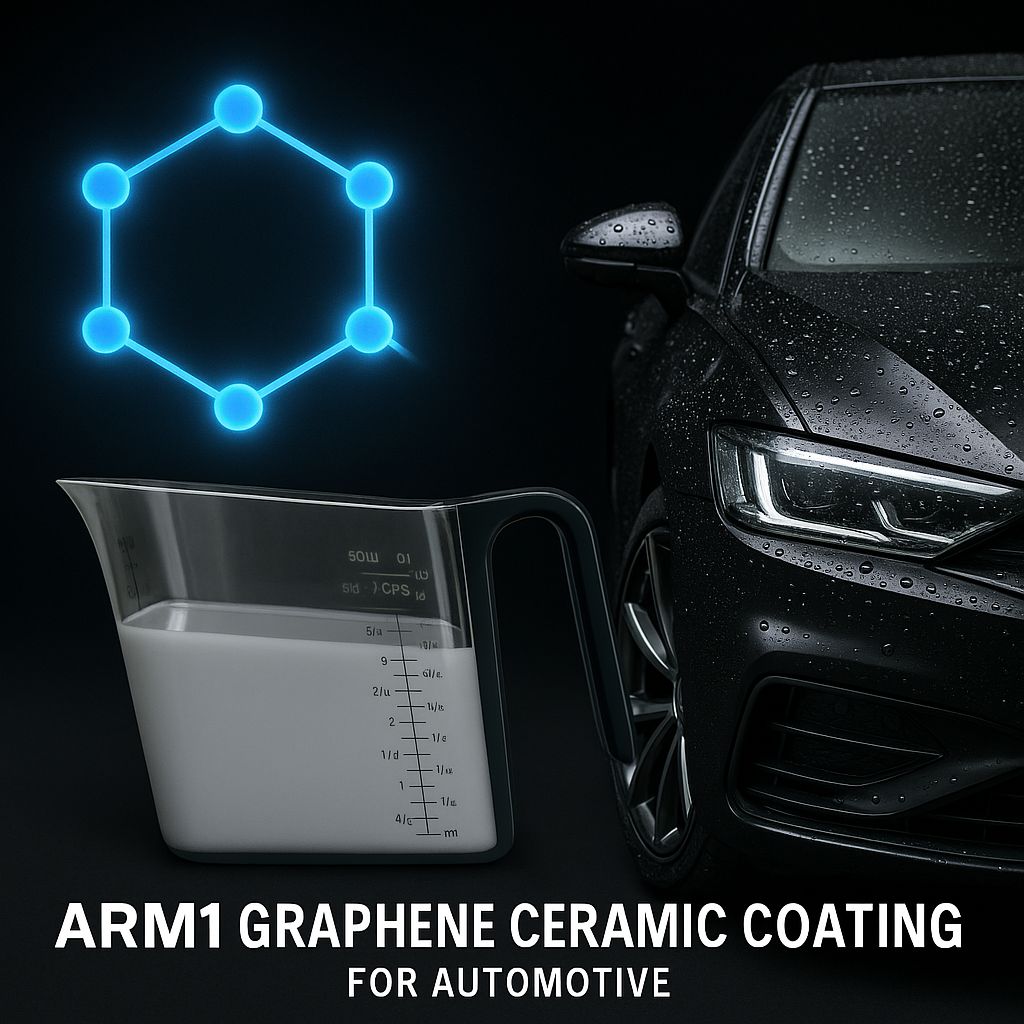
Ceramic car coating is a liquid surface-protection product applied to a vehicle’s prepared paintwork. After application and curing, the formulation is intended to leave a thin, transparent film that changes how the surface interacts with water, contaminants and light. Depending on its chemistry and application quality, a coating can improve gloss, make routine cleaning easier and provide a sacrificial layer between the environment and the underlying clear coat.
The word “ceramic” is commonly used in automotive detailing for coatings built around reactive or film-forming silicon-containing chemistry, such as silane- or siloxane-related materials. Some products combine these materials with other functional additives. Graphene-enhanced coatings add a graphene-related material or nanocarbon component to a wider formulation. The exact chemistry varies by manufacturer; a product name alone does not establish the concentration, structure or performance of a particular ingredient.
Gloss and reflection
A clean, smooth, well-levelled film can improve the way light reflects from paint, giving the surface a rich, mirror-like appearance. Preparation and paint condition remain decisive.
Water beading
A hydrophobic surface encourages water to form droplets rather than spreading evenly. Beading is a useful visual cue, but it is not a complete measurement of coating durability.
Surface protection
The cured layer can help reduce direct contact between paint and everyday grime. It is not an armour plate and cannot prevent all scratches, stone chips or collision damage.
How Graphene and Ceramic Technologies Work Together
Automotive coatings are complex formulations, not simply a single ingredient poured into a bottle. A typical system may include film-forming components, solvents or carriers, stabilisers, and carefully selected functional additives. The film-forming chemistry determines how the coating wets the substrate, levels, reacts or dries, and ultimately adheres. Additives may be used to influence handling, appearance, stability or surface behaviour.
Graphene is a carbon material built from a network of carbon atoms arranged in a two-dimensional structure. In real commercial formulations, the term “graphene” can refer to different grades and related materials, and their properties depend on structure, particle size, defects, surface chemistry and dispersion quality. In a liquid coating, a nanomaterial must be distributed consistently and remain compatible with the surrounding chemistry. Agglomeration, poor wetting or instability can reduce the value of an otherwise promising additive.
Ceramic-related film-formers can create a durable, transparent surface layer when the formulation and curing conditions are appropriate. A graphene-containing additive may be explored to tune the coating’s performance, but the result depends on the whole formulation rather than on the word “graphene” alone. It is therefore best to assess a finished coating using verified testing and real-world maintenance results, not ingredient names in isolation.
These are product-page specifications and stated usage references, not independently verified test results. Actual coverage depends on panel area, paint condition, applicator loading, technique and product loss.
Film formation
After spreading, volatile carrier components may evaporate while reactive or film-forming ingredients develop the protective layer. Temperature, humidity, air movement and surface contamination can change working time.
Surface energy and wetting
Hydrophobic behaviour relates to the surface’s interaction with water. Droplet shape is influenced by surface chemistry, cleanliness, roughness and contamination, so a single water-beading demonstration is not a complete durability test.
Key Benefits of Ceramic Car Coating
A well-selected and correctly applied ceramic car coating can simplify routine vehicle care. The value is not that the car becomes maintenance-free; it is that cleaning and preserving a good finish may become more manageable when the coating is compatible with the paint and maintained correctly.
Ultra-hydrophobic surface
Water may bead and roll off more readily, helping rinse away some loose dust and road film. Hydrophobicity varies with contamination and care products, so periodic washing remains essential.
Deep, mirror-like gloss
A uniform coating over properly corrected paint can make reflections appear sharper and the colour look richer. It cannot hide deep scratches, chips, oxidised paint or poor previous repairs.
Everyday environmental barrier
The coating is intended to reduce direct exposure of the clear coat to certain environmental contaminants. Prompt removal of bird droppings, insect residue, tree sap and harsh deposits is still important.
Potentially easier washing
When the surface is clean and functioning well, dirt may release more easily during a gentle wash. This can reduce effort, but it does not eliminate the need for safe wash tools and proper technique.
Reduced light marring risk
A coating may help reduce some fine wash-related marring under suitable conditions, but the thin layer should not be marketed as scratch-proof. Abrasive contact can still mark the coating and paint beneath it.
Long-term care value
The product page states a potential 1–3 year durability range with proper care. Actual service life depends on climate, mileage, parking, washing habits, preparation, application and validated product testing.
Think of the coating as a maintenance aid, not invincibility.
The strongest results come from clean paint, correct surface preparation, careful application, sufficient curing and a consistent maintenance routine.
What Is Included in the ARMI® DIY Kit?
The stated kit contents are intended to support a straightforward home application. Check the delivered package and instruction sheet before beginning; never substitute an unknown applicator or cloth if the supplied instructions specify a particular method.
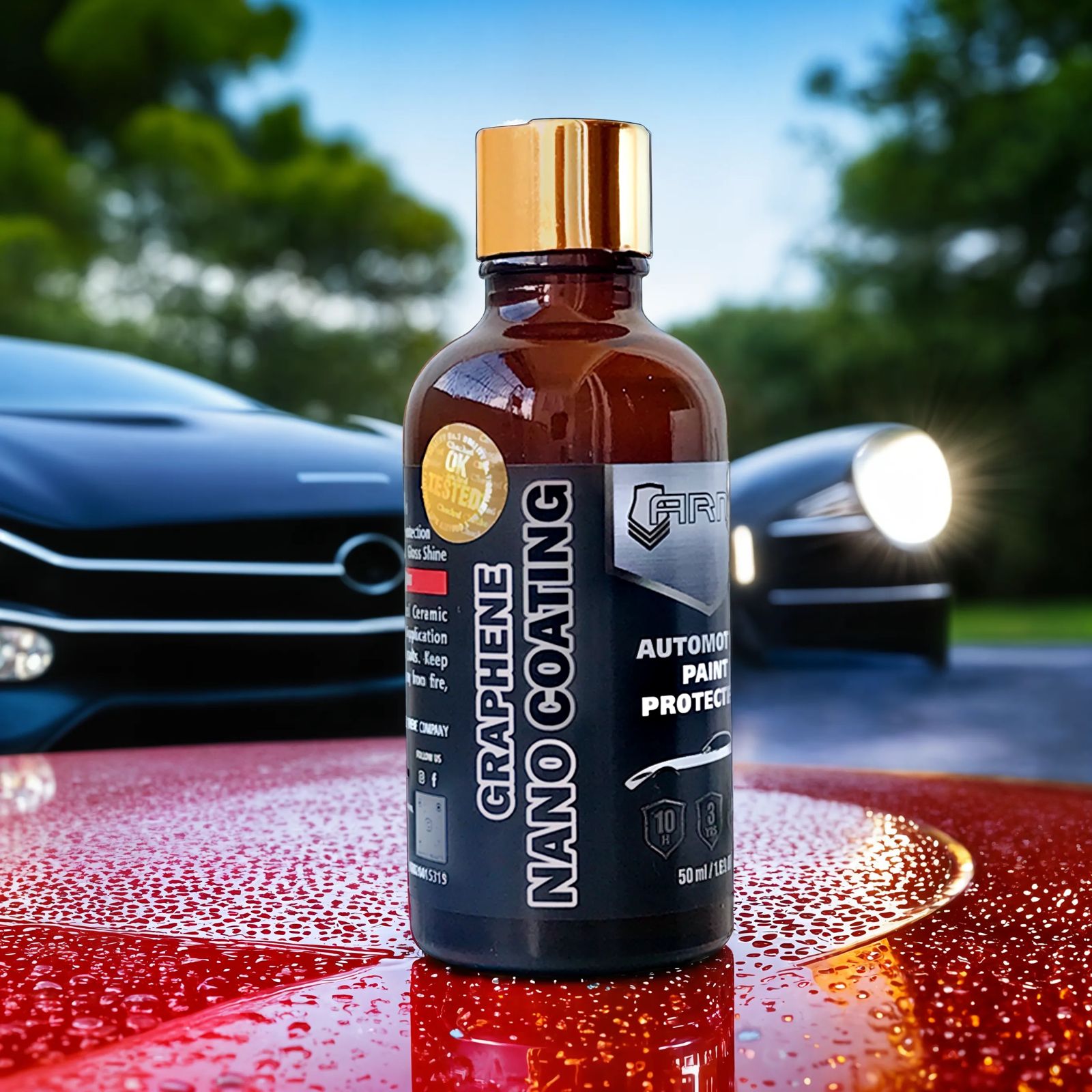
ARMI® Graphene Ceramic Coating
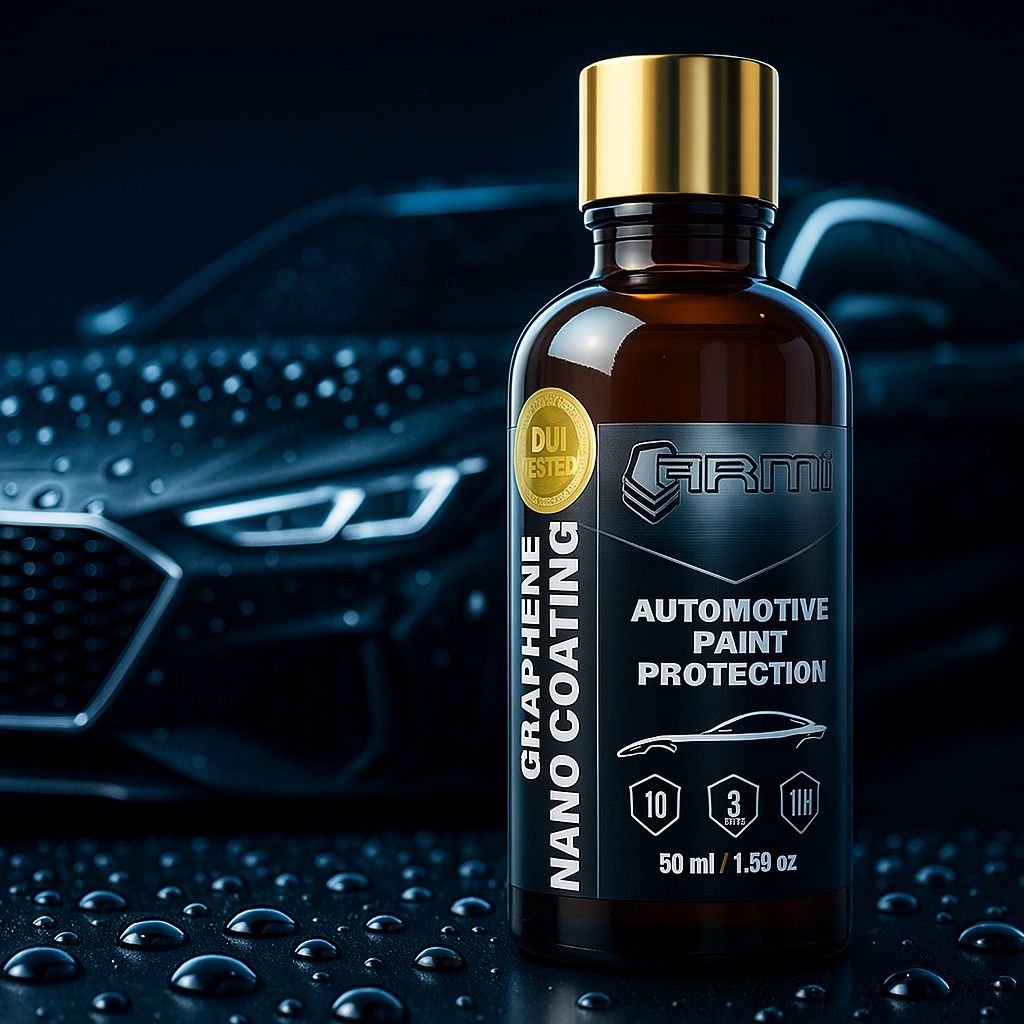
Refer to the supplied product label and manual for exact kit contents.
Use only on compatible painted surfaces as directed by the manufacturer.
50 ml glass vial
The coating container. Check the seal, label, batch information and instructions before use. Do not use a damaged or leaking container.
Foam applicator pad
Designed to help spread the liquid in controlled, overlapping passes. Keep it clean and follow the product instructions for loading and replacement.
Premium microfiber cloth
Used for levelling or residue removal only as directed. A clean, soft cloth helps avoid introducing lint or abrasive particles to the paint.
A pair of gloves
Included protective gloves are not necessarily chemical-resistant for every ingredient. Consult the product safety data sheet (SDS) and use suitable PPE.
User manual
The supplied instructions should control the application method, working time, cure time, weather limits and any product-specific restrictions.
QR video guide
Use the official video guide, if supplied, to understand the process visually before opening the vial. Read the written instructions as well.
Where Can Ceramic Car Coating Be Used?
The product description specifies painted surfaces only and lists cars, bikes, helmets and chrome parts as intended examples. Surface compatibility can vary: “painted surfaces only” should be treated as the controlling limitation unless the manufacturer’s current instructions explicitly approve another substrate. Chrome, plastic trim, rubber, glass, matte finishes, wraps and repainted panels may react differently or require separate products.
Cars and SUVs
Potential application areas include compatible painted body panels such as bonnet, doors, roof, boot and fenders after suitable preparation.
Motorcycles
Use only on compatible painted panels. Avoid tyres, brake components, grips, seats and controls because a slick coating can create a safety hazard.
Helmets
Only consider application on an exterior painted shell if the helmet maker and coating instructions permit it. Keep product away from visors, vents, adhesives and safety-critical materials.
Surface Preparation: The Foundation of a Good Finish
Preparation often determines whether a coating looks even and lasts as intended. Applying a premium product over dust, oily residue, wax, embedded grit or old dressing can interfere with wetting and adhesion. Rushing this stage can leave visible high spots, streaks or uneven hydrophobic behaviour. Work in a clean, shaded and well-ventilated location, and follow the official product instructions for approved cleaners and surface conditions.
Wash thoroughly
Use an automotive shampoo and clean wash tools. Rinse loose grit away first to reduce the chance of dragging particles across the paint.
Decontaminate when needed
Use compatible detailing methods to remove bonded contaminants. Follow each chemical’s directions and do not combine incompatible products.
Inspect the paint
Use good lighting to check for swirl marks, oxidation, scratches, repainted areas and defects. A coating preserves the finish you prepare; it does not repair damaged clear coat.
Correct if appropriate
Polishing may improve gloss before coating, but it should be performed by someone who understands paint thickness and safe polishing limits.
Remove residue
Use only a coating-compatible panel preparation product where the manual permits it. The surface should be free from polishing oils and residues that could affect adhesion.
Confirm dry conditions
Ensure panels are dry and cool, and that the work area meets the label’s temperature and humidity guidance. Avoid direct sun and hot body panels.
Before application, prepare all cloths, the applicator, lighting and PPE. Plan to work panel by panel without interruptions. Do not begin if rain, dust, wind, extreme heat or inadequate ventilation will interfere with the process. If the vehicle has recently been repainted, consult the paint shop and coating manufacturer about the appropriate waiting period.
How to Apply Ceramic Car Coating at Home
This is a general educational workflow. The current instruction manual and label for the specific ARMI® product take precedence over generic detailing advice. Different formulations have different flash times, levelling windows, cure requirements and PPE needs. Do not guess these values.
Read the full instructions
Review the manual and safety information before opening the vial. Confirm approved surfaces, weather conditions, coverage guidance and the correct levelling technique.
Protect the work area
Work away from flames, sparks, cigarettes, hot equipment and ignition sources. Provide good ventilation and keep children and pets away from the work zone.
Load the applicator carefully
Use the quantity and method specified by the manufacturer. Avoid excessive product, which can increase residue and make levelling difficult.
Spread in controlled sections
Apply thin, even, overlapping passes to a manageable panel section. Maintain a consistent pattern and avoid leaving dry gaps or uncontrolled puddles.
Observe the product’s working window
Some coatings show a visual change as they flash; others behave differently. Follow the stated timing and environmental guidance instead of relying on a universal number of seconds.
Level residue as instructed
Use clean microfiber and the prescribed method to remove excess product. Inspect the panel from several angles under bright, diffuse lighting for streaks or high spots.
Continue panel by panel
Keep track of completed sections and replace or turn cloths when they become saturated or contaminated. Avoid touching coated panels with bare hands.
Allow the coating to cure
Follow the product’s exact cure and no-water instructions. Protect the vehicle from rain, dust, washing and contact for the specified period.
How Graphene Ceramic Coatings Are Manufactured
Manufacturing a stable nano-enabled automotive coating requires more than mixing ingredients. The producer must select compatible raw materials, control their quality, design a stable formulation, manage dispersion and viscosity, package the product safely, and verify that batches perform consistently. The exact composition and process for ARMI® Graphene Ceramic Nano Coating are proprietary; the following is a high-level overview of common industrial development stages, not a recipe or a claim that every step is used in this particular product.
1. Requirements and formulation design
Researchers define target properties such as substrate compatibility, application feel, levelling, gloss, hydrophobic behaviour, storage stability and intended service conditions. Trade-offs are assessed early.
2. Raw-material qualification
Suppliers’ documentation, identity, purity, moisture, lot consistency and relevant safety information are reviewed. Nanomaterial grade and surface chemistry can influence compatibility and stability.
3. Controlled dispersion
Where a nanocarbon additive is used, the development team works to distribute it through the selected medium and manage agglomeration. Dispersion equipment and conditions are selected for the specific chemistry and scale.
4. Blending and compatibility checks
Film-forming ingredients, carriers and functional additives are combined under controlled conditions. Compatibility checks look for separation, unexpected thickening, haze, settling or other signs of instability.
5. Bench testing and optimisation
Small test panels help researchers assess spreadability, flash behaviour, levelling, appearance, adhesion and cure response. Formulations may be adjusted through a documented development cycle.
6. Performance validation
Appropriate tests may examine water contact behaviour, gloss, abrasion or chemical resistance, weathering and storage stability. The chosen method, substrate and conditions must be recorded for results to be meaningful.
7. Scale-up and process control
Moving from laboratory batches to production requires attention to mixing energy, temperature, order of addition, hold time, equipment cleanliness and batch traceability. Scale-up is validated rather than assumed.
8. Filling, packaging and release
Compatible containers and closures are selected, filling is controlled, and batch records are reviewed. Label checks, packaging integrity and release criteria help ensure the product reaches customers in a consistent state.
Why nano-dispersion quality matters
Nanomaterials can have a strong tendency to interact with one another because of their high surface area. If particles or flakes form clusters, the final coating may become less uniform or develop sedimentation, haze or inconsistent performance. Surface functionalisation, solvent compatibility, mixing strategy and stabilisation choices all influence the result. A robust manufacturer monitors the formulation over time, not only immediately after mixing.
Why the formula cannot be inferred from the product name
“Graphene ceramic” is a product category description, not a complete ingredient declaration. Formulations can differ substantially in reactive chemistry, carrier system, additive package and nanomaterial grade. For that reason, a technical brief should use the approved technical data sheet (TDS), safety data sheet (SDS), test reports and product label for exact specifications. Do not publish a guessed percentage or chemical formula.
Quality Control: What a Responsible Coating Programme Should Check
Quality assurance is a system of repeatable checks, traceable records and clear release criteria. For a nano-enabled coating, the manufacturer should determine which tests are relevant to the product’s intended use and apply them consistently. Not every test is suitable for every chemistry, and no single test can prove all aspects of real-world durability.
| Quality area | What it can help assess | Why it matters |
|---|---|---|
| Appearance and homogeneity | Visible separation, particles, haze or inconsistent appearance | Can flag processing or storage issues before release. |
| Viscosity / flow behaviour | Whether the liquid falls within defined handling limits | Influences spreading, dosing and application consistency. |
| Storage stability | Changes over defined time and temperature conditions | Helps establish appropriate shelf-life and storage guidance. |
| Adhesion and film appearance | Performance on specified test panels after defined preparation | Connects formulation performance to substrate and process. |
| Gloss and water interaction | Optical finish and water contact behaviour under a set method | Provides repeatable comparison when conditions are controlled. |
| Weathering / chemical exposure | Changes after specified environmental or chemical challenges | Can support carefully scoped durability claims. |
| Packaging integrity | Closure, leakage, label and container compatibility | Protects product quality during storage and transport. |
| Batch traceability | Raw-material lots, production records and release results | Supports investigations and consistent customer support. |
Claims such as “10H hardness,” “scratch protection,” “UV protection” and “1–3 years” should be accompanied by suitable test-method details and defined conditions where applicable. Pencil-hardness values, for example, depend on the method, coating build, substrate and cure conditions; they are not equivalent to a guarantee against stone chips or all real-world scratches. A trustworthy product page explains the scope of the claim rather than implying universal protection.
BTCORP Generique Nano Pvt. Ltd.: Advanced Materials and Industrial R&D
According to the company information supplied for this article, BTCORP Generique Nano Pvt. Ltd. was established in 2012 and has developed capabilities across graphene and advanced nanomaterials. Its stated focus is to bridge research and commercial production, with industrial-scale manufacturing, application-oriented development and technical support for organisations integrating advanced materials into products.
The company profile describes work with graphene and related derivatives, including graphene oxide (GO), reduced graphene oxide (rGO) and functionalised nanomaterials, supplied in different formats such as powders, liquid dispersions and polymer masterbatches. These materials can require different handling, dispersion and quality controls depending on their target application. Specific manufacturing capacity, certifications, patent status and product availability should be verified against current company documentation.
Industrial graphene platform
The supplied company brief highlights batch-to-batch consistency, application-specific surface functionalisation and technical guidance for OEMs, formulators and process engineers. These are important themes in industrial nanomaterial supply because the performance of a nanomaterial depends not only on its nominal identity, but also on its morphology, surface chemistry, dispersion and compatibility with the host formulation.
Integrated manufacturing and R&D
The company also describes contract research and development support, including graphene qualification, strategic sourcing, laboratory-to-plant process translation, performance engineering, custom nanoformulations, pilot prototyping and validation. In practice, this type of service helps teams translate an experimental material into a repeatable product by defining the target use, selecting suitable materials, evaluating compatibility, testing prototypes and documenting scale-up parameters.
ARMI®: bringing nano-enabled products to market
ARMI® is described in the supplied company profile as a commercial division delivering nano-enabled products in multiple markets. Its stated application areas include automotive surface coatings, thermal-efficiency coatings, engineered fluids and adhesives, nano-enhanced consumer products, and protective surface technologies. Product-specific claims should always be supported by the relevant technical documents and test data.
Sector-ready applications
The company brief references advanced materials for energy storage, construction, aerospace, automotive, research and industrial systems. Graphene-based materials may be explored for electrical conductivity, composite reinforcement, thermal management or barrier-related functions, but performance depends on grade, loading, dispersion, matrix chemistry and the application’s operating environment.
Full technology control and quality
The supplied overview emphasises in-house synthesis protocols, morphology control, tuned chemical profiles, dispersion stability and ready-to-use intermediate materials. These capabilities are relevant to product developers seeking repeatable integration and reduced handling complexity. Statements about patents, production scale and leadership should be substantiated by current corporate records before publication.
Leadership, Research and a Long-Term Materials Vision
Mohammed Naushad Ali · Founder & Director
The supplied executive biography describes Mohammed Naushad Ali as a former Marie Curie Fellow with more than 15 years of experience in industrial graphene development, over 100 scientific publications and multiple international patents. It states that he guides technology commercialisation, manufacturing scale-up, global strategy and multi-vertical operations alongside material scientists and industrial engineers. These credentials are reproduced from the provided brief and should be checked against official biographies before public use.
Research-led commercialisation
Advanced-material innovation succeeds when scientific research is paired with manufacturability, process control, customer feedback and clear performance validation. An industrial development programme must consider not only whether a material works in a laboratory, but whether it can be made safely, consistently, economically and at the required scale.
Corporate vision: scalable, practical advanced materials
The corporate vision supplied for BTCORP focuses on making advanced materials scalable, sustainable and accessible, while encouraging collaboration with industrial partners. In a practical setting, that vision can mean designing formulations for existing manufacturing equipment, reducing process complexity, documenting performance, and helping customers choose a material suited to a real technical requirement instead of relying on broad marketing language.
For automotive coating customers, this research-to-market approach is relevant because the final user experiences the entire system: packaging, storage stability, application feel, levelling, cure, gloss, water behaviour and long-term maintenance. A good coating is not just a promising material; it is a complete, usable product supported by instructions and quality control.
How Long Does Ceramic Car Coating Last?
The product information supplied for ARMI® Graphene Ceramic Nano Coating states a 1–3 year durability range with proper vehicle care. Treat this as the product’s stated expectation, not a guaranteed lifespan for every vehicle. Actual durability depends on paint preparation, application thickness and uniformity, curing, weather, UV exposure, parking conditions, annual mileage, detergents, wash technique and whether the vehicle is regularly exposed to harsh contaminants.
Do not use beading alone as a definitive indicator of coating life. Dust, oils, traffic film and residue from wash products can mask surface behaviour; conversely, a surface may bead strongly while still being vulnerable to mechanical damage. Evaluate the vehicle’s overall condition and consult the product supplier if the surface becomes difficult to clean or develops persistent uneven patches.
Maintenance Tips to Preserve the Coated Finish
Use gentle washing
Choose a pH-appropriate automotive shampoo and clean wash media. Rinse loose grit before contact washing and avoid harsh household detergents.
Use safe drying methods
Dry with a clean, soft microfiber towel or an appropriate filtered-air method. Avoid dragging a dirty towel across the paint.
Remove contaminants promptly
Bird droppings, insects, tree sap and mineral deposits can etch or mark finishes. Remove them with compatible products as soon as practical.
Avoid abrasive contact
Automatic brushes, dirty sponges and gritty cloths can create scratches. A coating does not make unsafe wash techniques safe.
Choose compatible chemicals
Strong solvents, aggressive acids or alkaline cleaners may affect coating performance. Follow the coating maker’s maintenance recommendations.
Inspect periodically
Look for persistent water spots, uneven patches or contamination. Seek professional advice before using polishing compounds or abrasive correction on a coated panel.
For the initial curing period, follow the exact instructions supplied with the product. Some coatings require protection from water or washing for a defined period, and some may continue curing after they feel dry. Avoid guessing a cure time based on another brand’s product.
Safety, Storage and Responsible Handling
The product information states that the coating is volatile and must be kept away from flame, sparks and heat sources. Treat this as a critical precaution. The exact hazards and appropriate protective equipment must be determined from the product label and current safety data sheet, not from the appearance of the liquid or the accessories included in the box.
During use
- Work in a well-ventilated area.
- Keep away from flames, sparks, smoking and hot surfaces.
- Wear the PPE specified by the SDS.
- Avoid eye and skin contact and do not inhale vapour.
- Keep children and pets away from the work area.
After use and storage
- Close the container tightly after use.
- Store in a cool, dry place away from direct sunlight.
- Keep away from heat and ignition sources.
- Do not transfer to an unlabelled container.
- Follow local rules for disposal of product and contaminated materials.
Do not pour unused coating, solvent or contaminated liquid into drains or onto soil. Dispose of residues, empty containers and used applicators according to the label, SDS and local regulations. If exposure occurs, follow the SDS first-aid guidance and seek professional medical advice where indicated. In the event of a spill, remove ignition sources if safe to do so, ventilate the area and use the spill procedure recommended by the SDS.
Ceramic Coating vs Wax vs Paint Protection Film
Different paint-protection options solve different problems. The right choice depends on budget, finish expectations, driving conditions and the kind of damage a vehicle owner wants to reduce. A ceramic car coating is generally chosen for gloss, water behaviour and easier cleaning; wax is a simpler sacrificial finish that usually needs more frequent renewal; PPF is a physical film designed to take the brunt of some road debris and abrasion.
| Feature | Ceramic car coating | Traditional wax | Paint protection film (PPF) |
|---|---|---|---|
| Primary role | Surface finish, hydrophobic behaviour and maintenance support | Short-term gloss and sacrificial surface layer | Physical barrier against some chips and abrasion |
| Physical thickness | Very thin cured film | Thin surface layer | Much thicker film |
| Scratch / impact defence | Limited; not scratch-proof | Limited | Can absorb some impacts, depending on film and impact |
| Appearance | Can add gloss and water beading | Can add warmth and gloss | May be clear or textured depending on film |
| Maintenance | Requires compatible washing and periodic inspection | Needs regular reapplication | Requires correct film care and edge inspection |
| Application | Liquid product applied to prepared surface | Liquid or paste applied and buffed | Installed as a fitted film by a trained installer |
These categories are not mutually exclusive. Some vehicle owners use PPF on high-impact panels and a compatible coating on other painted surfaces or over approved film. Always confirm compatibility and warranty conditions before combining products.
Common Application Mistakes and How to Avoid Them
Applying in direct sunlight
Hot panels can shorten working time and make levelling harder. Choose a shaded, controlled work area within the label’s temperature range.
Skipping paint preparation
Oil, wax, dust and bonded contamination may interfere with adhesion and appearance. Clean and inspect the paint carefully first.
Using too much product
Excess liquid can leave residue or high spots. Follow the product’s dosing guidance and work in manageable sections.
Waiting too long to level
Missing the prescribed working window can make residue more difficult to remove. Follow the product-specific instructions and inspect under suitable lighting.
Using a contaminated cloth
Old residue and trapped grit can streak or scratch. Keep cloths clean, rotate to a fresh side and replace them when needed.
Washing too soon
Water or contact before the recommended cure period may affect the finish. Respect the no-water and no-wash window in the manual.
If you notice a cured high spot or streak, do not immediately use abrasive polish or strong chemicals. Consult the official troubleshooting guidance or a trained detailer; correction methods depend on the state of cure and the paint system beneath the coating.
What to Check Before Buying a Ceramic Car Coating
Product pages often use similar phrases, so a useful comparison should go beyond the headline. Review the technical documents, intended substrates, safety requirements, application support and evidence behind performance claims. Ask the seller or manufacturer for clarification if a key specification is missing.
- Compatibility: confirm whether the product is for gloss painted surfaces only and whether repainted panels are excluded.
- Technical documentation: look for a current TDS, SDS, application manual and clear storage guidance.
- Test methods: ask how hardness, durability, chemical resistance and weathering claims were evaluated.
- Coverage: compare stated consumption with vehicle size and the possibility of application loss.
- Kit contents: confirm the vial size, applicator, cloth, gloves and instructions included in the package.
- Support: check whether official application videos or technical assistance are available.
- Care requirements: understand cure time, first wash timing and recommended maintenance chemicals.
- Claims and warranty: read the terms and conditions rather than relying on a broad durability headline.
For an at-home user, a clear instruction set and realistic performance claims are especially important. A coating that is difficult to level in the local climate or is applied to an unsuitable surface may produce a disappointing result even when its underlying chemistry is promising.
Ceramic Car Coating FAQs
What is ARMI® Graphene Ceramic Nano Coating?
It is described as a 50 ml DIY automotive surface coating designed for painted surfaces, combining graphene-related and ceramic coating technology. The product page states a 10H hardness description, hydrophobic finish and gloss benefits. Confirm exact performance conditions in the current technical documentation.
Is ceramic car coating completely scratch-proof?
No. A coating is a thin protective film, not an impact-proof shield. It may help reduce some light wash-related marring under suitable conditions, but it cannot prevent every scratch, stone chip or collision mark.
How long can the coating last?
The supplied product description states a 1–3 year range with proper vehicle care. Real-world life depends on preparation, application, curing, weather, mileage, parking and maintenance. Treat the stated range as conditional rather than guaranteed.
How much area can a 50 ml bottle cover?
The product information states spreadability of approximately 2 ml per square foot and says one vial is sufficient for one full-size SUV. Actual consumption depends on vehicle dimensions, paint condition, technique and wastage.
Can beginners apply it at home?
The product is presented as a DIY kit, but users should read the manual and SDS first, work in a ventilated area, use suitable PPE and practise careful panel-by-panel application. If unsure, seek help from a professional detailer.
Can it be applied to glass, tyres, plastic trim or matte paint?
The supplied product details specify painted surfaces only. Do not apply it to glass, tyres, plastic trim, matte finishes or other substrates unless the current manufacturer instructions expressly approve them.
Does hydrophobic water beading prove that the coating is healthy?
Not on its own. Surface contamination, wash products and environmental deposits can change water behaviour. Use overall condition, ease of cleaning and the manufacturer’s maintenance guidance rather than a single water test.
Can I wash the vehicle immediately after application?
Follow the exact cure and no-water period provided in the product manual. The required period can differ among coating formulations and weather conditions.
What does 10H hardness mean?
Hardness claims depend on the test method, substrate, film build and curing conditions. A pencil-hardness rating is not the same as Mohs mineral hardness and does not mean a surface cannot be scratched.
Who is identified as the manufacturer?
The supplied brief identifies BTCORP Generique Nano Pvt. Ltd. as the manufacturing company and ARMI® as the commercial product division. Verify the current label and official company documentation for the exact legal manufacturer and product details.
What safety precautions matter most?
The supplied product information says it is volatile. Keep it away from flame, sparks and heat; work in a well-ventilated area; use PPE specified by the SDS; and store it tightly sealed in a cool, dry place away from sunlight.
Does the coating remove existing swirl marks?
No. Coating is not a paint correction process. Existing defects generally remain visible unless they are safely corrected before application. A coating can make a well-prepared finish look glossier, but it should not be treated as a scratch filler.
Choosing a Smarter Paint-Protection Routine
Ceramic car coating can be a valuable part of a vehicle-care routine when expectations are realistic. A graphene-enhanced ceramic formulation aims to combine a refined finish with water-repellent behaviour and everyday surface protection. The final outcome depends on the quality of the product, compatibility with the paint, careful preparation, controlled application, appropriate curing and consistent maintenance.
The ARMI® Graphene Ceramic Nano Coating DIY Kit is described as a 50 ml solution for painted surfaces, with an included applicator, microfiber cloth, gloves and guidance materials. Its product brief lists a 10H hardness description, hydrophobic performance, a mirror-like gloss and a potential 1–3 year service range with proper care. These statements should be interpreted in light of the manufacturer’s test methods and the conditions in which the coating is used.
At the manufacturing level, nano-enabled coating development depends on raw-material qualification, dispersion control, formulation compatibility, stability checks, performance testing and repeatable batch release. BTCORP Generique Nano Pvt. Ltd. is identified in the supplied company brief as the manufacturing partner, with ARMI® positioned as the commercial product division. For exact formula details, verified test results, handling requirements and warranty terms, refer to the current official product documentation.
A better finish begins before the first drop.
Prepare the paint, read the instructions, work safely, apply methodically and maintain the vehicle with compatible wash products. Consistent care is what helps a coating deliver its intended value over time.