
Why Eco-Friendly Laundry Detergents Are the Future of Smart Cleaning
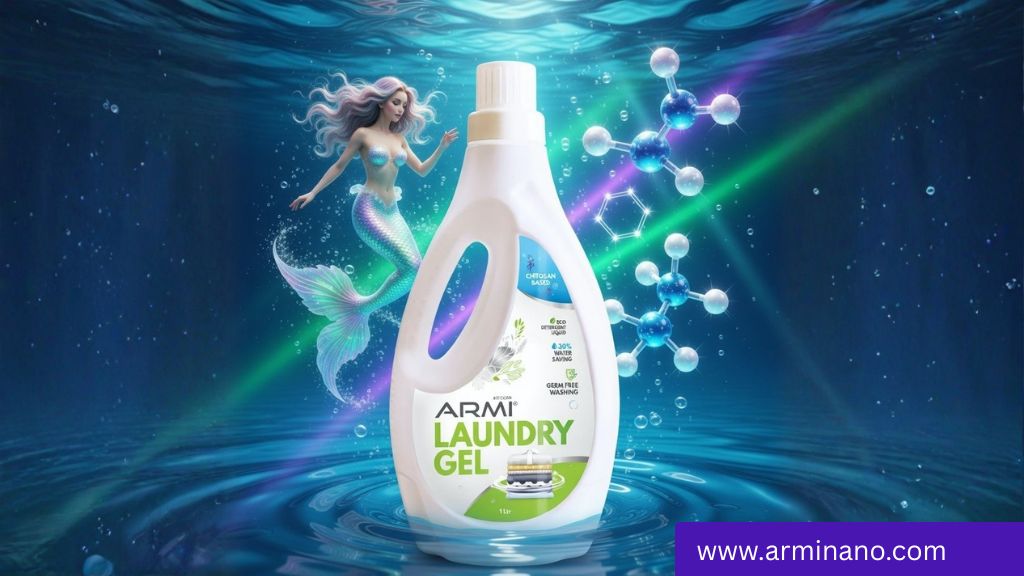
You finish a load of laundry, pull out a shirt, and think — okay, done. But then you notice your hands feel dry and irritated, there’s still that stubborn collar stain that didn’t budge, and you’re already running the rinse cycle a second time because the foam just won’t quit. Honestly, this happens in more households than you’d think. People blame the fabric, the machine, the water — but rarely the detergent. And yet, that’s usually where the problem starts. Making the switch to an eco friendly laundry detergent is one of those small changes that quietly fixes several things at once. Some of you might not even have a skin problem yourself — it’s your kid. You’re washing their little onesies and pajamas with something that proudly says “mild” on the bottle, and yet by evening your toddler is fussy and scratching. You’ve checked everything else. The thing is, what gets left behind in fabric after a wash matters just as much as what gets removed. And most conventional detergents leave behind more than they should. Then there’s the water situation. If your machine is running three or four rinse cycles just to clear out the suds, that’s not a machine problem — that’s a foam problem. Week after week, that’s a lot of extra water, extra electricity, and extra time. Not dramatic, but quietly wasteful. And honestly, unnecessary. Why This Keeps Happening Here’s the thing about most detergents on the market — they’re built to look like they’re working, not necessarily to work better. That mountain of foam? It doesn’t clean anything extra. It’s just what synthetic surfactants do, and somewhere along the way, we started associating bubbles with cleanliness. Clever marketing did the rest. The real issue is what these chemicals leave behind. Synthetic surfactants, artificial fragrances, optical brighteners, phosphate builders — these don’t fully rinse out, especially in hard water. What remains is a thin film on your clothes that you can’t see or feel immediately, but your skin absolutely notices over time. Wear that shirt for eight hours and your skin has been in contact with that residue all day. For someone with eczema or generally reactive skin, that’s often enough to cause a flare-up. For babies, it’s even more straightforward. Their skin is genuinely thinner and more absorbent than adult skin. A residue that your body might tolerate can easily irritate theirs. And this isn’t about being overly cautious — it’s just biology. The environmental story isn’t great either. A lot of these compounds don’t break down well in water treatment systems. They end up in rivers, affect aquatic life, and linger in soil. Add single-use plastic packaging to that, and the picture gets uncomfortable for something you’re doing three or four times a week. So What’s the Better Option? Eco-friendly detergents used to have a reputation problem — and fair enough, the early versions were often watery and underwhelming. But that’s genuinely not the case anymore. Today’s green cleaning products are properly formulated, properly tested, and perform well on real laundry — not just light fabrics in ideal conditions. The shift happened because the science caught up. Modern sustainable cleaning formulas use biodegradable, plant-derived and sea-derived surfactants that do the actual heavy lifting, then break down harmlessly once rinsed away. A good non toxic laundry detergent today doesn’t ask you to compromise on performance. It just asks you to rethink what clean should actually look like. How Modern Eco-Friendly Detergents Actually Work Most people assume that stronger chemicals mean better cleaning. That logic made sense once — but it’s outdated now. The smarter approach is using naturally derived surfactants that work with fabric structure rather than against it. A well-formulated eco friendly detergent liquid doesn’t strip fibres or leave residue. It lifts dirt, oils, and stains precisely, then rinses away completely. Low foam is a big part of this. A low foaming detergent is not a weak detergent — that’s one of the most persistent myths in laundry. Foam is just a byproduct of certain synthetic surfactant types. It has no bearing on cleaning power. In fact, excessive foam causes real problems in front-load and high-efficiency machines — it builds up around the drum seal, clogs filters, and forces extra rinse cycles. A well-designed liquid detergent for washing machine use works better with controlled lather. Fewer rinse cycles means it genuinely functions as a water saving detergent — less water per load, less energy, same or better result. The real question is what the active cleaning ingredient actually is — and that’s where the most interesting innovation in this space is happening right now. The Ocean Has Been Doing This for Centuries There is something worth pausing on here. Marine ecosystems have some of the most effective natural cleaning and protective compounds found anywhere in nature. Shells, crustaceans, and other sea organisms contain a biopolymer called chitosan — a naturally occurring substance that has been studied extensively in pharmaceutical, food safety, and agricultural applications for decades. It works as a natural surfactant, it binds to contaminants, and it breaks down harmlessly in water. The ocean, in a sense, has always known how to clean itself. Applying this to fabric care is not just a clever idea — it represents a genuine shift in how we think about cleaning technology. A chitosan based detergent uses this sea-derived polymer in a refined, nano-scale form that penetrates deep into fabric fibres rather than just cleaning the surface. It breaks down grease, oils, embedded dirt, and microbial residue at a structural level — the kind of cleaning that synthetic chemicals attempt through force, but chitosan achieves through precision. What makes this particularly significant is that chitosan nanoparticle technology had never been used in a mainstream detergent formulation before. This is not a marginal improvement on existing products. It is a different approach entirely — one rooted in marine science, developed through rigorous research, and brought to everyday households for the first time.
Why Eco-Friendly Laundry Detergents Are the Future of Smart Cleaning Read More »