

Reduced Graphene Oxide Pure Powder
High-performance reduced graphene oxide engineered for advanced composites, conductive materials, coatings, thermal management, energy storage and next-generation research applications.
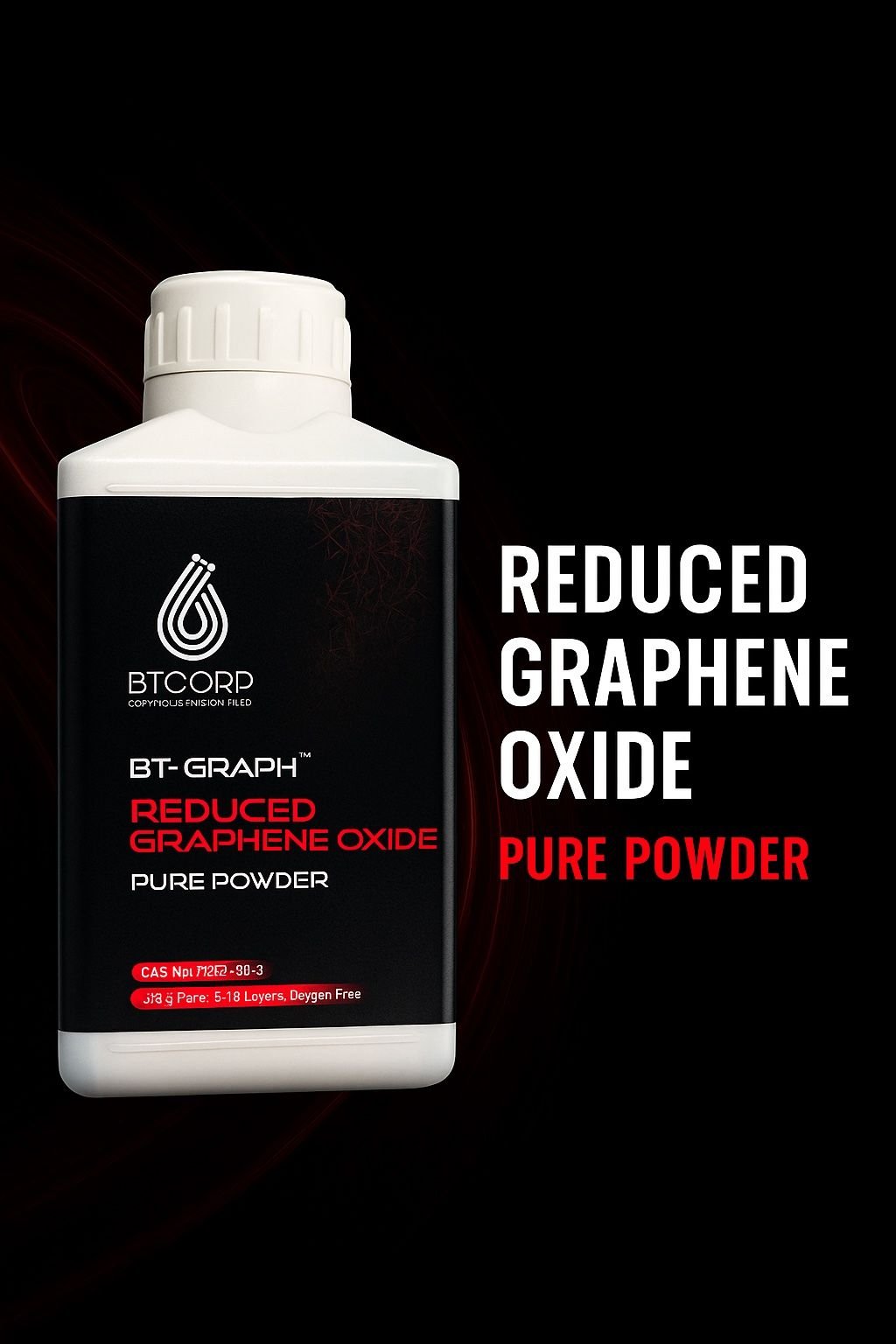
Reduced Graphene Oxide – Product Showcase
Explore the supplied BTcorp Reduced Graphene Oxide Pure Powder, its packaging, material form and laboratory-oriented presentation.
What Is Reduced Graphene Oxide?
Reduced Graphene Oxide (rGO) is a graphene-derived two-dimensional carbon nanomaterial produced by reducing graphene oxide and partially restoring the conductive carbon network.
The reduction process decreases oxygen-containing functional groups introduced during graphite oxidation. As the oxygen functionality is reduced, the carbon structure becomes more graphene-like and electrical conductivity can increase significantly.
BTcorp Reduced Graphene Oxide Pure Powder is designed for advanced research and industrial applications where a combination of electrical conductivity, thermal transport, mechanical reinforcement, surface interaction and barrier performance is required.
General Properties of Supplied Reduced Graphene Oxide
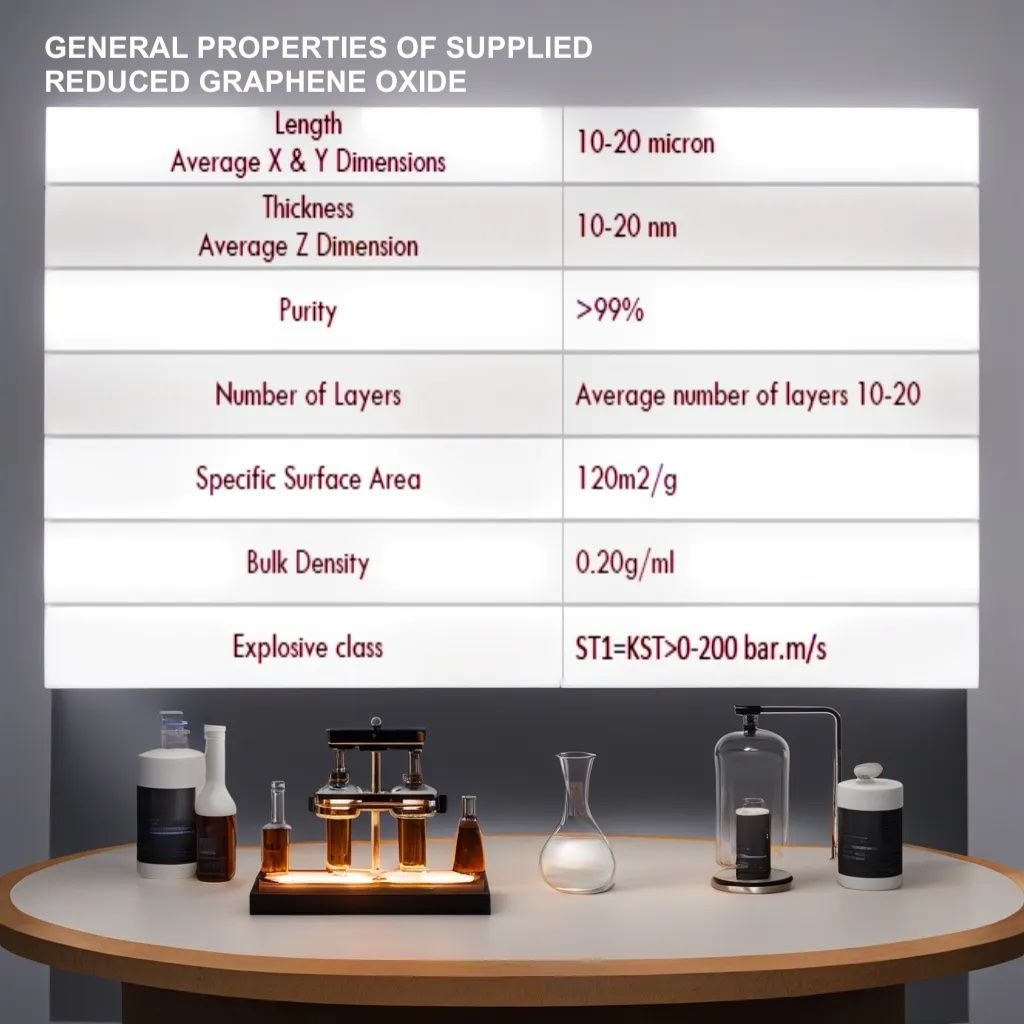
Complete Technical Specifications
| Property | Specification / Typical Value | Technical Significance |
|---|---|---|
| Material | Reduced Graphene Oxide (rGO) | Graphene-derived advanced carbon nanomaterial |
| Production Method | Modified Hummers Method + Chemical Reduction | Controlled oxidation and reduction route |
| Overall Purity | >99% | High-purity material specification |
| Carbon | >96 wt.% | Carbon-rich composition |
| Oxygen | <0.1 wt.% | Indicates highly reduced material |
| Average X–Y Size | 10–20 µm | Micrometre-scale platelet morphology |
| Average Z Thickness | 10–20 nm | Thin layered morphology |
| Average Number of Layers | 10–20 layers | Multilayer graphene-derived structure |
| Specific Surface Area | 120 m²/g | Large material–matrix interface |
| Bulk Density | 0.20 g/mL | Important for powder handling and formulation |
| Explosion Classification | ST1 / KST 0–200 bar·m/s | Important for industrial dust-handling safety |
Physical Appearance of rGO Powder
The supplied material is presented as a dark carbonaceous powder. Its physical appearance reflects the graphene-derived structure and high carbon content of the product.
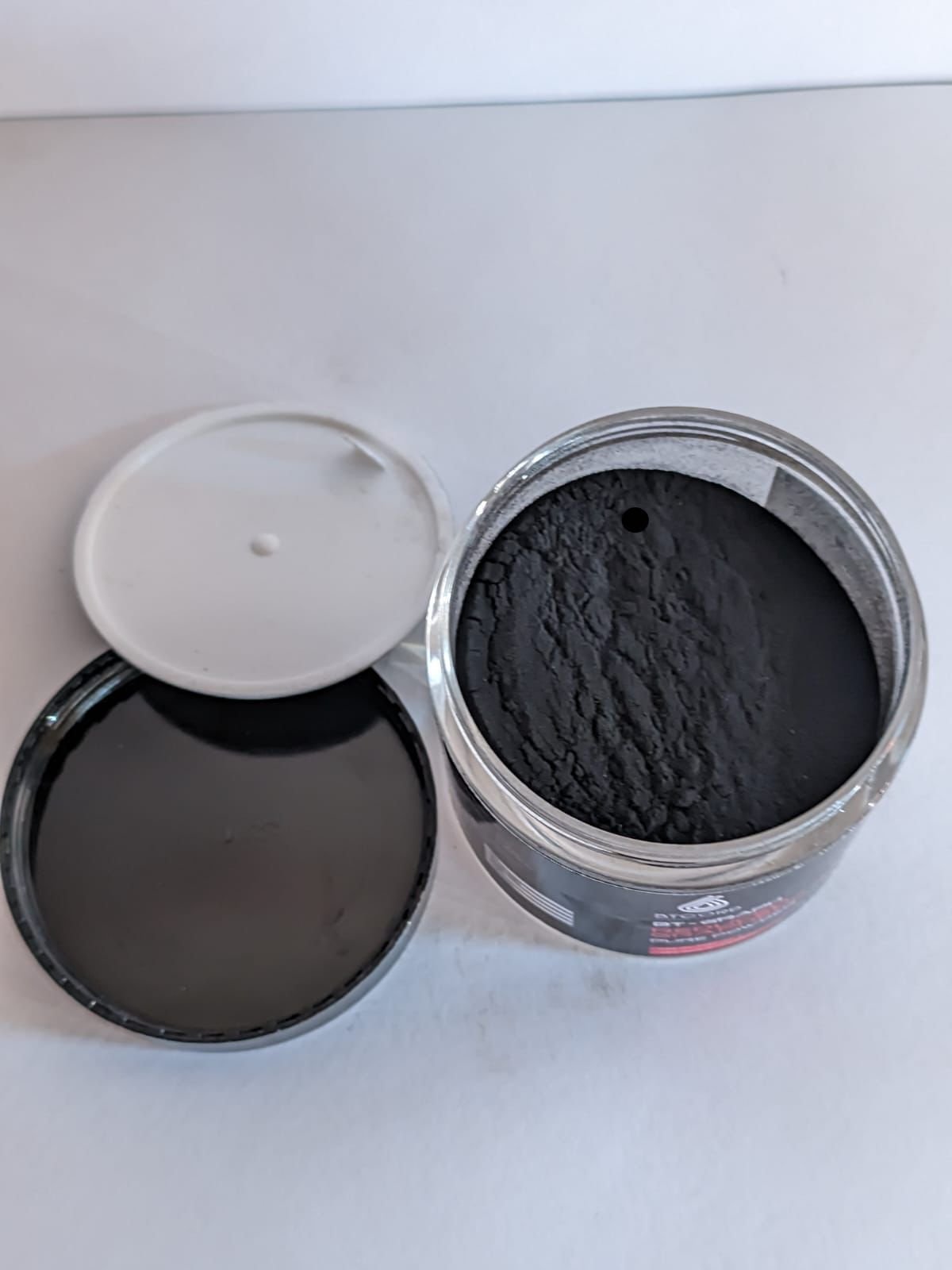
Powder morphology, agglomeration state, moisture exposure and handling conditions can influence dispersion during formulation. For this reason, the material should be stored in a tightly sealed container in a cool, dry environment.
Elemental Characterization – EDS Analysis
Energy-dispersive X-ray spectroscopy (EDS/EDX) is commonly used to investigate the elemental composition of a material at the microscopic scale.
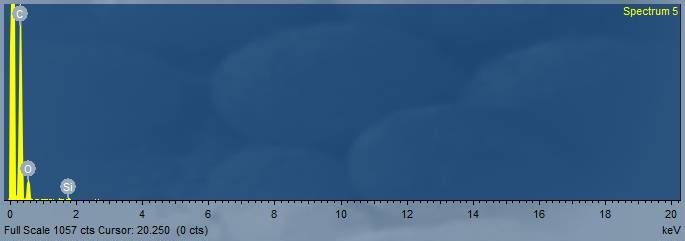
The supplied spectrum is dominated by carbon, with a smaller oxygen signal visible in the displayed spectrum. EDS is useful for qualitative and semi-quantitative elemental assessment, although exact bulk composition should be interpreted using the appropriate certified analytical method and test report.
TEM Morphology of Reduced Graphene Oxide
Transmission Electron Microscopy (TEM) provides direct visual information about nanoscale morphology. The supplied TEM image shows thin, overlapping and irregular graphene-derived sheets.
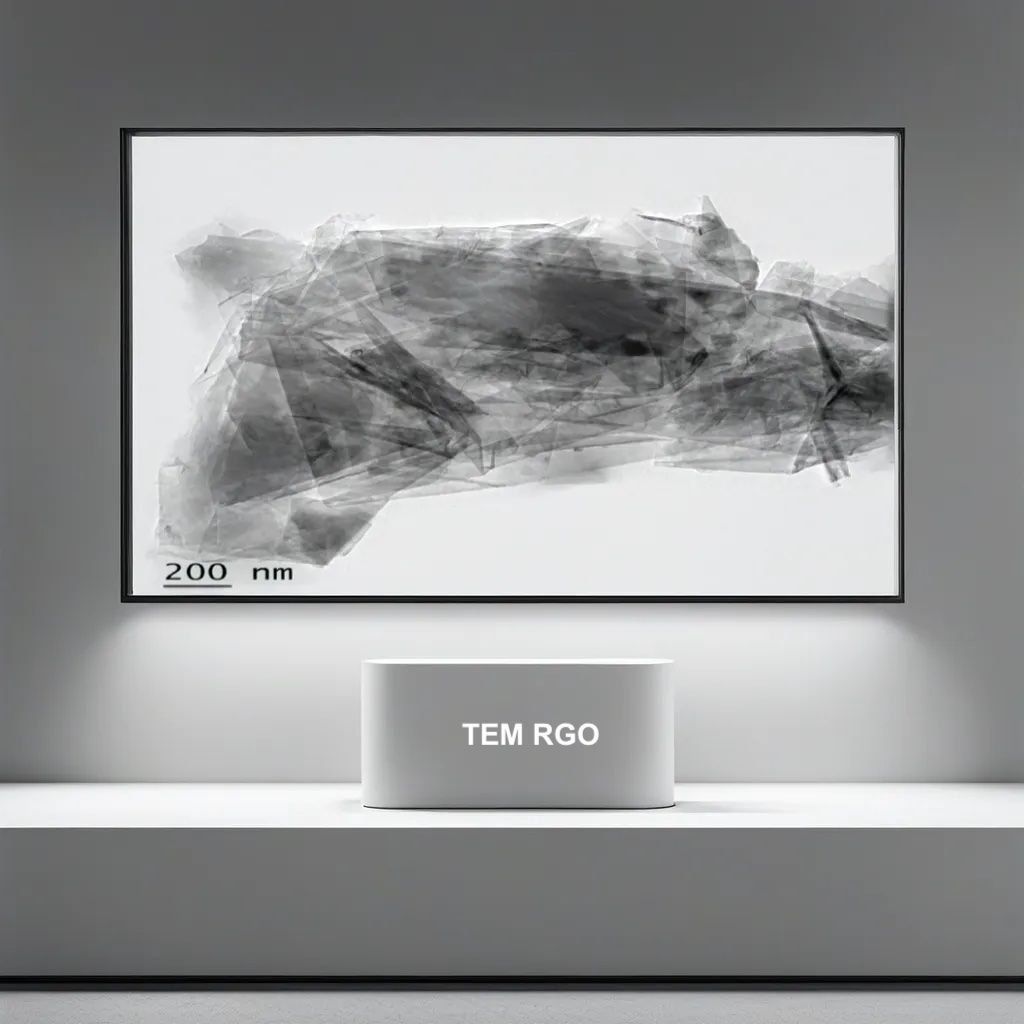
The layered sheet-like morphology is one of the defining characteristics of graphene-derived nanomaterials. In composite systems, these extended sheets can provide large contact areas and help create interconnected networks.
The 200 nm scale shown in the supplied image provides nanoscale visual context for the sheet morphology. Particle-size and lateral-dimension specifications should nevertheless be evaluated using the complete characterization method and statistical measurement procedure.
BTcorp rGO Pure Powder – Product Packaging
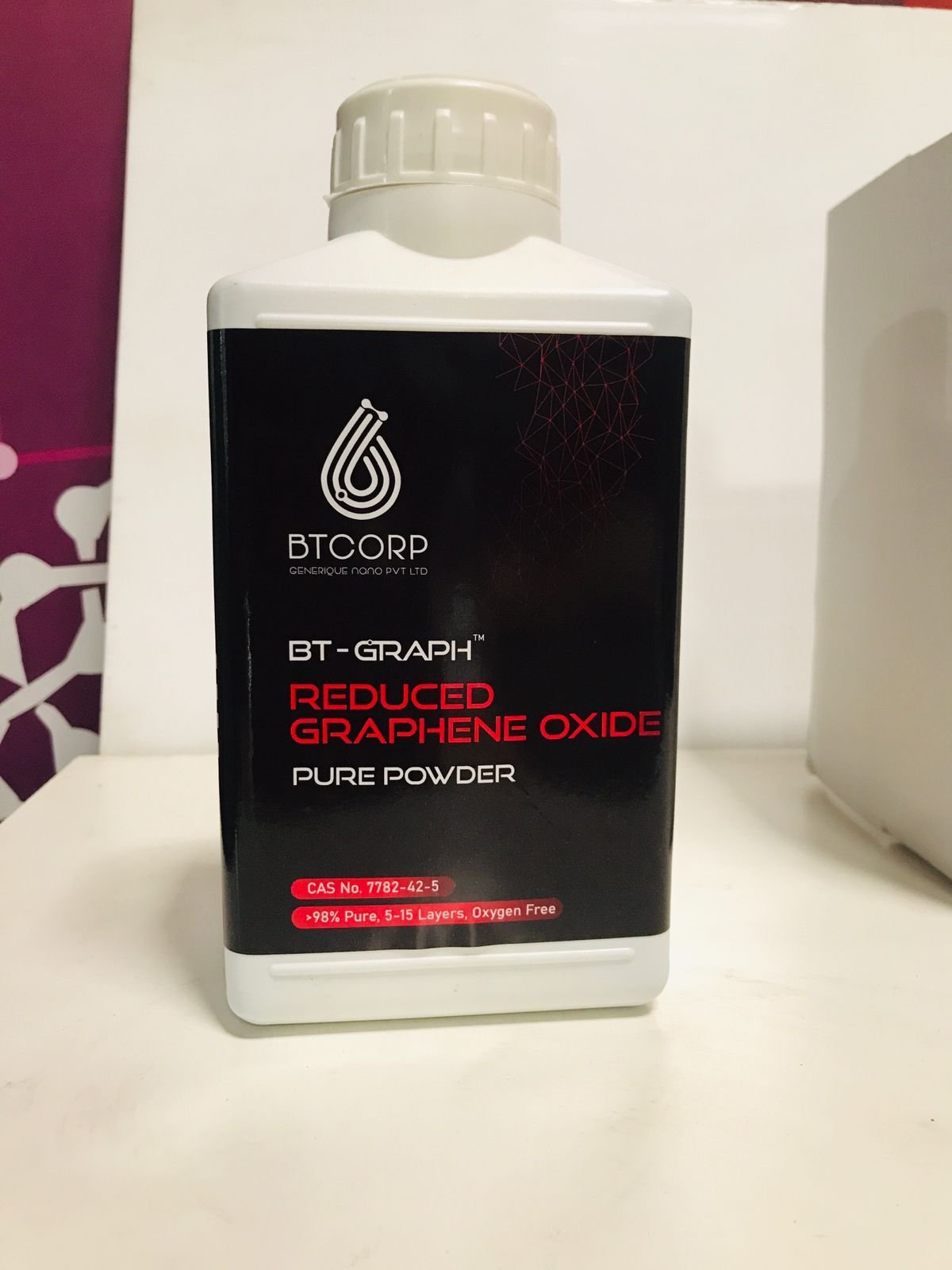
The supplied packaging presentation identifies the product as Reduced Graphene Oxide Pure Powder under the BTcorp / BT-GRAPH product range. Packaging may vary according to laboratory, pilot-scale, bulk or customized industrial supply requirements.
How Reduced Graphene Oxide Is Produced
The supplied product is produced through a modified Hummers oxidation process followed by controlled chemical reduction. The process begins with natural vein graphite and transforms the layered carbon structure into graphene oxide before reduction.
Natural Graphite
Natural vein graphite provides the carbon-rich starting material.
Oxidation
Modified Hummers chemistry introduces oxygen-containing groups.
Reduction
Controlled chemical reduction removes much of the oxygen functionality.
rGO Powder
The resulting reduced graphene oxide is processed for applications.
Electrical & Thermal Performance
The supplied technical specification reports strong directional differences between in-plane and through-plane transport. This anisotropy is associated with the layered structure of graphene-derived materials.
Major Applications of Reduced Graphene Oxide
Epoxy & Polyurethane Nanocomposites
rGO can be used as a multifunctional reinforcement and conductive filler in epoxy and polyurethane systems.
Anti-Corrosion Coatings
Graphene-derived platelets can contribute to barrier performance by increasing diffusion-path tortuosity.
Conductive Coatings & Paints
Suitable for research into conductive and antistatic coating systems.
EMI Shielding
Conductive graphene-derived networks can be incorporated into electromagnetic shielding composites.
Batteries
rGO can act as a conductive framework or composite component in advanced electrode architectures.
Supercapacitors
Electrical conductivity and surface characteristics make rGO relevant to electrochemical energy storage.
Conductive Inks
Properly formulated dispersions can be investigated for printed electronics and sensing applications.
Polymer Masterbatches
rGO can be introduced into polymer systems through masterbatch-based processing.
Thermal Interface Materials
High in-plane thermal transport makes rGO interesting for thermal-management research.
Adhesives & Sealants
Can be investigated where mechanical, electrical or barrier functionality is required.
Cement & Concrete
Graphene-derived additives are researched for reinforcement and multifunctional cementitious materials.
Rubber & Elastomers
rGO can be investigated as a reinforcing and conductive filler in elastomeric compounds.
BTcorp Reduced Graphene Oxide – Pure Powder

Storage & Handling
Store the material in a tightly sealed container in a cool, dry environment away from moisture and direct sunlight. Prolonged exposure to humidity should be avoided.
Advanced rGO for Next-Generation Materials
Reduced Graphene Oxide combines the unique morphology of graphene-derived sheets with electrical, thermal, mechanical and interfacial functionality. This makes it a valuable platform for developing advanced composites, coatings, conductive materials, energy-storage systems and thermal management solutions.
The supplied BTcorp material is specified with greater than 99% purity, 10–20 µm average X–Y dimensions, 10–20 nm average thickness, 10–20 average layers, approximately 120 m²/g specific surface area and approximately 0.20 g/mL bulk density.
Its combination of high purity, layered morphology and multifunctional properties makes it suitable for laboratory, R&D, pilot-scale and industrial material-development programs.