
Graphene Conductive Coating: Properties, Benefits, Applications & Industrial Uses
Explore graphene’s conductive network, real-world industrial applications, technical specifications, surface preparation, ESD considerations and ARMI® Graphene PU Conductive Coating.
Quick answer: Graphene conductive coating is a polymer coating that uses interconnected graphene particles to provide electrical pathways while protecting the underlying surface. It may be useful for selected ESD, industrial equipment, protective metal and EMI-related applications when the complete coating system is correctly specified and tested.
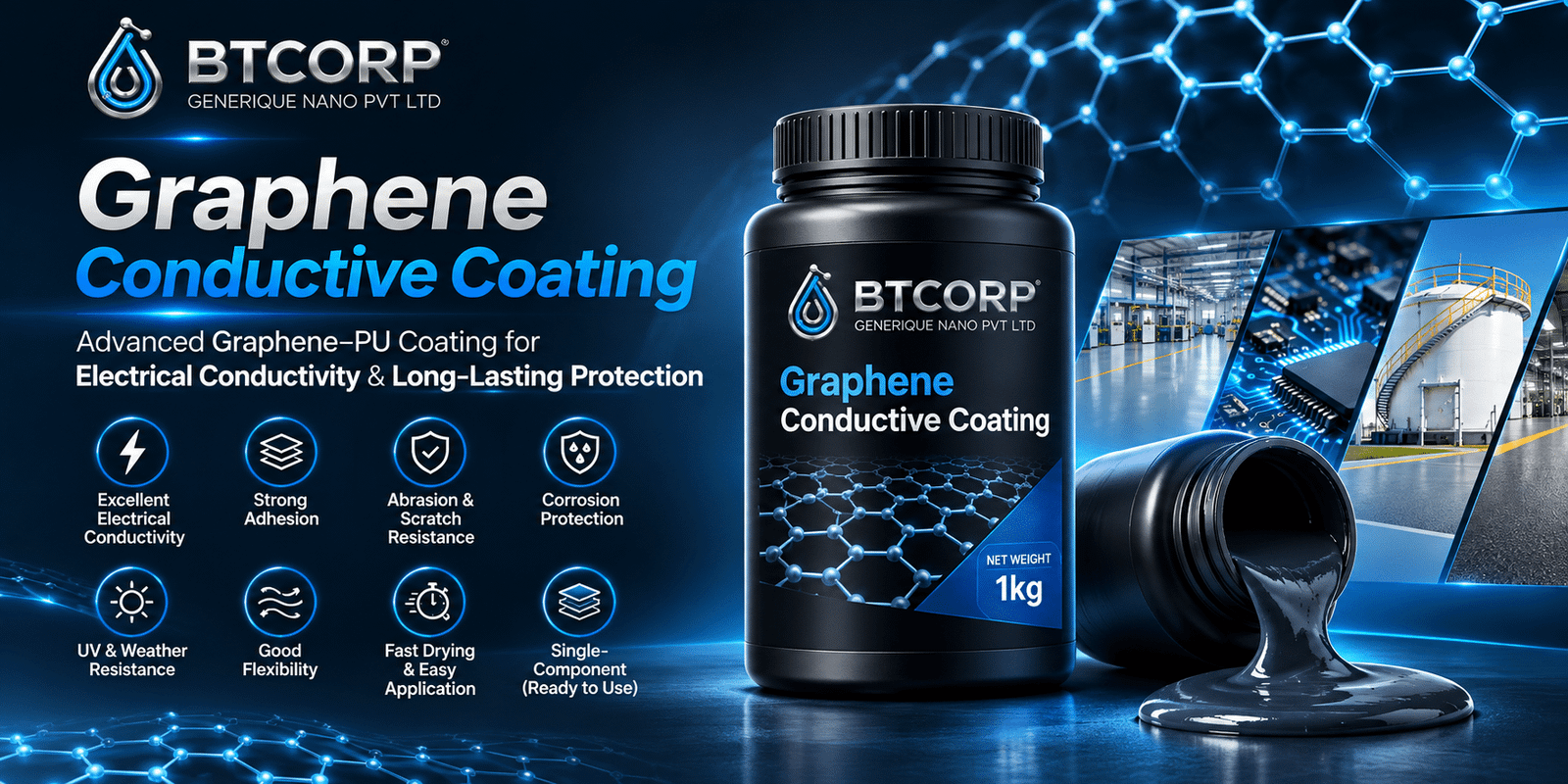
Featured formulation: ARMI® Graphene PU Conductive Coating • 5 wt.% graphene • single-component polyurethane • listed price ₹16,000/kg.
What Is Graphene Conductive Coating?
Graphene conductive coating is a functional surface treatment in which graphene-based particles are dispersed through a binder, such as polyurethane, to give the finished film electrical properties alongside conventional protection. Rather than acting only as a decorative or insulating paint, the coating is engineered to conduct or dissipate charge when the filler forms a connected network.
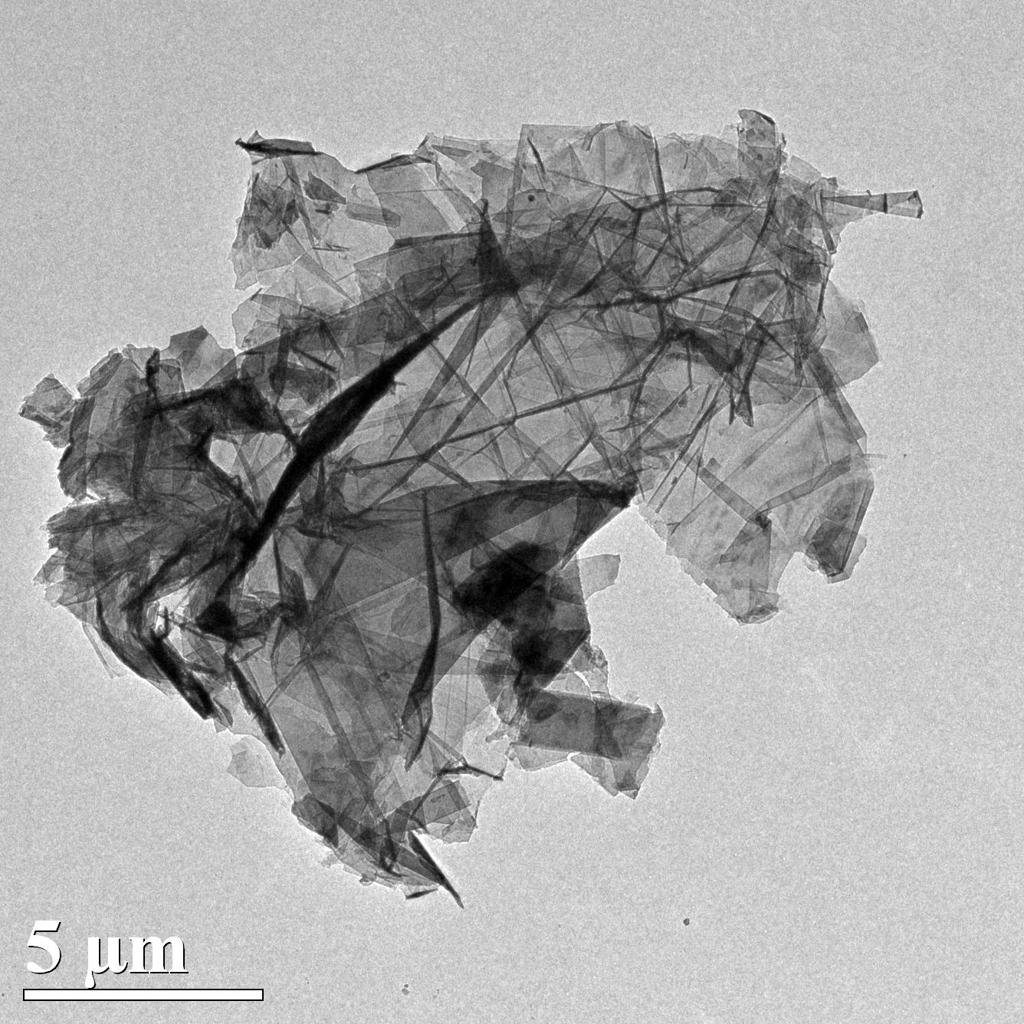
Graphene nanoplatelets are thin, plate-like carbon structures with a high aspect ratio. Their geometry allows individual platelets to approach, overlap and connect within the polymer. This is why graphene is being investigated for conductive films, antistatic surfaces, protective coatings and multifunctional industrial components.
A conductive coating is not the same as an electrical conductor made entirely of metal. Its resistance depends on the type and concentration of filler, the polymer binder, film thickness, humidity, dispersion and curing. Engineers should therefore evaluate the actual coated system rather than assuming every graphene-containing paint will behave identically.
ARMI® Graphene PU Conductive Coating is described as a single-component polyurethane formulation with 5 wt.% functional graphene nanomaterial. It is supplied ready to use and is intended for compatible industrial substrates where electrical conductivity, adhesion, abrasion resistance and environmental protection matter together.
Why Graphene Is Useful in Functional Coatings
Graphene has attracted attention because of its carbon lattice, high intrinsic electrical conductivity, large specific surface area and outstanding intrinsic mechanical characteristics. These qualities are compelling, but the properties of an isolated graphene sheet should not be confused with the measured performance of a commercial coating.
Electrical functionality. When sufficient graphene platelets are connected in a resin, they provide pathways through which electrical charge can move. This makes graphene attractive for antistatic and electrically conductive surfaces.
High aspect ratio. Platelets have a large lateral dimension compared with their thickness. In some formulations, that shape helps a connected network form without requiring the same filler volume as certain spherical fillers. The actual threshold is formulation-dependent.
Mechanical reinforcement. Good dispersion and bonding between the polymer and graphene may improve toughness, scratch resistance and wear behaviour. Poor dispersion, on the other hand, can create defects and weaken the film.
Barrier effects. Well-dispersed platelets can force water and oxygen to follow a longer, more tortuous path through the coating. This may contribute to corrosion protection, although edge defects, substrate preparation and coating continuity remain critical.
Thermal functionality. Graphene has high intrinsic thermal conductivity. Whether a finished coating transfers heat efficiently depends on filler orientation, contact between particles and the surrounding polymer.
How the Conductive Network Works
The key scientific concept is electrical percolation. At very low loading, conductive platelets may be isolated from one another by insulating polymer. As loading and connectivity increase, some particles touch or approach closely enough for charge transport to become possible. At the percolation threshold, a continuous conductive network emerges.
This transition is not determined by loading alone. Platelet size, functionalisation, agglomeration, mixing, resin viscosity, processing history and film formation all influence whether the network survives after drying and curing. Two coatings containing the same nominal percentage of graphene may therefore have very different electrical resistance.
In a polyurethane system, the binder provides film formation, adhesion and protective properties while the graphene network provides electrical pathways. These functions must be balanced: too little filler can produce insufficient conductivity, while excessive filler may make application difficult or reduce flexibility.
The coating can contribute to static charge management when its electrical characteristics are appropriate. However, conductivity is not the same as a complete ESD installation. An effective ESD system may also require grounding points, conductive layers, controlled resistance to ground and periodic testing.
Likewise, electromagnetic interference shielding is a system-level performance outcome. A conductive coating can interact with electromagnetic fields, but shielding effectiveness depends on frequency, thickness, specimen geometry, continuity and test conditions.
ARMI® Graphene PU Conductive Coating: Product Overview
ARMI® Graphene PU Conductive Coating is presented as a high-performance, single-component, graphene-reinforced polyurethane coating. The formulation contains 5 wt.% functional graphene nanomaterial and is supplied ready for use, without separate hardener addition during normal application.
The product is black with a satin-to-matte finish. Its published specification describes strong adhesion to compatible metals, composites, selected plastics and concrete, along with abrasion resistance, scratch resistance, flexibility, moisture-barrier performance and electrical conductivity.
A single-component product can simplify handling and reduce errors associated with hardener ratios. Nevertheless, users still need to follow the manufacturer’s mixing, storage, surface-preparation, dilution and curing instructions. Ready-to-use does not mean that the substrate can be left contaminated or that final performance is achieved immediately after touch drying.
The product is marketed for industrial and electronic applications, including selected ESD floors, equipment surfaces, metal structures, machinery and specialised infrastructure. Every critical use should be assessed against the relevant electrical, mechanical, chemical and environmental requirements.
Listed price: ₹16,000 per kg. Bulk orders and customised formulations are available. Prices and technical specifications should be reconfirmed with the manufacturer before procurement.
Electrical Performance: Understanding the Numbers
The published technical data lists a typical surface resistivity of 1 × 10⁴ Ω/sq and volume resistivity of 5 × 10² Ω·cm, with ASTM D257 identified as the test method. These quantities describe different aspects of electrical behaviour and should not be used interchangeably.
Surface resistivity is associated with electrical resistance along a surface, commonly reported in ohms per square. It helps engineers evaluate whether a coated surface can support a desired antistatic or conductive function. The acceptable range depends on the specific standard and application.
Volume resistivity describes the resistance through a material’s bulk and is typically expressed in Ω·cm. It can be particularly relevant when current must pass through the coating thickness. Test conditions, electrode geometry and specimen preparation matter greatly.
The product information also states an approximately 200 S/m calculated conductivity, an IEC 61340 pass for static charge dissipation, and 20–35 dB EMI shielding effectiveness depending on thickness. These are manufacturer-provided typical claims, not independent measurements established by this article.
Importantly, the listed 5 × 10² Ω·cm volume resistivity would correspond to about 0.2 S/m if treated as a homogeneous bulk resistivity and inverted directly. That does not match the separately stated 200 S/m figure. The manufacturer should clarify the measurement basis, specimen geometry or calculation before these figures are presented as mutually consistent.
For procurement or engineering approval, request the original reports with film thickness, conditioning, electrode arrangement, frequency range and measurement uncertainty. This is especially important for ESD-controlled facilities, EMI shielding systems and other safety- or reliability-sensitive installations.
Published electrical characteristics
Different quantities and units are shown separately; bar lengths are decorative and are not a common-scale comparison.
*Manufacturer-stated typical range, thickness-dependent. Not a comparative engineering graph.
Mechanical and Protective Benefits
Electrical conductivity is only one reason to consider a graphene-reinforced coating. Many industrial surfaces must also resist scratching, abrasion, corrosion, temperature changes and repeated handling. A well-formulated polyurethane binder helps create a continuous protective film, while graphene may add reinforcement and barrier functionality.
Scratch and abrasion resistance. Mechanical contact, movement and cleaning can gradually damage coatings. Graphene platelets may improve the film’s ability to resist local deformation and wear when they are properly dispersed. The product lists pencil hardness up to 3H, but actual performance should be confirmed on representative samples.
Adhesion. Strong adhesion is essential because electrical and barrier performance are compromised if a coating delaminates. The supplied information says ASTM D3359 5B adhesion is achievable. That rating should be understood as a reported potential under suitable preparation and test conditions, not a universal guarantee on every substrate.
Corrosion protection. The coating matrix can help isolate metal from moisture and oxygen. Graphene platelets may create a more tortuous diffusion path. Corrosion performance nevertheless depends on film integrity, substrate cleanliness, edge coverage, primer selection and exposure conditions.
Flexibility. Polyurethane chemistry can balance toughness and flexibility. This is useful for components exposed to modest movement, vibration or thermal cycling. Excessive filler, inadequate curing or poor surface preparation can still lead to cracking.
Weather and chemical exposure. The product is described as suitable for indoor and outdoor use, with UV and weather resistance. Such claims should be verified for the actual environment, particularly for aggressive chemicals, prolonged immersion or highly exposed external surfaces.
Graphene Coating Compared with Other Conductive Technologies
Conductive coatings can use carbon black, graphite, graphene, metallic particles or intrinsically conductive polymers. There is no universally best filler. Selection depends on target resistance, cost, weight, colour, corrosion behaviour, mechanical durability and manufacturing constraints.
Carbon black is a well-established conductive filler that can be cost-effective and readily available. Graphene platelets offer a different geometry and may create connected pathways efficiently in some formulations. However, dispersion and quality control can be more demanding.
Metal-filled coatings can provide high conductivity for specialised electronic and shielding applications. They may involve higher density, cost or oxidation concerns depending on the metal and system. Graphene-based systems offer a carbon-based alternative with potential reinforcement and barrier advantages.
Comparisons must be based on tested formulations at equivalent thickness, substrate and conditions. A coating with higher conductivity is not automatically better for every ESD application: certain installations need a controlled resistance range rather than the lowest possible resistance.
| Aspect | Graphene-based | Carbon black | Metal-filled |
|---|---|---|---|
| Filler geometry | Plate-like | Particulate / aggregated | Metal particles |
| Conductive network | Connected platelets | Connected carbon particles | Particle contacts |
| Mechanical effects | Potential reinforcement | Formulation-dependent | Formulation-dependent |
| Density | Typically low filler density | Typically low | Often higher |
| Cost | Grade-dependent | Often economical | Metal-dependent |
Application 1: ESD and Antistatic Industrial Flooring
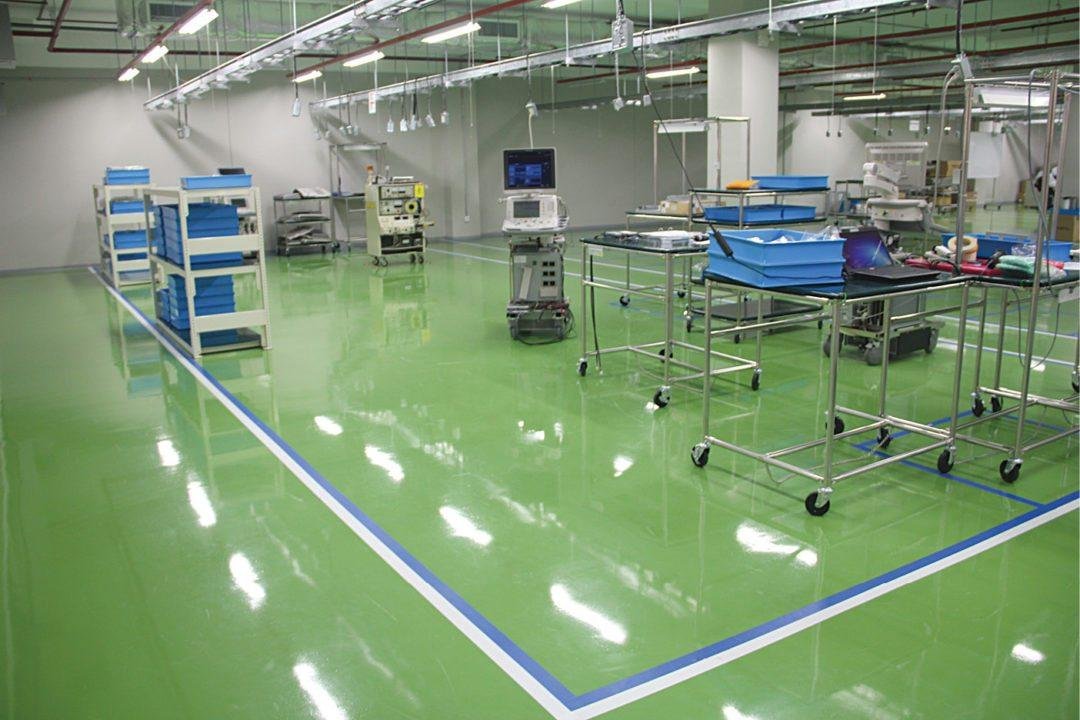
Electrostatic discharge can damage sensitive electronic components and interfere with production. Flooring is one part of an electrostatic control programme, alongside footwear, grounding, work surfaces, humidity management and regular testing.
A graphene conductive coating may serve as a functional layer in a designed ESD flooring system. It can be evaluated for electronics assembly areas, battery plants, laboratories and selected industrial production spaces where a controlled electrical pathway is needed.
The complete floor assembly must be considered. The coating’s surface resistivity alone does not establish resistance to ground or person-to-ground performance. Substrate moisture, conductive primers, grounding points, layer thickness and installation quality can all affect the final result.
Facility engineers should define the relevant IEC 61340 requirements and verify the installed floor using the specified methods. They should also consider wear, cleaning chemicals, wheel traffic and maintenance, because these factors can change electrical and mechanical performance over time.
Application 2: Electronics and Semiconductor Facilities
Electronics manufacturing involves sensitive devices, precise assemblies and environments where electrostatic control is important. Conductive coatings may be considered for suitable equipment housings, fixtures, enclosures and selected surfaces as part of a wider ESD programme.
A graphene-reinforced film can combine a protective polymer layer with controlled electrical characteristics. This may be attractive where ordinary insulating paint would allow charge to accumulate, provided the measured resistance meets the facility’s requirements.
Semiconductor environments introduce additional considerations. Outgassing, particle shedding, contamination, cleanability and chemical resistance can be just as important as conductivity. A general-purpose industrial coating should not be assumed suitable for a cleanroom without the relevant qualification.
Before adopting the coating, engineers should assess sample panels, substrate compatibility, cleaning processes and the electrical behaviour of the complete assembled component. Documented test results are more valuable than a generic claim of being ‘antistatic’.
Application 3: Battery Manufacturing and Automotive Components
Battery production involves specialised electrical, chemical and process-safety conditions. Selected conductive surfaces and equipment enclosures may benefit from a protective coating with controlled charge dissipation. However, flammability, chemical exposure, grounding and operational safety must be assessed independently.
Potential battery-facility uses include suitable machinery housings, metal structures and selected production-area surfaces. The coating should not be assumed appropriate for direct battery-cell contact, internal electrochemical components or hazardous areas without dedicated qualification.
In automotive manufacturing, protective coatings are used on metal and composite parts, equipment, housings and assemblies. Graphene conductive coatings may be investigated where a combination of surface durability and electrical function is desirable.
Automotive validation may include adhesion, abrasion, thermal cycling, salt spray, chemical resistance and electrical stability after environmental ageing. For plastics, surface energy and primer compatibility often determine whether the coating bonds successfully.
Application 4: Metal Structures, Tanks and Pipelines
Industrial metal structures are vulnerable to atmospheric moisture, contaminants and mechanical damage. Protective coatings are intended to slow corrosion and preserve surface integrity. Graphene reinforcement can potentially improve barrier performance while adding electrical functionality.
Carbon steel, stainless steel, aluminium and galvanized steel each present different preparation challenges. Steel may need rust removal and an appropriate surface profile. Aluminium and galvanized surfaces may require carefully selected pretreatment or compatible primers. Stainless steel may need cleaning and preparation to support adhesion.
Storage tanks and pipelines can experience chemical exposure, thermal variation and demanding service conditions. A conductive coating should only be selected after reviewing the service environment and the product’s chemical resistance data.
External atmospheric protection is different from internal tank lining or continuous immersion. Do not infer that a coating suitable for an exterior steel panel is automatically suitable for fuel storage, potable water contact, buried pipelines or aggressive immersion conditions. Those uses need dedicated approval and testing.
Application 5: Aerospace, Defence and Smart Infrastructure
Aerospace and defence equipment often requires coatings with strict controls for weight, adhesion, environmental stability and functional performance. Graphene-based materials are of interest because they can add multiple properties to a polymer film without necessarily relying on heavy metallic fillers.
Potential research and development applications include conductive composite surfaces, electronic enclosures and specialised protective components. However, aerospace and defence uses demand rigorous qualification, traceability and conformity to project-specific standards. A commercial coating description alone is not evidence of certification.
Smart infrastructure is another emerging area. Conductive surfaces may support specialised monitoring systems, functional construction components or static control. Graphene-based coatings are distinct from graphene-modified concrete: the former create a surface film, while the latter modify the cementitious bulk material.
For concrete and cement board, substrate porosity, residual moisture, surface strength and grounding design should be evaluated. Pilot installations and long-term monitoring are particularly useful when introducing a new coating technology into infrastructure.
Application 6: EMI Shielding and Functional Enclosures
Electromagnetic interference shielding aims to reduce unwanted electromagnetic energy passing into or out of a protected space. Conductive materials can contribute through reflection, absorption and associated electromagnetic loss mechanisms.
Graphene-filled polymer coatings are being investigated for shielding electronic enclosures and specialised components. Their effectiveness depends on conductivity, film continuity, thickness, frequency, substrate, enclosure seams and grounding design.
The product information quotes 20–35 dB shielding effectiveness depending on coating thickness and references ASTM D4935. A decibel value is meaningful only when its test frequency, sample geometry and measurement conditions are known. A range measured on a laboratory specimen does not automatically predict shielding of an assembled enclosure.
For EMI applications, request the complete test report and evaluate the final device configuration. Fasteners, joints, openings and interfaces can dominate real-world shielding performance even when the coating itself performs well.
Technical Properties and Drying Schedule
The supplied ARMI® product information provides typical formulation, application and curing values. These figures are useful for preliminary planning but should be checked against the latest manufacturer-issued Technical Data Sheet before work begins.
The formulation is described as a single-component polyurethane with 5 wt.% graphene loading, black appearance, satin-to-matte finish, 55–65% solids and density of 1.10–1.25 g/cm³. Recommended dry film thickness is 40–100 µm per coat.
The stated touch-dry time is 20–40 minutes, recoat time 2–4 hours and full cure 5–7 days. Actual drying is influenced by ambient temperature, relative humidity, airflow, substrate temperature and applied thickness. Touch dry is not the same as full mechanical or chemical readiness.
The listed operating temperature range is -30°C to 120°C and shelf life is 12 months. These should be interpreted according to the manufacturer’s conditions and verified for unusual exposure, cyclic service or prolonged high-temperature operation.
| Property | Typical value |
|---|---|
| Resin | Single-component polyurethane |
| Graphene loading | 5 wt.% |
| Appearance / finish | Black / satin to matte |
| Solids content | 55–65% |
| Density | 1.10–1.25 g/cm³ |
| Dry film thickness | 40–100 µm per coat |
| Touch dry | 20–40 minutes |
| Recoat time | 2–4 hours |
| Full cure | 5–7 days |
| Adhesion | ASTM D3359, 5B achievable |
| Pencil hardness | Up to 3H |
| Operating temperature | -30°C to 120°C |
| Shelf life | 12 months |
Surface Preparation: The Foundation of Reliable Performance
Even a sophisticated nanomaterial coating cannot compensate for an unstable or contaminated substrate. Surface preparation is one of the most important determinants of adhesion, film integrity and service life.
Inspect first. Identify the substrate, existing coatings, corrosion, cracks, porosity and contamination. Confirm whether the material is compatible with the coating and whether a primer is recommended.
Remove contaminants. Oil, grease, dust, salts and loose particles can interfere with adhesion. Use cleaning methods appropriate to the substrate and facility conditions. Do not apply the coating over rust or unstable existing paint unless the system is specifically approved for that purpose.
Control moisture. Concrete and cementitious materials may retain moisture that affects coating performance. Metal surfaces can also develop condensation. Check substrate conditions before application.
Prepare the profile. Some metals require mechanical or abrasive preparation to achieve the correct surface condition. Plastics may need surface activation or a primer. Do not damage thin composite or plastic substrates during preparation.
Trial the system. For critical work, coat representative panels and evaluate adhesion, appearance, film thickness and electrical performance before full-scale installation.
Application Methods: Spray, Brush, Roller and Dip
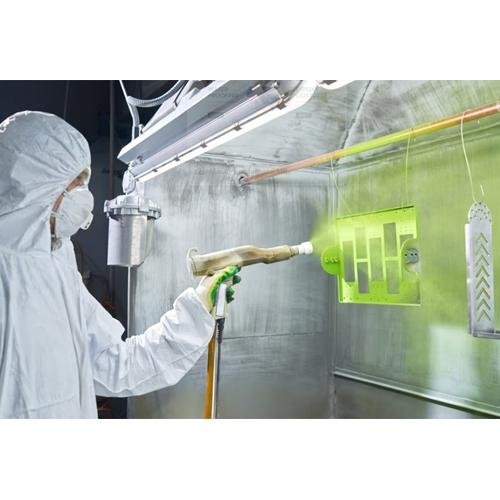
The product information lists air spray, airless spray, HVLP spray, brush, roller and dip coating as possible methods. The best choice depends on component geometry, production volume, desired finish and required dry film thickness.
Air spray can provide controlled coverage on complex shapes but requires appropriate atomisation settings and overspray management. Airless spray is often useful for larger industrial areas, although pressure and tip selection must suit the coating.
HVLP spray can be helpful when a controlled finish and transfer efficiency are important. Brush application suits edges, small areas and touch-ups, but care is needed to avoid non-uniform film build. Roller application can be practical for flat surfaces and selected flooring systems, provided the roller and technique are appropriate.
Dip coating may suit certain components where complete coverage is required. Withdrawal rate, drainage and geometry can affect uniformity.
For every method, measure the final dry film thickness and verify electrical performance. A coating that looks visually uniform may still have inconsistent resistance if the conductive network or film thickness varies.
Thinning, Handling and Curing Guidelines
ARMI® Graphene PU Conductive Coating is described as water-based and ready to use. The supplied instructions permit up to 5% clean potable or deionized water for viscosity adjustment when necessary. The maximum dilution should not be exceeded without written technical approval.
Over-thinning can change solids content, film thickness, drying behaviour and graphene network formation. It may also affect adhesion and electrical resistance. Any dilution should therefore be followed by a trial application and verification of the finished film.
Use suitable mixing procedures to maintain uniform particle distribution while limiting foam and air entrapment. Avoid introducing contaminants into the container. Follow the product’s storage recommendations and use material within its specified shelf life.
Allow the required recoat interval and full curing time before subjecting the surface to demanding service or conducting final acceptance tests. Where electrical performance is critical, establish a repeatable testing schedule after curing.
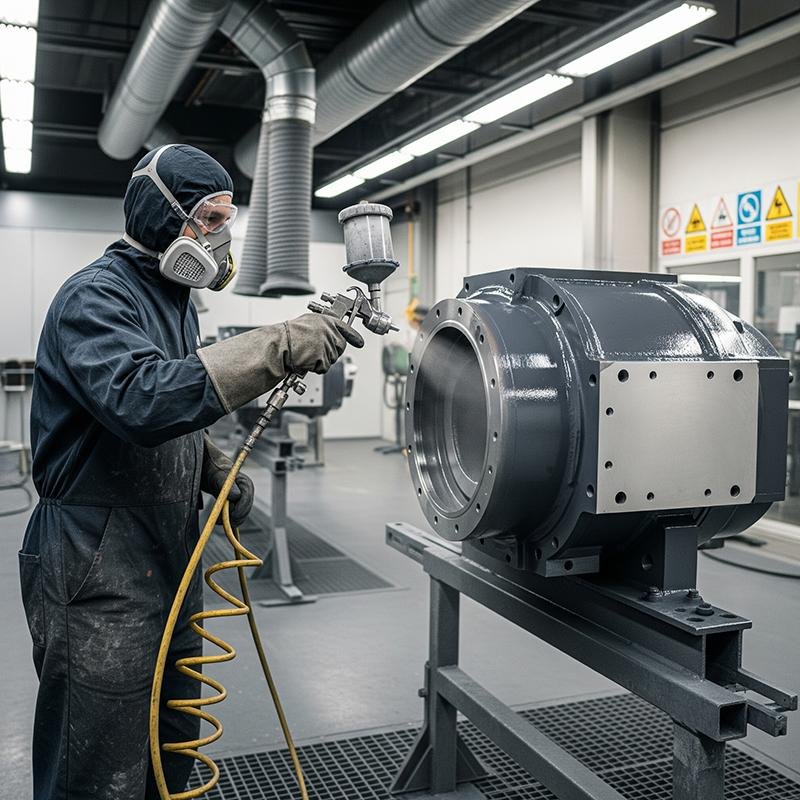
Use the Safety Data Sheet to select personal protective equipment and ventilation. Suitable gloves, protective clothing and eye protection are recommended. Spray applications may require additional respiratory and environmental controls.
How to Choose the Right Graphene Conductive Coating
Start with the performance requirement rather than the material name. Does the project require static dissipation, a defined resistance to ground, low surface resistivity, EMI shielding, corrosion protection or a combination of these functions?
Next, identify the substrate and operating conditions. A coating for an indoor electronic enclosure faces different stresses from a coating on an outdoor pipeline or a forklift-trafficked floor. Specify temperature, humidity, chemicals, abrasion, UV exposure and cleaning procedures.
Compare the available technical data with the relevant standards. Look for complete test reports rather than a single headline number. Confirm how the specimen was prepared, what thickness was measured and whether results reflect realistic service conditions.
Evaluate the application process, including surface preparation, primer compatibility, dilution, equipment, drying and full cure. Calculate the total installed cost rather than comparing only the price per kilogram. Coverage depends on solids content, density, film thickness, substrate texture and application losses.
Finally, conduct a sample trial. Measure adhesion, dry film thickness, surface resistance and any other critical properties after full cure. Where possible, repeat measurements after cleaning, wear or environmental exposure. A short pilot can prevent expensive large-scale failures.
Common Mistakes to Avoid
Assuming all graphene coatings are conductive. Some products contain graphene primarily for barrier or mechanical properties. Conductivity requires an effective network and appropriate measurement.
Confusing resistivity units. Surface resistivity, volume resistivity, resistance to ground and conductivity are different quantities. They should be reported with units and methods.
Ignoring film thickness. A thin or inconsistent film may not achieve the expected electrical or protective properties. Check the manufacturer’s recommended thickness and measure the installed coating.
Skipping grounding design. A conductive film alone is not a complete ESD system. Grounding, system resistance and periodic verification may be necessary.
Over-diluting the coating. Excess water can change the finished film and disrupt expected performance. Respect the specified maximum dilution.
Using an unqualified coating in a critical environment. Aerospace, semiconductor cleanrooms, hazardous areas and immersion service require application-specific validation. Do not extrapolate from generic product claims.
Treating typical values as guarantees. Ask for test reports, specification tolerances and project-specific acceptance criteria.
Commercial Considerations and Product Availability
The published price for ARMI® Graphene PU Conductive Coating is ₹16,000 per kilogram. This is a listed product price and may change. Bulk orders and customised formulations are available according to the product information.
When preparing a purchase enquiry, share the substrate, total area, target dry film thickness, application method, required electrical resistance, expected environment and desired order quantity. This helps the supplier assess whether the standard product or a modified formulation is appropriate.
Ask for the current TDS, SDS, packing information, storage conditions, application recommendations and available test reports. If the coating is part of a regulated or safety-critical system, discuss the relevant qualification requirements before ordering.
For project budgeting, remember that material price is only one component. Surface preparation, primer, application equipment, labour, wastage, quality control and maintenance all contribute to installed cost. A lower initial material price does not necessarily result in the lowest lifecycle cost.
Product information and enquiries: https://arminano.com/product/graphene-conductive-coating/
The Future of Graphene-Based Industrial Coatings
Graphene-based coatings sit at the intersection of nanomaterials, polymer science and industrial surface engineering. Researchers and manufacturers continue to explore ways to improve particle dispersion, network connectivity, mechanical reinforcement and process reliability.
One important direction is more predictable conductivity at practical filler loading. Another is combining electrical properties with corrosion protection, abrasion resistance or thermal functionality without making the coating difficult to apply.
Emerging applications may include flexible conductive surfaces, specialised electronic housings, functional composite structures, smart infrastructure and improved static-control systems. Their commercial success will depend on repeatable manufacturing, verified test performance and practical installation methods.
For industrial buyers, the most useful question is not simply whether graphene is an advanced material. It is whether a particular coating delivers measurable advantages under the exact conditions in which it will be used. Transparent specifications, consistent quality and real-world validation will determine long-term adoption.
Quality Control and Acceptance Testing After Application
A successful conductive coating project needs a practical inspection and acceptance plan. A surface can appear smooth and attractive while still failing the electrical or protective requirement. Testing should therefore begin with a clear written specification and continue through application, curing and final handover.
Before coating, record the substrate type, condition, preparation method, ambient temperature, humidity and any primer used. Identify reference areas or sample panels. Confirm that the material has been stored correctly and that its batch and shelf life are documented. If the formulation is diluted, record the exact amount of water added.
During application, monitor wet film thickness where appropriate and check for runs, pinholes, missed edges, bubbles and visible contamination. Use calibrated tools where practical. When the coating is dry, measure dry film thickness at multiple representative points rather than relying on a single reading. Different geometries, corners and textured surfaces may produce variable film build.
After curing, verify adhesion and electrical resistance using the agreed method. For ESD flooring, measure the installed system rather than only a loose laboratory coupon. Record test locations, environmental conditions, instruments and results. When the intended function is EMI shielding, assess the actual specimen or enclosure configuration at the required frequencies.
For long-term reliability, consider repeat testing after cleaning, mechanical wear, humidity exposure or thermal cycling. Electrical performance may change when the surface becomes contaminated or the film is damaged. Define a maintenance and inspection schedule appropriate to the facility’s risk level.
Acceptance criteria should be agreed before application, including what happens if a result falls outside tolerance. Rework procedures may involve cleaning, additional coating, removal and reapplication or investigation of the grounding system. No single test can establish every aspect of coating performance. A balanced programme combines visual inspection, film thickness, adhesion, electrical measurements and relevant environmental tests.
Understanding Coverage, Cost and Project Planning
The price per kilogram is an important procurement figure, but it does not directly tell a project team how much coating is needed. Coverage depends on density, solids content, target dry film thickness, substrate porosity, application method and unavoidable material losses.
As a general principle, a thinner specified dry film uses less coating than a thicker one, all else being equal. However, choosing an artificially low film thickness can compromise barrier protection, appearance and electrical performance. Always use the manufacturer’s recommended thickness and verify it with a trial.
A useful project estimate begins with the actual coated surface area, including edges, equipment geometry and hard-to-reach regions. Next, establish the number of coats, target thickness and expected application efficiency. Rough concrete may absorb or retain more material than a smooth, sealed metal panel. Spray overspray can also increase consumption.
Include costs for substrate cleaning, surface preparation, primer, labour, equipment, safety controls, inspection and possible downtime. A single-component coating may reduce certain mixing tasks, but it does not eliminate preparation or quality assurance. For critical installations, allow time for curing and post-cure acceptance testing before equipment returns to service.
When requesting a quotation for a bulk project, share the project area, substrate, environment, electrical target and planned application method. Ask whether the supplier can provide sample material for validation and whether customised formulations affect lead time, minimum order quantity or performance documentation.
Lifecycle cost matters too. A coating that maintains its electrical and protective performance with appropriate cleaning and maintenance may reduce disruptions, but this benefit should be evaluated through service records and testing rather than assumed from the presence of graphene alone.
Conclusion: A Multifunctional Approach to Conductive Protection
Graphene conductive coating offers a promising way to combine electrical functionality with the protective characteristics of polymer coatings. By incorporating graphene nanoplatelets into a suitable binder, formulators can create interconnected pathways for charge transport while seeking improvements in adhesion, toughness, barrier protection and service life.
ARMI® Graphene PU Conductive Coating is described as a ready-to-use, single-component polyurethane product with 5 wt.% graphene. Its published data provides a useful starting point for evaluating selected ESD, industrial equipment, metal protection and functional surface applications.
Successful adoption requires more than choosing a product by name. Engineers should confirm the target resistance range, substrate compatibility, film thickness, curing conditions and actual test results. The complete system matters, particularly for ESD and EMI shielding applications.
For a technical discussion, current specifications or bulk and customised formulation enquiries, consult the manufacturer through the official product page. Listed price: ₹16,000/kg.
Frequently Asked Questions About Graphene Conductive Coating
What is graphene conductive coating?
It is a polymer-based coating containing graphene particles engineered to form conductive pathways while also providing a protective surface film.
How does graphene make a coating conductive?
When graphene platelets connect sufficiently inside the binder, they create a percolation network through which electrical charge can move.
What is graphene PU conductive coating?
It is a graphene-filled polyurethane coating that combines a protective PU binder with electrical functionality from the graphene network.
How much graphene does ARMI® coating contain?
The manufacturer states 5 wt.% functional graphene nanomaterial.
What is its surface resistivity?
The published typical value is 1 × 10⁴ Ω/sq, with ASTM D257 referenced. Confirm the latest test report and conditions.
What is its volume resistivity?
The stated typical value is 5 × 10² Ω·cm. It describes resistance through the material, not simply across the surface.
Can it be used for ESD flooring?
It may be evaluated as part of a designed ESD floor system, but grounding and installed-system resistance must be verified.
Does the coating provide EMI shielding?
The product lists 20–35 dB depending on thickness; the applicable frequency range and test configuration should be checked.
Can it be applied on metal?
The product lists carbon steel, stainless steel, aluminium and galvanized steel among recommended substrates, subject to proper preparation.
Can it be applied to concrete?
Concrete and cement boards are listed as possible substrates. Moisture, porosity, adhesion and electrical-system design must be evaluated.
Will it adhere to plastic?
Selected engineering plastics may require surface treatment or a compatible primer. Trial adhesion testing is recommended.
Is the coating waterproof?
It is designed to provide moisture-barrier properties, but waterproofing or continuous immersion suitability requires specific testing.
Does graphene prevent corrosion?
Graphene can contribute to a tortuous diffusion barrier; actual corrosion resistance depends on the entire coating system and exposure.
Can it be used outdoors?
The product is described as suitable for indoor and outdoor environments, subject to UV, weathering and application-specific validation.
What is the recommended dry film thickness?
The stated range is 40–100 µm per coat. Confirm the appropriate target for the required electrical and protective performance.
How quickly does it dry?
Typical touch dry is 20–40 minutes, recoat time 2–4 hours and full cure 5–7 days, depending on conditions.
Does it need a separate hardener?
No separate hardener is specified for normal application; the product is described as single-component and ready to use.
Can it be diluted with water?
The supplied instructions allow up to 5% clean potable or deionized water when needed for viscosity adjustment.
What application methods are available?
Air spray, airless spray, HVLP spray, brush, roller and dip coating are listed.
What is the listed price?
The published price is ₹16,000/kg, with bulk and customised formulation options available.
What is the shelf life?
The product lists a typical shelf life of 12 months when stored under the manufacturer’s recommended conditions.
What is the operating temperature range?
The published typical range is -30°C to 120°C; verify suitability for continuous or cyclic exposure.
Is it suitable for semiconductor cleanrooms?
Do not assume cleanroom compatibility without testing for contamination, outgassing, cleaning chemicals and other facility requirements.
How do I select the right coating?
Define electrical targets, substrate, environment, film thickness and standards; then review test reports and perform a trial application.
Where can I buy ARMI® graphene coating?
Consult the official ARMI® product page for availability, pricing and technical enquiries.
Explore Graphene PU Conductive Coating
Review the manufacturer’s product details, request the latest technical documentation and discuss bulk orders or customised formulations.
Listed price: ₹16,000/kg
View Product DetailsTechnical note: Product properties and test values are reproduced from information supplied for ARMI® Graphene PU Conductive Coating. They are typical claims, not independent verification. The separately stated conductivity and volume resistivity figures require clarification from the manufacturer. Always consult the latest TDS, SDS and application-specific test reports before critical use.