

ARMI® EPOXY-GRAPHENE
Engineering the Next Generation of Epoxy Systems
A technical magazine feature exploring graphene dispersion technology, epoxy compatibility, performance opportunities and industrial applications — from material science to formulation practice.
Graphene has extraordinary intrinsic properties. Turning those properties into reliable industrial performance requires more than adding a nanomaterial to a resin: it requires controlled dispersion, compatible chemistry, careful processing and application-specific validation.
ARMI® EPOXY-GRAPHENE is presented as a ready-to-use graphene dispersion designed to simplify graphene incorporation into conventional epoxy resin formulations.
The Evolution of Epoxy Materials: Why Formulators Are Looking Beyond Conventional Systems
Epoxy resins have earned a central place in industrial manufacturing because they combine useful adhesion, chemical resistance, mechanical properties and formulation flexibility. Yet modern applications increasingly ask one material to do more: protect, reinforce, conduct, manage heat and remain processable.
Industrial coatings are expected to protect metal structures in demanding environments. Adhesives may need to retain bond integrity under repeated loading. Composite developers may seek improvements in stiffness, fracture behaviour or functional performance. In electronics and specialised manufacturing, an otherwise insulating polymer may need to deliver controlled electrical or thermal characteristics.
These demands do not make conventional epoxy obsolete. Instead, they encourage manufacturers to explore ways of extending an established polymer platform. Functional fillers, fibres and nanomaterials are among the approaches used in materials research. Graphene is especially interesting because its two-dimensional carbon structure combines several intrinsic properties that can be relevant to polymer composites.
The central engineering question is not simply whether graphene has impressive properties in isolation. It is whether graphene can be incorporated into a real epoxy formulation in a controlled, stable and repeatable way. A material that is difficult to disperse or incompatible with the receiving resin can create more problems than it solves. That is why dispersion engineering is a defining part of graphene-enabled material development.
Graphene: A Two-Dimensional Carbon Structure with Multifunctional Potential
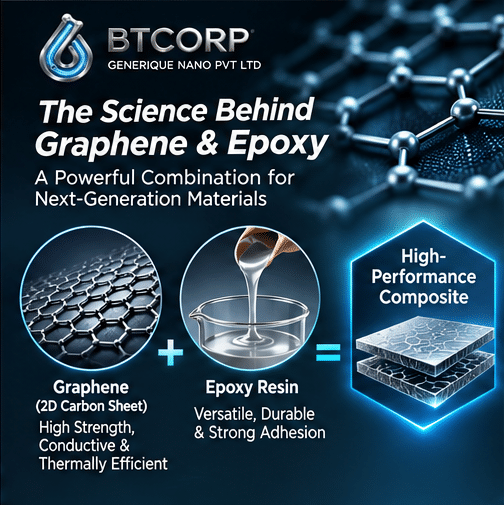
Graphene is a carbon material in which atoms are arranged in a two-dimensional hexagonal lattice. Each carbon atom is bonded to neighbouring atoms, forming a repeating honeycomb-like network. This atomic arrangement is associated with graphene’s notable intrinsic mechanical, electrical and thermal characteristics.
Its sheet-like geometry also gives it a high surface area relative to its mass. In a polymer composite, that geometry can create a substantial interface between the graphene and the surrounding resin. The effectiveness of this interface depends on the graphene grade, surface chemistry, sheet dimensions, dispersion quality and the chemistry of the polymer matrix.
Mechanical characteristics
High-quality graphene has exceptional intrinsic stiffness and strength. In a composite, the practical question is whether stress can be transferred effectively between the polymer matrix and the graphene sheets. Appropriate dispersion and interfacial interaction can help graphene contribute to reinforcement mechanisms. Poorly distributed clusters, by contrast, may behave as defects or local stress concentrators.
Electrical characteristics
Graphene is electrically conductive. When conductive sheets form a sufficiently connected network within an insulating polymer, the composite’s electrical behaviour can change. The concentration at which a connected pathway begins to develop is commonly discussed as the percolation threshold. It is not a universal fixed value: graphene morphology, aspect ratio, orientation, dispersion and matrix chemistry all influence it.
Thermal characteristics
Graphene is also studied for its high in-plane thermal conductivity. In an epoxy composite, the actual heat-transfer behaviour depends on sheet connectivity, orientation and thermal resistance at interfaces. The intrinsic property of graphene should therefore not be confused with the measured thermal conductivity of a finished coating or composite.
Barrier characteristics
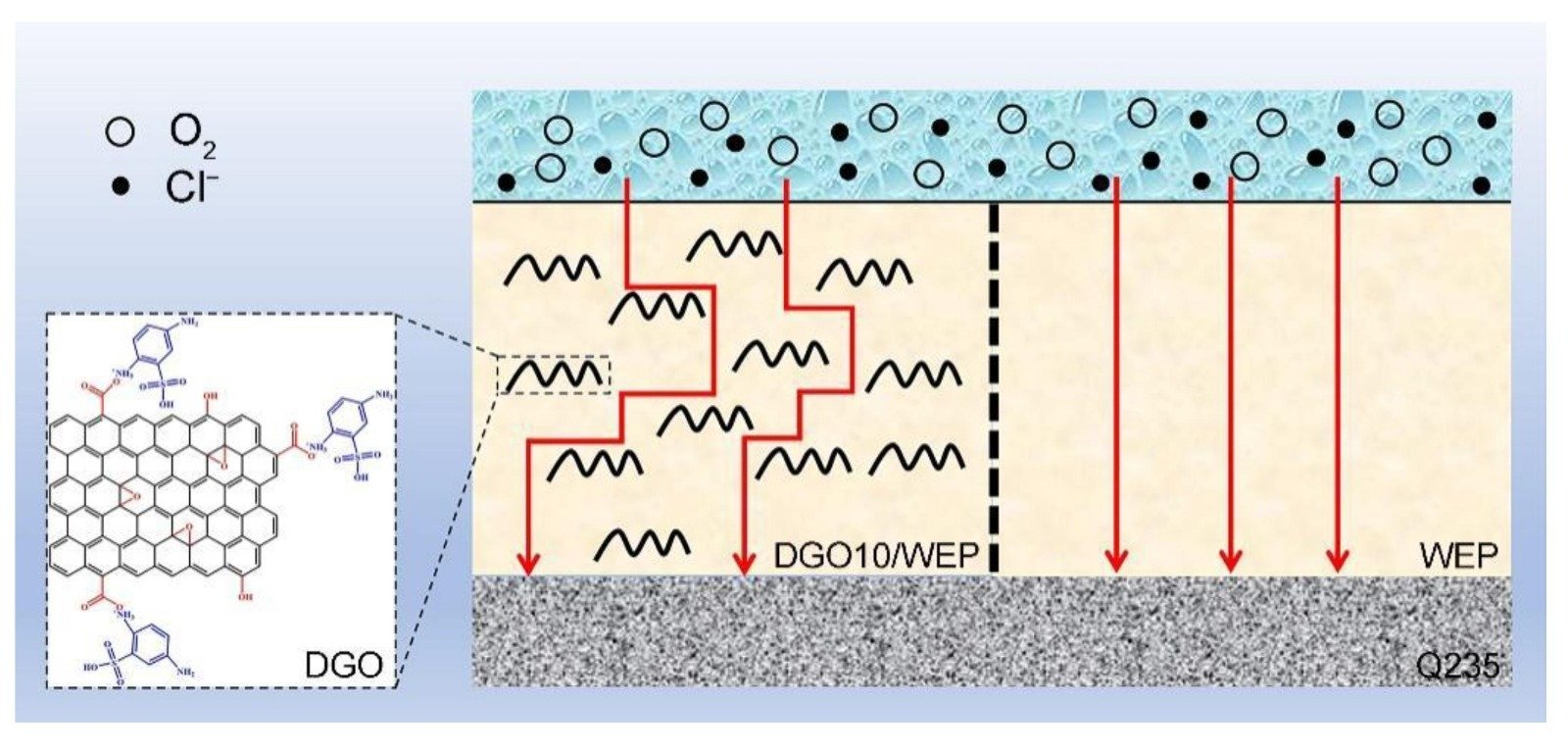
Well-distributed, appropriately oriented graphene sheets may create a more tortuous route for permeating molecules moving through a polymer film. This concept is relevant to barrier-coating research. The outcome depends on film continuity, dispersion, sheet geometry, loading and the presence of defects. A barrier benefit must be confirmed on the final coating, not inferred from graphene’s structure alone.
Understanding Epoxy Resin Systems
Epoxy is a family of thermosetting polymer systems. In a typical two-component system, an epoxy resin reacts with a curing agent to form a crosslinked network. The chemistry and processing conditions determine the properties of the cured material.
Epoxy systems are used in protective coatings, industrial flooring, adhesives, electrical encapsulation and composite manufacturing. Their value comes from a combination of adhesion, chemical resistance, mechanical performance and the ability to tailor formulations for particular uses. These characteristics depend on the resin type, hardener chemistry, stoichiometric ratio, fillers, additives, substrate preparation and cure schedule.
Adhesion
Epoxy can bond to many properly prepared substrates. Surface preparation and formulation remain critical to reliable adhesion.
Crosslinking
Curing creates a three-dimensional network that defines the final thermoset properties.
Formulation flexibility
Resins, curing agents, pigments, fillers and functional additives can be selected for different performance targets.
One-component and two-component systems
A one-component (1K) epoxy product is supplied as a single formulated package and cures under its specified activation conditions. A two-component (2K) system typically separates resin and hardener until use; the components are mixed at the specified ratio and the curing reaction begins. Pot life, mixing sequence and cure conditions are therefore important considerations in 2K applications.
The supplied ARMI® product artwork identifies both 1K and 2K epoxy systems as compatibility categories. This is a product-positioning statement, not a substitute for checking the precise resin grade, addition sequence and processing instructions in the current technical datasheet.
Why Combine Graphene with Epoxy?
Epoxy provides the continuous polymer matrix; graphene provides a functional nanoscale phase. The aim is to distribute graphene so that it interacts with the matrix and can contribute to selected composite properties. Depending on formulation and testing, researchers may investigate mechanical reinforcement, electrical pathways, thermal transport and barrier behaviour.
The interface is where the engineering happens
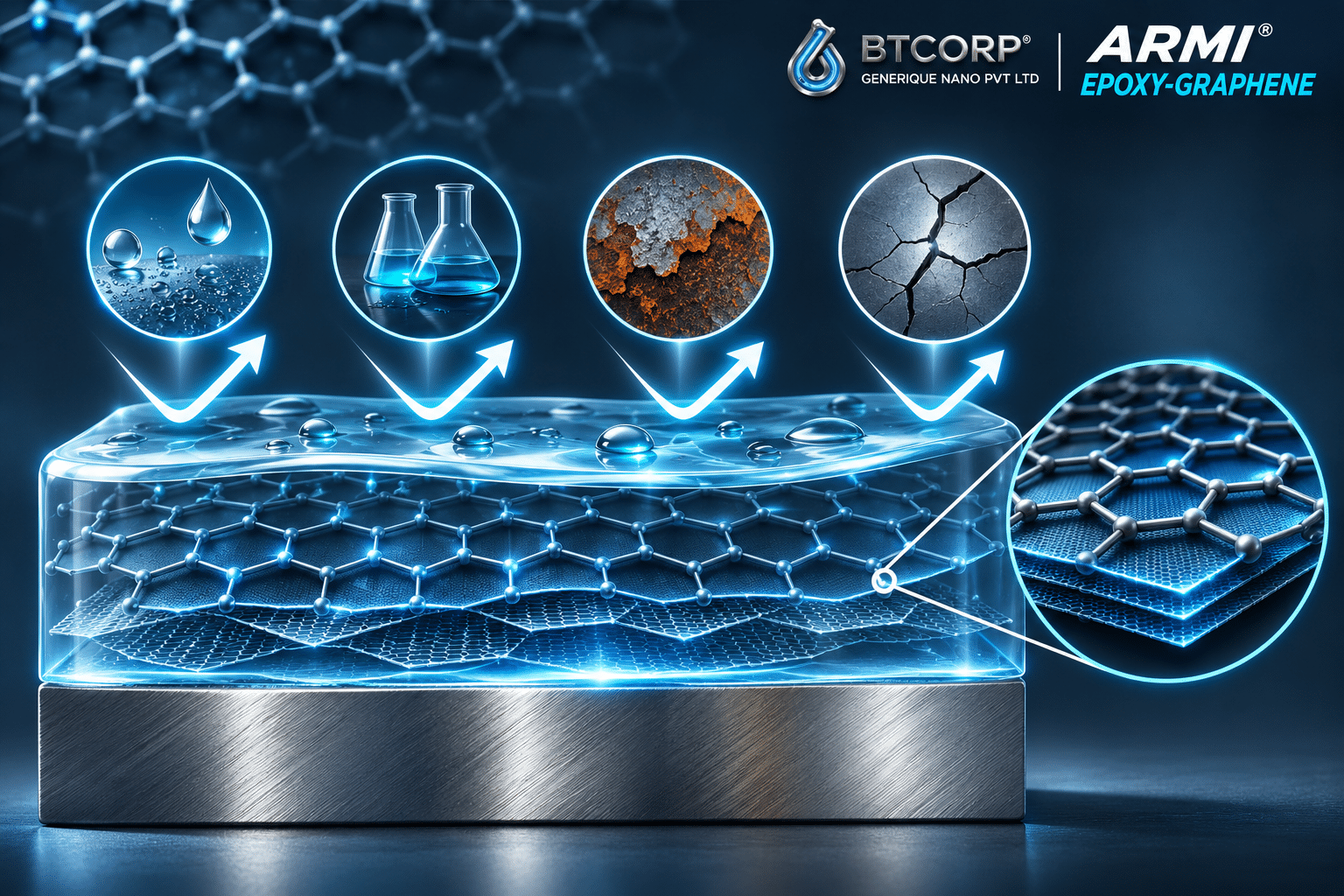
The region where graphene meets epoxy is called the interface. If the interface is suitable, it can help transfer stress and integrate the sheets into the polymer structure. If the sheets are poorly wetted or strongly aggregated, the theoretical advantages of graphene may not be realised. This is why material selection, surface chemistry and dispersion are inseparable from composite design.
What Is Graphene Masterbatch Technology?
A masterbatch is a concentrated preparation of a functional ingredient in a carrier or dispersion medium. In polymer and coating industries, this approach can make it easier to dose and incorporate specialised ingredients than handling the raw material in isolation. A graphene masterbatch applies the same broad principle to graphene.
Direct addition of graphene powder can be challenging because sheets may aggregate and require carefully controlled processing. Depending on the graphene grade and receiving formulation, manufacturers may need to develop a suitable wetting, mixing and dispersion procedure. A prepared dispersion can provide a more convenient starting point for formulation trials.
A ready-to-use dispersion does not mean universal compatibility or that no mixing is required. The term describes the prepared supply format. The user must still follow the supplier’s recommendations for storage, addition, mixing and validation.
Introducing ARMI® EPOXY-GRAPHENE
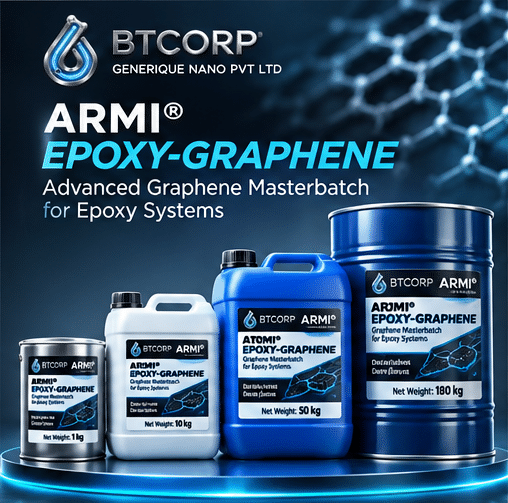
ARMI® EPOXY-GRAPHENE is presented by BTCORP Generique Nano Pvt. Ltd. as an advanced graphene masterbatch for epoxy systems. The supplied product graphics describe it as a ready-to-use graphene dispersion engineered to simplify graphene integration into conventional epoxy resin formulations.
Product features highlighted in the supplied artwork
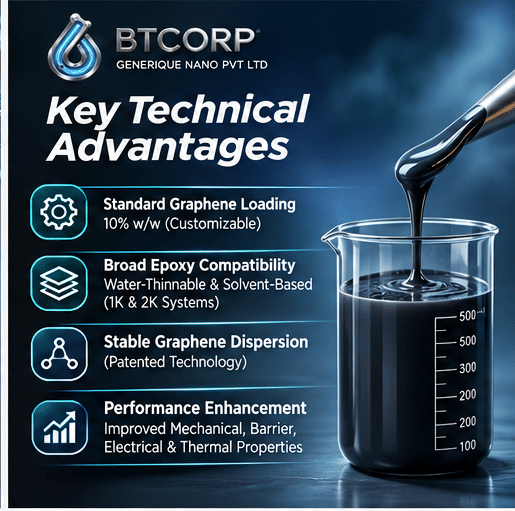
- Standard graphene loading of 10% w/w, with customized concentrations indicated as available.
- Compatibility positioning for water-thinnable and solvent-based epoxy systems.
- 1K and 2K epoxy system categories.
- Stable graphene dispersion using proprietary patented dispersion technology.
- Potential performance enhancement areas covering mechanical, barrier, electrical and thermal properties.
These are the product statements visible in the supplied materials. Detailed specifications such as viscosity, recommended dosage, shelf life, carrier composition and test results should be taken from the current product documentation.
The commercial proposition is that a prepared dispersion may simplify the first stage of graphene incorporation for manufacturers who want to investigate graphene-enhanced epoxy formulations. It does not remove the need for laboratory compatibility trials or application qualification.
What Does 10% w/w Graphene Loading Mean?
The abbreviation w/w means weight by weight. A 10% w/w loading means that graphene accounts for 10% of the total masterbatch mass, according to the stated product specification. It does not mean that the final epoxy formulation automatically contains 10% graphene.
A simple mass-balance example
In 1,000 g of a 10% w/w masterbatch, the nominal graphene content is 100 g. The remaining 900 g comprises the dispersion medium and other formulation components, whose exact identity should be confirmed from the product documentation.
Illustrative final-concentration calculation
If 1 kg of a 10% w/w masterbatch is added to 99 kg of another formulation component, the final blend mass is 100 kg and the graphene contribution is 0.1 kg. The final graphene concentration is therefore 0.1% w/w. This is a mathematical illustration only, not a recommended dosage.
| Masterbatch mass | Graphene at 10% w/w | Illustrative final blend mass | Final graphene concentration |
|---|---|---|---|
| 0.5 kg | 0.05 kg | 100 kg | 0.05% w/w |
| 1 kg | 0.10 kg | 100 kg | 0.10% w/w |
| 2 kg | 0.20 kg | 100 kg | 0.20% w/w |
| 5 kg | 0.50 kg | 100 kg | 0.50% w/w |
| 10 kg | 1.00 kg | 100 kg | 1.00% w/w |
Important: Actual formulation calculations must account for the total final mass and the supplier’s addition instructions. The table is illustrative and must not be read as a dosage recommendation.
Stable Graphene Dispersion: Why It Matters
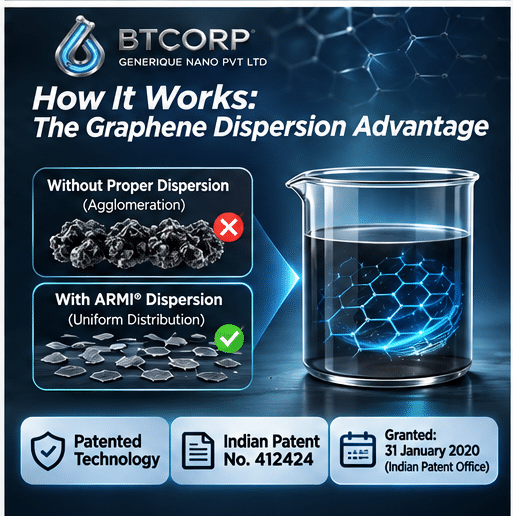
Graphene sheets can attract one another and form aggregates. This tendency is associated with interactions between sheet surfaces and can make uniform distribution difficult. In an epoxy formulation, large clusters may create local concentration differences, influence viscosity and reduce the effectiveness of the graphene-polymer interface.
What does stable dispersion mean?
It means maintaining a suitable distribution of graphene within its dispersion medium over defined storage and processing conditions. A mixture that looks uniform immediately after mixing may still change during storage. Stability should therefore be evaluated over a specified period using relevant observations and tests.
Possible evaluation parameters include sedimentation, agglomerate formation, viscosity change, redispersibility and compatibility after blending into the target resin.
How dispersion can influence the finished material
Uniform distribution can increase the opportunity for graphene sheets to interact with the polymer matrix. Agglomerates may behave as defects or produce uneven functional pathways. For electrical composites, sheet connectivity matters; for barrier coatings, orientation and film integrity matter; for mechanical reinforcement, interfacial stress transfer matters. Dispersion is therefore application-dependent, not a single visual attribute.
Water-Thinnable, Solvent-Based, 1K and 2K Epoxy Systems
The supplied ARMI® artwork identifies compatibility with water-thinnable and solvent-based epoxy systems, including 1K and 2K formulations. These categories cover different formulation environments and should be evaluated individually.
Water-thinnable epoxy systems
Water-thinnable epoxy formulations use water as a dilution or dispersion medium, depending on the resin chemistry. Compatibility with a graphene dispersion can depend on pH, ionic strength, resin type, stabilising ingredients, viscosity and film formation. The formulator should check whether the addition changes stability or cured-film properties.
Solvent-based epoxy systems
Solvent-based systems use organic solvents to achieve processing and application characteristics. The compatibility of a dispersion depends on its carrier, solvent environment and resin chemistry. Compatibility in one solvent system should not automatically be assumed for another.
1K and 2K systems
For 1K formulations, storage stability and the specified cure mechanism are important. For 2K formulations, the resin-hardener ratio, order of addition, pot life and cure schedule must be respected. The correct component into which the masterbatch should be added must be confirmed with the supplier.
| Formulation category | Key evaluation questions | What to validate |
|---|---|---|
| Water-thinnable epoxy | Does the dispersion remain compatible in the aqueous formulation? | Phase stability, pH, viscosity, film formation and cure. |
| Solvent-based epoxy | Is the carrier compatible with the selected solvent and resin? | Uniformity, solvent tolerance, sedimentation and application. |
| 1K epoxy | Does the addition affect storage and the intended cure mechanism? | Shelf stability, viscosity, cure response and final properties. |
| 2K epoxy | Which component receives the masterbatch and does the mix ratio remain correct? | Pot life, mixing, cure time, adhesion and mechanical properties. |
Where Graphene May Influence Epoxy Performance
The product artwork identifies potential enhancement areas: mechanical properties, barrier and corrosion resistance, electrical conductivity and thermal management. These should be understood as areas for formulation development, not guaranteed improvements for every resin system.

Mechanical performance
Graphene may influence stiffness, strength and fracture behaviour when it is suitably dispersed and integrated into the polymer matrix. Proposed mechanisms in composite research include stress transfer, crack deflection, crack bridging and energy dissipation. The effect depends on graphene grade, loading, interface, cure and processing. Tensile, flexural, impact and fracture tests are needed to establish the outcome.
Barrier and corrosion performance
Dispersed sheet-like fillers may create a tortuous pathway for moisture or other permeating species. This is relevant to protective coating development. Corrosion behaviour is complex, however, and depends on coating continuity, substrate preparation, adhesion, defects, exposure and electrical interactions. Graphene’s conductivity means that protective formulations must be designed and tested carefully; the presence of graphene alone does not establish corrosion protection.
Electrical conductivity
Graphene can contribute to conductive pathways if sufficient connectivity develops within the polymer. The percolation threshold is influenced by sheet geometry, dispersion, orientation and loading. Surface resistivity, volume resistivity or conductivity should be measured on the cured formulation according to the intended application.
Thermal management
Graphene may provide heat-transfer pathways in selected composite structures. The final thermal conductivity depends on sheet connectivity, orientation and interfacial thermal resistance. Thermal conductivity or diffusivity should be measured on the final material.
Four performance domains to investigate
Conceptual editorial graphic only — bar lengths do not represent measured ARMI® product performance or test results.
Five Industrial Application Areas
The supplied ARMI® graphics identify five target application categories. Each has a different performance objective, so each requires its own formulation and test plan.

1. Protective and anticorrosive coatings
Protective coatings are used to limit the exposure of metal and other substrates to moisture, chemicals and environmental stress. Epoxy coatings are common in industrial protection because of their adhesion and film-forming properties. Graphene-containing systems may be investigated for barrier-related effects and mechanical characteristics. Relevant validation can include salt-spray exposure, electrochemical impedance spectroscopy, adhesion, water immersion and coating-thickness checks.
2. Conductive coatings
Conductive coatings are designed to deliver a defined electrical response at a surface. Graphene can be investigated as a conductive phase in epoxy coatings for selected functional and antistatic applications. The target resistance range must be established first; then the formulator can evaluate loading, dispersion, film thickness and curing. Surface and volume resistivity testing should reflect the intended use.
3. Epoxy composites
Epoxy composites combine a polymer matrix with reinforcing or functional materials. Graphene may be explored as a nanoscale additive alongside conventional fillers or fibre reinforcements. Development targets can include stiffness, fracture behaviour, electrical functionality or thermal transport. The composite architecture, fibre interface, resin chemistry and manufacturing process all influence the result.
4. Industrial adhesives
Epoxy adhesives are used to bond components in manufacturing and engineering. Graphene incorporation may be investigated for changes in mechanical or functional properties, but adhesive performance must remain appropriate for the joint design. Lap-shear, tensile, peel, impact and environmental durability tests may be relevant depending on the application.
5. Functional coatings
Functional coatings are designed to do more than provide colour or basic protection. They may be engineered for electrical, thermal, barrier or other specialised functions. Graphene provides a platform for exploring such multifunctionality, provided that the formulation remains processable and the final coating meets its target specification.
How to Evaluate a Graphene Masterbatch in an Existing Epoxy Formulation
Industrial adoption begins with a clearly defined application target. Before changing a formulation, the manufacturer should document the current resin, hardener, solvents, fillers, pigments, mixing sequence, viscosity, cure conditions and performance requirements. This creates a baseline against which the modified system can be compared.
Laboratory trial design
A useful trial programme includes an unmodified control and one or more carefully selected masterbatch addition levels. Mixing conditions, batch size, temperature and cure schedule should be documented. The formulator should observe appearance, viscosity, dispersion, sedimentation, pot life where relevant, film formation and cure response. The chosen test methods should match the intended product application.
Scale-up considerations
Laboratory mixing and industrial mixing are not identical. Larger batches can change heat transfer, shear history, mixing efficiency and processing time. A successful laboratory formulation should therefore move through a pilot stage before commercial production. Batch records and defined acceptance criteria help support repeatability.
Quality Control: What Should Be Tested?
Technical claims become meaningful when supported by reproducible measurements. A graphene-containing epoxy system should be assessed as a complete formulation, not solely by reference to the intrinsic properties of graphene. Testing may cover the masterbatch, the uncured mixture and the final cured material.
Test selection should be driven by the application. A protective coating does not need exactly the same test programme as a conductive composite or structural adhesive.
| Evaluation area | Possible measurements | Why it matters |
|---|---|---|
| Dispersion | Microscopy, sedimentation, visual stability, viscosity trend | Checks distribution and storage behaviour. |
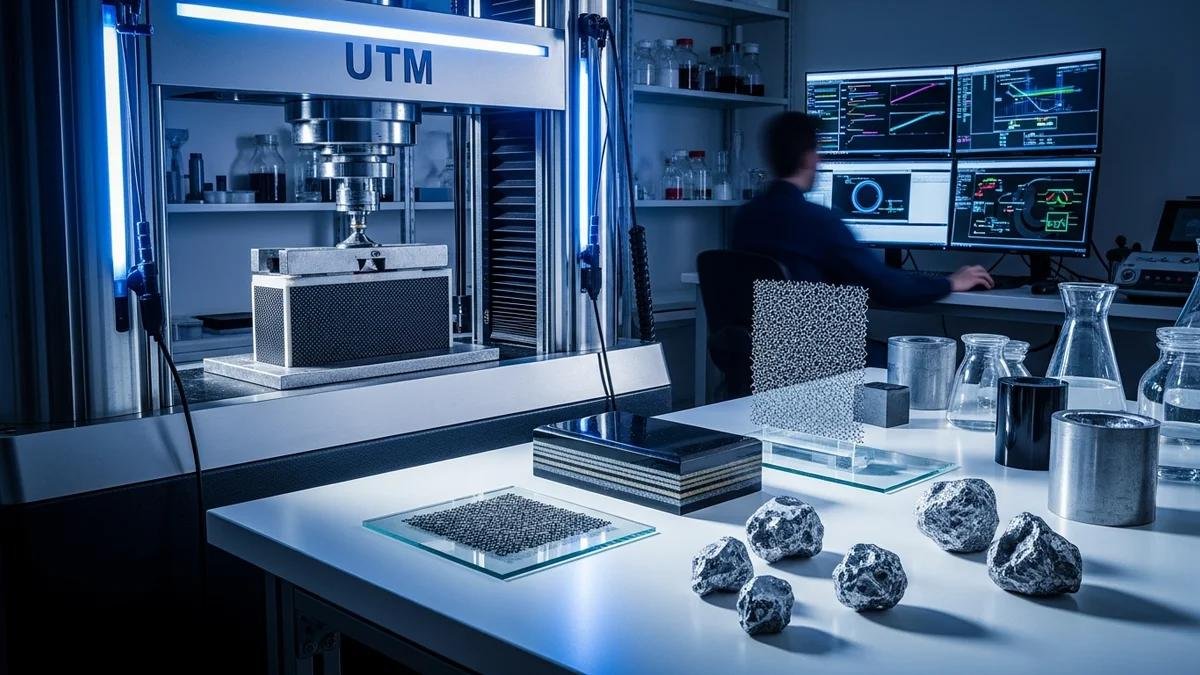
| Mechanical | Tensile, flexural, impact, hardness, abrasion | Measures response to force, deformation and wear. |
| Protective coating | Adhesion, salt spray, immersion, EIS, film thickness | Evaluates coating integrity and corrosion-related behaviour. |
| Electrical | Surface/volume resistivity, conductivity | Checks whether the target electrical function is achieved. |
| Thermal | Thermal conductivity, diffusivity, DSC, TGA | Characterises heat transport and thermal behaviour. |
| Curing | Pot life, cure time, hardness development, Tg | Checks processing and cured network behaviour. |
Where possible, testing should use a control formulation, replicates and a documented procedure. Test standards should be selected by the responsible laboratory or customer according to the target market and product specification.
Patented Graphene Dispersion Technology
The official certificate image supplied for this article identifies Indian Patent No. 412424. It records the application filing date as 31 January 2020 and the date of grant as 25 November 2022. The certificate names the invention “A Production Process of Stable Dispersion of Graphene in Water and Organic Solvent” and identifies Mohammed Naushad Ali as the patentee.
Official Indian Patent Certificate
Indian Patent No. 412424
Invention: A Production Process of Stable Dispersion of Graphene in Water and Organic Solvent
Application No.: 201941054827
Filing date: 31 January 2020
Date of grant: 25 November 2022
Patentee named on certificate: Mohammed Naushad Ali
The certificate is provided as a reference document for readers who want to inspect the patent particulars. A patent protects the invention described in its legal record; it is not a certification of every finished coating property or a guarantee of performance in every application.
↓ View / Download Patent CertificateOpens the original certificate image in a new tab. From there, visitors can save or download the image.

Packaging, Supply and Industrial Buyers
The second supplied product graphic depicts 1 kg, 10 kg, 50 kg and 180 kg packaging formats, while the first product graphic depicts a 50 L container. These are visual representations in the supplied artwork; current pack availability and the relationship between mass and volume units should be confirmed with BTCORP before publication or purchase.
Different package sizes can support different stages of evaluation, from laboratory trials to pilot work and larger production requirements. The right quantity depends on the test plan, formulation scale and supplier’s current commercial offering.
R&D teams
Evaluate compatibility, dispersion behaviour and selected performance targets at laboratory scale.
Formulators
Investigate integration into protective, conductive and functional epoxy formulations.
Industrial buyers
Review technical documentation, samples, bulk supply and scale-up requirements.
What the Research Environment Adds to the Story
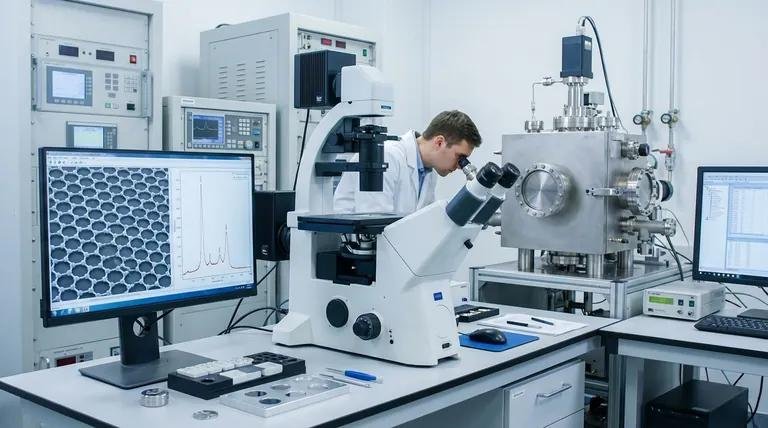
Graphene-enhanced epoxy development sits at the intersection of material science, polymer chemistry and process engineering. Research teams may examine the morphology of graphene, its distribution in a resin, the rheology of the uncured formulation and the structure of the cured composite. Microscopy can help reveal agglomeration or distribution patterns; mechanical testing can measure strength and deformation; electrical and thermal testing can assess functional performance.
For industrial users, the purpose of research is not simply to produce an impressive laboratory image. It is to create a reliable evidence base for a formulation decision. A useful development report records the material grade, batch, loading, mixing sequence, curing conditions, test method and control results. That information makes the work reproducible and helps the manufacturer decide whether the technology is commercially relevant.
From Research to Real-World Manufacturing
The path from a nanomaterial concept to a commercial product usually involves several stages: material characterisation, formulation screening, laboratory testing, pilot production, application validation and quality-control planning. Each stage reduces uncertainty. A prepared masterbatch can simplify the starting point for graphene incorporation, but successful commercialisation still depends on a formulation that performs consistently and can be manufactured economically.
For coating manufacturers, the value may lie in a measurable barrier or functional improvement. For adhesive developers, it may be a change in a specific mechanical or electrical property. For composite manufacturers, it may be a balance of stiffness, fracture behaviour and processability. The best formulation is not necessarily the one with the highest graphene concentration; it is the one that meets the application specification with reliable processing and justified cost.
Designing a Meaningful Graphene-Epoxy Trial Matrix
A formulation trial is most useful when it is designed to answer a specific technical question. Simply preparing a graphene-containing sample and observing that it looks different from the control does not establish whether the material is better for the intended application. A trial matrix should connect the target property to measurable responses and should minimise the number of uncontrolled variables.
The first sample should normally be a baseline formulation without the graphene masterbatch. This control establishes the starting viscosity, processing window, cure response and cured properties. Subsequent samples can explore selected addition levels recommended by the supplier. The formulator should avoid changing resin type, hardener ratio, solvent level, pigment package and mixing conditions at the same time, because doing so makes it difficult to identify the reason for a result.
For each trial, record the batch mass, masterbatch lot, addition sequence, mixing equipment, mixing time, temperature, observed viscosity and any visible instability. For a two-component epoxy, record the exact resin-to-hardener ratio and the time elapsed between mixing and application. If the formulation is applied as a coating, also record substrate preparation, wet-film thickness, dry-film thickness, curing conditions and conditioning period before testing.
A useful trial matrix does not need to be complicated. It needs to be repeatable. A small number of carefully controlled samples can provide more useful information than a large number of poorly documented experiments. Where the target is electrical conductivity, measure resistivity on cured specimens. Where the target is corrosion protection, use a defined exposure protocol and compare coating defects, adhesion and electrochemical response. Where the target is mechanical reinforcement, select the test that reflects the real loading mode.
How a Protective Epoxy Coating Works as a System
A protective coating is not just a resin layer. It is a complete system involving the substrate, surface preparation, primer, intermediate coat, topcoat, film thickness, cure and service environment. Each part contributes to the final protection strategy. A graphene-containing epoxy formulation must be evaluated within that system rather than in isolation.
Surface preparation is particularly important. Oil, dust, soluble salts, rust and weak boundary layers can reduce adhesion or create pathways for underfilm corrosion. The coating must wet the prepared surface and form a continuous film. Application conditions such as temperature, humidity, pot life and recoat interval can influence the final result.
In barrier-coating research, platelet-shaped fillers are often discussed in terms of the tortuous path effect. If platelets are well distributed and appropriately oriented, permeating molecules may need to travel around them rather than moving directly through the polymer. This can increase the effective diffusion path. However, the effect is sensitive to platelet geometry, orientation, loading and the presence of voids or defects.
Graphene’s electrical conductivity adds another design consideration. Depending on the coating architecture and substrate, conductive pathways may influence electrochemical behaviour if electrolyte reaches the metal. Consequently, corrosion performance should be evaluated with appropriate controls and exposure tests. It is not scientifically sound to infer corrosion resistance solely from the fact that graphene is present.
For a coating manufacturer, the practical objective is a system that applies reliably, cures consistently, adheres to the substrate and performs under the specified environment. Graphene may be one part of the formulation strategy, but the complete coating system determines service performance.
Conductive Epoxy: From Isolated Sheets to Connected Networks
Electrical conductivity in a polymer composite is often governed by whether conductive elements form a connected pathway. At low loading, graphene sheets may remain separated by insulating epoxy. As loading and connectivity increase, the distance between sheets can become small enough for charge transport mechanisms to link the network. The transition is commonly described as a percolation phenomenon.
The concentration at which this transition occurs is not determined by mass fraction alone. High-aspect-ratio sheets may form networks at different concentrations from compact particles. Sheet orientation can create directional behaviour. Agglomeration can sometimes create local conductive clusters while leaving other parts of the film poorly connected. This may lead to non-uniform resistance across a surface.
Conductive coating development therefore requires a clear specification. Is the objective a low-resistance conductive layer, a controlled resistive coating, or a static-dissipative surface? These are different targets and may require different formulations. The test method should reflect the geometry and intended use of the coating. Surface resistivity, volume resistivity and resistance across a defined electrode arrangement are not interchangeable measurements.
Film thickness, substrate, cure conditions and environmental conditioning can also influence measured electrical behaviour. A formulation that shows a particular resistance immediately after curing may behave differently after humidity exposure, thermal cycling or mechanical abrasion. For this reason, repeatability and durability testing can be as important as the initial conductivity result.
Mechanical Reinforcement: Why the Interface and Geometry Matter
When a polymer composite is loaded, stress must be transferred through the matrix and across the interface to any reinforcing phase. Graphene’s high intrinsic stiffness is useful only if the surrounding epoxy can interact with the sheets effectively. The interface, sheet geometry and dispersion determine how much of the reinforcement potential can be used.
Researchers discuss several possible toughening mechanisms in graphene-containing polymers. A crack may be deflected as it encounters a sheet or interface. A sheet may bridge the faces of a developing crack. Local debonding or pull-out may dissipate energy under some conditions. These mechanisms depend on the nature of the interface and the microstructure of the cured material.
It is also important to distinguish stiffness from toughness. A material can become stiffer without becoming more resistant to fracture. Likewise, a change in tensile strength does not automatically imply improved impact resistance or fatigue life. The target property should be measured directly using the test geometry and loading conditions relevant to the final component.
For fibre-reinforced epoxy composites, graphene may interact with both the resin matrix and the fibre-matrix interface. The result depends on the complete composite architecture, including fibre type, fibre volume fraction, lay-up, resin flow and cure cycle. A masterbatch trial in neat resin is therefore a useful early step, but it does not replace testing of the finished composite component.
Thermal Management: Measuring the Finished Composite, Not the Filler
Thermal management applications require careful interpretation of material data. Graphene has high intrinsic in-plane thermal conductivity, but a polymer composite contains many interfaces and discontinuities. Heat must move from the epoxy into a graphene sheet, along the sheet and then into neighbouring material. Interfacial thermal resistance can limit this process.
Sheet orientation can also matter. A composite may transfer heat more effectively in one direction than another if the graphene sheets become preferentially aligned during coating, casting or moulding. A single measurement may therefore not describe all directions of heat flow. The test method and specimen geometry should match the intended application.
Thermal conductivity and thermal diffusivity are related but different properties. Conductivity describes the ability to transfer heat under a temperature gradient, while diffusivity describes how quickly a temperature change spreads through a material and depends on conductivity, density and heat capacity. Thermogravimetric analysis and differential scanning calorimetry provide other information about thermal stability and transitions; they do not directly replace thermal conductivity measurement.
For an epoxy formulation intended for thermal management, the development programme should define the operating temperature range, heat-flow direction, mechanical constraints and electrical requirements. A thermally functional material may also need to remain electrically insulating or may intentionally be conductive. That requirement should be made explicit before formulation begins.
Rheology, Mixing and Application: The Practical Side of Masterbatch Use
Rheology describes how a material flows and deforms. In coatings and adhesives, viscosity influences pumping, mixing, levelling, sprayability, sag resistance and film build. Adding a concentrated dispersion can change the rheology of the receiving system, so a formulator should not assume that the original application settings will remain suitable.
Mixing conditions should be selected in line with supplier guidance and the sensitivity of the resin system. Too little mixing may leave non-uniformity; excessive or unsuitable mixing can introduce heat, air or other process changes. The mixing vessel, impeller geometry, batch size and temperature can all influence the result. A small laboratory mixer may create a different shear history from an industrial production vessel.
For coatings, application method also matters. A formulation intended for spray application may have different viscosity and flow requirements from one intended for brush, roller or drawdown application. Film formation, wetting, levelling and solvent or water release can affect the appearance and integrity of the cured film. For adhesives, bond-line thickness and substrate wetting may be more important than decorative surface finish.
Manufacturers should therefore treat masterbatch incorporation as a formulation change requiring process review. The goal is not merely to obtain a uniform-looking mixture, but to maintain an acceptable manufacturing window and a finished product that meets its specification.
Storage, Handling and Documentation
Nanomaterial-containing products should be handled according to the supplier’s safety documentation. The product’s safety data sheet should be reviewed before opening, transferring, mixing or cleaning equipment. Appropriate personal protective equipment, ventilation, spill response and waste-handling procedures should be established by the workplace safety team.
Storage conditions should follow the current technical datasheet and container label. Avoid assuming that all dispersions have the same temperature limits, shelf life or redispersibility. Record the batch number, receipt date, storage conditions and any observations made before use. If a product appears separated, dried, contaminated or otherwise different from its expected condition, consult the supplier before processing it.
Traceability is particularly important when comparing formulation trials. Record the masterbatch lot, resin and hardener batches, test specimen preparation and laboratory method. This makes it possible to investigate differences between samples and determine whether a result is repeatable.
The information supplied in the product artwork is useful for identifying the product and its intended application categories, but it does not replace a technical datasheet or safety data sheet. Buyers should request current controlled documents before industrial use.
Questions Industrial Buyers Should Ask Before Qualification
Technical procurement involves more than comparing a product name and package size. Buyers should understand the material’s declared composition, the basis of its concentration specification, storage requirements, batch controls and the support available during formulation development.
| Question for the supplier | Why it matters |
|---|---|
| What is the carrier or dispersion medium? | It helps determine compatibility with the target resin and solvent system. |
| What is the recommended addition sequence? | It supports consistent mixing and reduces avoidable processing errors. |
| What dosage range is recommended for the intended application? | It provides a technically grounded starting point for trials. |
| What are the storage conditions and shelf life? | It supports inventory control and batch planning. |
| What stability and performance data are available? | It helps define the validation programme and compare results. |
| Which packaging formats are currently supplied? | It supports sample, pilot and production procurement planning. |
| Can the supplier support application-specific trials? | It can help resolve compatibility and scale-up questions. |
These questions also help ensure that marketing statements are translated into technical requirements. A buyer should seek evidence relevant to the actual formulation and service environment rather than relying on general claims about graphene.
Five Misconceptions to Avoid When Discussing Graphene-Epoxy Materials
Misconception 1: A 10% masterbatch means 10% graphene in the final coating
It does not. The 10% w/w figure refers to the masterbatch as supplied. The final concentration depends on how much masterbatch is added and the total mass of the finished formulation.
Misconception 2: More graphene always means better performance
Higher loading can increase viscosity, complicate dispersion or change the cured material in ways that are not desirable. The useful concentration is application-specific and must be established experimentally.
Misconception 3: A stable dispersion in its container guarantees compatibility in every epoxy
The receiving resin, hardener, solvent, water phase and additives can change dispersion behaviour. Compatibility must be checked in the actual formulation.
Misconception 4: Graphene’s intrinsic properties are the properties of the composite
The cured composite has its own structure and interfaces. Its mechanical, electrical and thermal properties must be measured directly.
Misconception 5: A patent is the same as an application performance certificate
A patent protects an invention described in the patent record. It does not certify that every formulation achieves a specific coating, electrical or mechanical performance level.
Matching the Formulation to Real Operating Conditions
A laboratory result becomes commercially meaningful only when it relates to the conditions the material will experience in service. A coating used indoors may face a very different combination of moisture, temperature, ultraviolet exposure and chemical contact from a coating used on an outdoor industrial structure. An adhesive in a static assembly may experience a different loading pattern from a bonded joint exposed to vibration, impact or repeated thermal cycling.
For this reason, the application brief should describe the substrate, operating temperature, humidity, chemical exposure, mechanical loading, cleaning regime and expected service interval. These conditions help determine which tests are relevant. A corrosion-protection formulation may require cyclic corrosion or immersion evaluation; a conductive coating may need resistance measurements before and after humidity conditioning; a composite intended for thermal cycling may need dimensional and mechanical checks after repeated temperature changes.
Environmental conditioning can also reveal changes that are not visible in an initial laboratory inspection. Moisture uptake may influence adhesion or electrical response. Temperature changes may affect the polymer network and residual stresses. Abrasion may remove part of a functional surface layer. Chemical exposure may alter the coating or adhesive over time. The appropriate conditioning programme should reflect the actual application rather than use a generic test simply because it is available.
Graphene masterbatch should therefore be assessed as one ingredient in a complete material system. The formulation must satisfy the primary application requirement first, while any additional electrical, thermal or mechanical function should be measured as a separate performance dimension. This disciplined approach helps manufacturers avoid over-interpreting a single test result and supports a more reliable technical qualification decision.
Frequently Asked Questions
What is ARMI® EPOXY-GRAPHENE?
It is presented as a ready-to-use graphene dispersion and advanced graphene masterbatch for conventional epoxy resin formulations, developed by BTCORP Generique Nano Pvt. Ltd.
What does the 10% w/w specification mean?
It refers to the nominal graphene mass fraction in the masterbatch. It does not mean the final epoxy blend contains 10% graphene.
Which epoxy systems are identified in the product artwork?
The artwork identifies water-thinnable and solvent-based systems, including 1K and 2K epoxy formulations. Confirm compatibility for the specific resin grade and process.
Why is stable dispersion important?
Graphene can aggregate. Dispersion quality influences uniformity, processing behaviour and the opportunity for graphene to interact with the epoxy matrix.
What applications are highlighted?
Protective and anticorrosive coatings, conductive coatings, epoxy composites, industrial adhesives and functional coatings.
Does the product guarantee better corrosion, electrical or thermal performance?
The supplied artwork presents these as potential enhancement areas. Actual performance depends on the final formulation and must be demonstrated through relevant tests.
What should a manufacturer request before a trial?
Request the current technical datasheet, safety datasheet, recommended dosage and addition sequence, storage guidance, compatibility information and available test data.
Can the masterbatch concentration be customised?
The supplied product artwork states that customized graphene concentrations are available. Confirm the available options and technical implications directly with BTCORP.
Which package sizes are available?
The supplied visual depicts 1 kg, 10 kg, 50 kg and 180 kg formats, plus a 50 L container in another visual. Confirm current pack sizes and units with the manufacturer.
Can I download the patent certificate from this article?
Yes. Visitors can open the official certificate image using the View / Download Patent Certificate link in the patent section.
Engineering the Next Generation of Epoxy Formulations
Graphene offers a compelling platform for exploring multifunctional polymer materials. Its intrinsic mechanical, electrical and thermal characteristics, together with its two-dimensional sheet geometry, create opportunities for advanced epoxy composites and coatings. Yet the final result depends on dispersion, compatibility, concentration, processing and curing — not on graphene’s properties in isolation.
ARMI® EPOXY-GRAPHENE is positioned as a ready-to-use graphene masterbatch intended to make graphene integration more accessible to epoxy formulators. Its stated standard loading, customized concentration option, dispersion-technology positioning and identified epoxy application categories provide a starting point for technical evaluation. The next step for each manufacturer is a controlled trial supported by current product documentation and application-specific testing.
BTCORP Generique Nano Pvt. Ltd. · ARMI® Advanced Research Materials
ARMI® EPOXY-GRAPHENE: Product Overview & Technical Details
The following two original client-supplied visuals are included at the end of the article as a product reference and summary. They are displayed at their natural aspect ratio, without forced cropping.
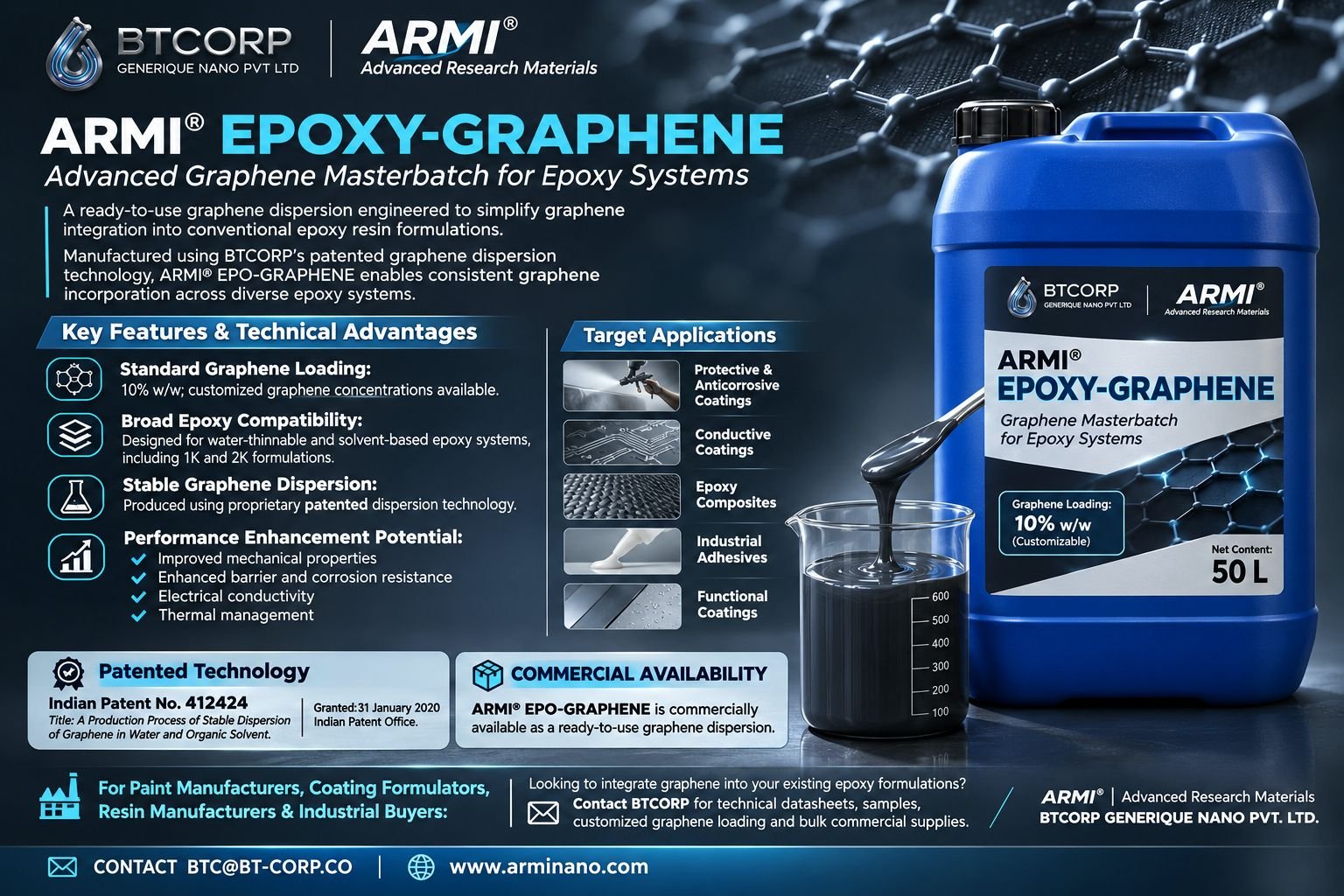
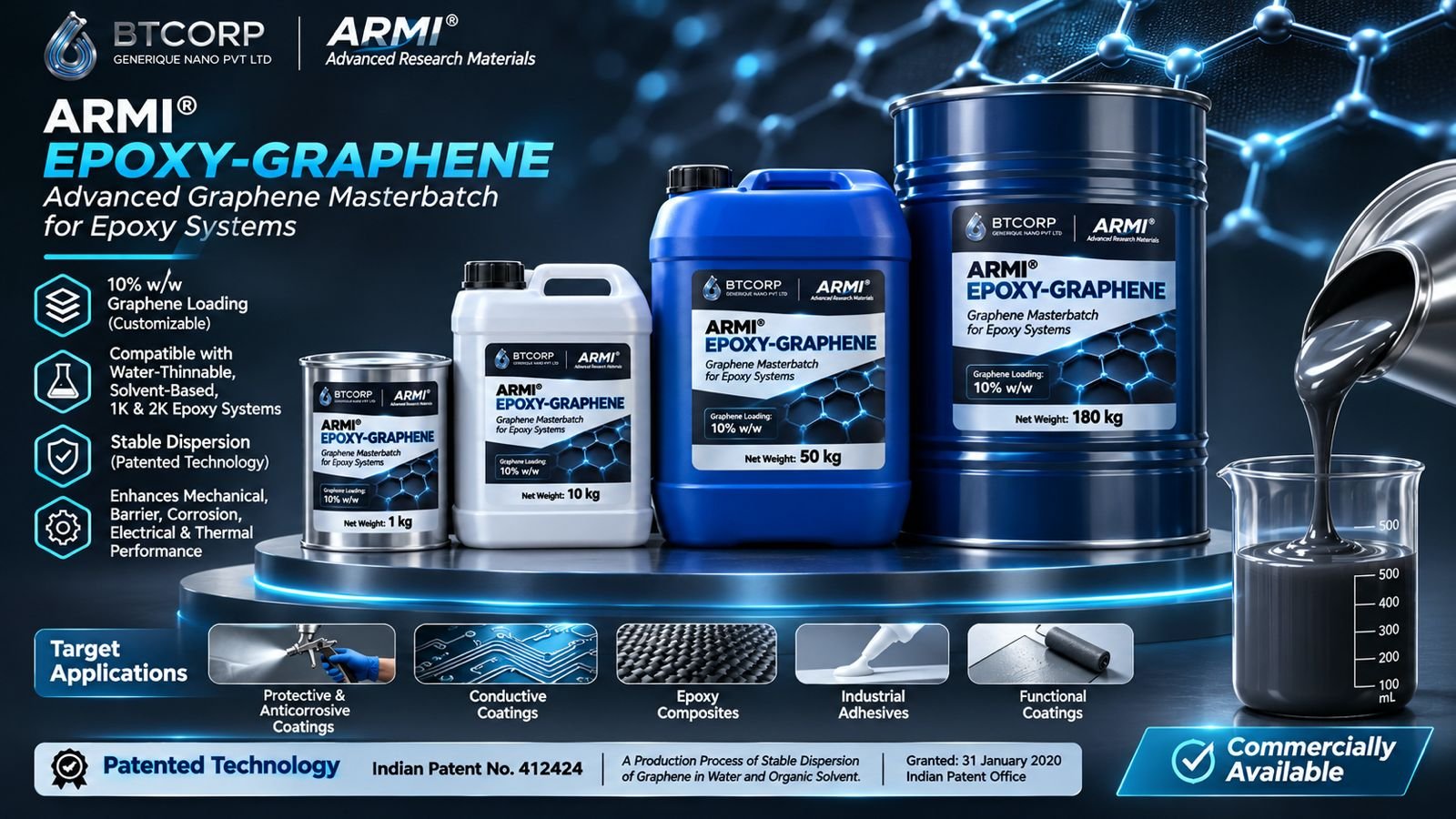
Technical and editorial note: This article distinguishes specifications visible in the supplied product artwork from general scientific explanations and potential application benefits. The product visuals state the 10% w/w standard graphene loading, customized concentration availability, epoxy compatibility categories, target applications and patent reference. Recommended dosage, carrier composition, viscosity, shelf life, detailed compatibility, numerical performance improvements, certifications and current packaging availability have not been supplied here and should be confirmed through current manufacturer documentation. Patent number, title, grant date and legal status should be verified against the official patent record before being represented as legal fact.