
ARMI® QUICK SHINER: Redefining Automotive Care
A deep technical guide to graphene-powered ceramic nanocoating in spray form — the materials, the surface science, the manufacturing workflow and the everyday application.
The New Language of Automotive Care
From occasional polishing to engineered surface maintenance
A vehicle’s finish is more than colour. It is a carefully built surface system: a substrate, primer, colour coat and clear coat on painted panels; engineered polymers and textured finishes inside the cabin; and metal, alloy, chrome, glass, rubber and coated components around the vehicle. Every journey exposes these surfaces to sunlight, rain, road film, airborne dust, mineral deposits, oils, fingerprints, temperature changes and repeated cleaning. The challenge is not simply to make a vehicle look clean for a few hours. It is to maintain appearance while respecting the different chemistry and physical behaviour of each material.

Automotive care has therefore moved through several generations. Traditional washing removes loose dirt. Waxes and polishes add gloss and can leave a sacrificial surface film. Sealants use polymer chemistry to improve durability and water behaviour. Professional ceramic coatings introduced more highly engineered siloxane- and silica-related networks, generally requiring careful preparation, controlled application and curing. Spray-format products respond to a different need: bringing selected surface-care functions into a fast, convenient routine that can be used by vehicle owners, workshops and detailing professionals.
ARMI® QUICK SHINER is presented as a graphene-powered ceramic nanocoating spray in an all-in-one CLEAN • SHINE • PROTECT format. The supplied product brief describes a formulation approach combining graphene-based technology, polysilane and a ceramic nanocoating matrix, with a convenient spray application. Its intended role is to help clean compatible surfaces, improve visual gloss and leave a surface treatment designed to promote water repellency and easier routine maintenance. The product should be understood as a maintenance-oriented spray treatment, not automatically equated with a multi-year professional coating system.
What Is Graphene?
A two-dimensional carbon material with unusual surface and barrier properties
Graphene is a sheet-like form of carbon in which carbon atoms are arranged in a hexagonal, honeycomb-like lattice. A single ideal graphene layer is approximately one atom thick. The carbon atoms are connected through strong in-plane bonds, creating a material known for high intrinsic strength, electrical and thermal conductivity, flexibility at the sheet scale and a very high aspect ratio. In a coating, the most relevant question is not whether graphene is impressive in isolation; it is whether the selected graphene material can be dispersed, oriented and integrated into the surrounding binder system in a stable and useful way.
Commercial coating formulations may use graphene, few-layer graphene, graphene oxide, reduced graphene oxide or functionalised graphene derivatives. These are not interchangeable. Graphene oxide contains oxygen-bearing functional groups that can improve compatibility with some polar systems but alter electrical, chemical and water-related behaviour. Reduced graphene oxide has fewer oxygen groups than graphene oxide, but its exact properties depend on the reduction process and residual chemistry. Few-layer graphene contains several stacked carbon sheets. The grade, lateral sheet size, defect density, surface chemistry and supplier specification all influence performance.
In a protective coating, high-aspect-ratio platelets can potentially create a more tortuous route for water, oxygen or aggressive species trying to pass through a film. This is often described as a barrier or labyrinth effect. The platelets may also influence mechanical reinforcement, thermal behaviour, friction and surface response. However, these benefits are conditional. Poor dispersion can cause agglomerates; excessive loading can make a film rough or unstable; and conductive graphene in contact with certain metals can sometimes complicate corrosion behaviour. A graphene label alone is not a performance guarantee.
The supplied ARMI® graphic describes a few-layer graphene component and associates it with strength, barrier behaviour and durability. That graphic is useful as an explanation of the intended technology concept. The precise graphene grade, concentration, functionalisation and dispersion method are not disclosed in the public product brief, so those details should be confirmed from the technical data sheet or manufacturer before publication as exact product specifications.
What Does Ceramic Mean in a Spray Coating?
Silica, siloxane and hybrid surface chemistry
In automotive detailing, the word ceramic is commonly used for coatings that rely on inorganic or hybrid inorganic-organic chemistry, often involving silicon-containing materials. Silica is silicon dioxide, SiO₂. Siloxane describes a repeating silicon–oxygen–silicon linkage, often written Si–O–Si. Polysiloxanes and organosilanes can be used to create films that combine inorganic-like network structures with organic groups that influence flexibility, compatibility and surface energy. The exact chemistry differs widely between products.
A ceramic spray coating is not necessarily a thick ceramic shell, nor is it the same as a fired ceramic. In a liquid maintenance product, ceramic-related ingredients may be present as dispersed silica, silane or siloxane species, pre-formed particles, reactive precursors or a hybrid resin. After application, solvent or carrier evaporation and any relevant chemical reactions can leave a thin residue or film. The film’s properties depend on its chemistry, thickness, continuity, substrate, preparation and curing conditions.
How a Spray Treatment Works on a Surface
From droplets to a thin, functional film
A spray bottle converts liquid into droplets. When the droplets land on a clean compatible surface, they spread according to the liquid’s surface tension, viscosity, wetting behaviour, the surface energy of the substrate and the condition of the panel. A microfibre cloth then helps distribute the liquid into a thin, more uniform layer and removes excess material. During the flash or drying period, volatile carrier components evaporate. Less volatile ingredients remain and may form a deposited film, organise at the interface or undergo further reactions depending on the chemistry.
The word coating can suggest a thick layer, but many spray-applied detailing products leave an extremely thin treatment. Uniformity matters. Too much liquid can create high spots, smears or streaks. Too little may produce uneven coverage. A clean cloth, clean panel, controlled product amount and suitable ambient conditions help the user achieve a more consistent result. On dark paint, strong side lighting can reveal residues that are difficult to see under diffuse light.
For ARMI® QUICK SHINER, the supplied brief describes a spray, spread and buff process. The user should follow the current pack label and approved instructions because the exact flash time, cloth type, number of sprays, curing interval and substrate restrictions are formulation-specific. The article’s general explanation is educational and should not replace the product label or the manufacturer’s latest technical data sheet.
The Chemistry Behind Silane and Polysiloxane Systems
Hydrolysis, condensation and network formation
One important family of ceramic-related coating chemistry is organosilane chemistry. A simplified trialkoxysilane can be represented as R–Si(OR′)₃, where R is an organic group and OR′ is a hydrolysable alkoxy group. In the presence of water and suitable conditions, alkoxy groups can hydrolyse to form silanol groups (Si–OH). A simplified reaction is: R–Si(OR′)₃ + 3H₂O ⇌ R–Si(OH)₃ + 3R′OH. The alcohol by-product and the rate of reaction depend on the identity of the alkoxy group and the formulation conditions.
Silanol groups can then condense with other silanol groups to form siloxane linkages. A simplified representation is: Si–OH + HO–Si → Si–O–Si + H₂O. Condensation can also occur between a silanol and a remaining alkoxy group, releasing an alcohol. Repeated reactions may produce oligomers or a three-dimensional siloxane-rich network. These equations are representative chemistry used to explain organosilane sol-gel systems; they are not a confirmed reaction scheme for the proprietary ARMI® QUICK SHINER formulation.
Reaction kinetics are influenced by pH, water content, solvent, catalyst, temperature, precursor structure and ageing time. Too much premature condensation can increase viscosity, generate particles or reduce shelf stability. Too little reaction may leave a film that does not develop the intended network. Formulators balance bottle stability with performance after application. This is one reason why exact ingredient percentages and processing conditions cannot responsibly be reverse-engineered from a marketing graphic.
BTCORP’s public brief describes polysilane and a ceramic nanocoating matrix. If the approved product formulation uses reactive silane precursors, the above chemistry may help explain one possible route to a silicon–oxygen-rich network. If it uses pre-formed polysiloxane or a non-reactive hybrid dispersion, the mechanism may be different. The final article should retain the wording “representative silane chemistry” until the manufacturer confirms the exact system.
What Each Formulation Family Can Contribute
A functional view of the ingredients shown in the product graphic
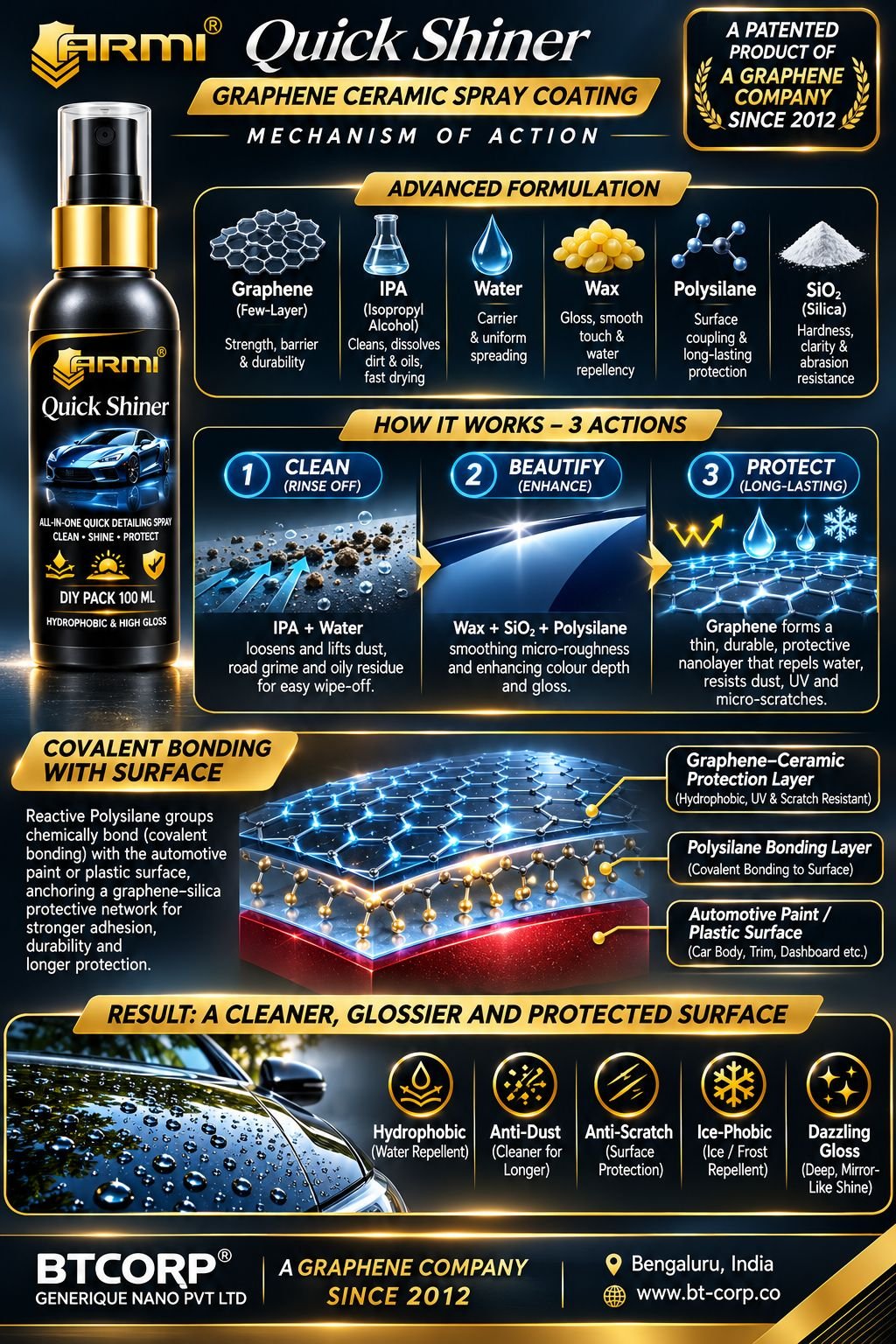
The supplied mechanism artwork identifies graphene, isopropyl alcohol (IPA), water, wax, polysilane and silica (SiO₂). This is a useful educational ingredient map. It should not be presented as a full INCI-style ingredient declaration, a complete bill of materials or proof that each named material appears at a particular concentration. The exact composition, grade and role of each material must be taken from the approved formulation record and safety data sheet.
IPA is a volatile alcohol solvent used in many surface-care systems because it can help dissolve certain residues, assist wetting and evaporate relatively quickly. Its suitability depends on the complete formula and the surface. It is flammable, can affect some plastics, coatings, adhesives and finishes, and should be handled with ventilation and appropriate controls. The presence of IPA in an illustrative graphic does not establish its exact concentration or confirm that the final product uses it as a primary solvent.
Wax or wax-like materials can improve slip, feel, gloss and water behaviour by forming a hydrophobic surface component. Different waxes have different melting points, compatibility and film characteristics. A wax may also influence wipe-off and residue. In a hybrid formula, it must be compatible with the resin or siloxane phase and must not destabilise the dispersion during storage.
Silica (SiO₂) may appear as a particulate, colloidal or chemically derived component, each with different behaviour. Particle size, surface treatment, concentration and dispersion influence transparency, abrasion, viscosity and film appearance. Large or poorly dispersed particles can cause haze or roughness. A clear automotive finish demands careful control of particle size distribution and compatibility. “Nano” should only be used where the material’s dimensions and evidence support the claim.
The Manufacturing Journey
How a professional manufacturer turns a formulation into a repeatable product
Manufacturing a surface-care spray is not simply mixing a list of chemicals in a tank. It is a controlled process in which raw-material identity, incoming quality, batch sequence, mixing energy, temperature, water quality, pH, viscosity, filtration, filling hygiene and packaging compatibility all influence the final product. The exact process for ARMI® QUICK SHINER is proprietary and has not been supplied. The following workflow is a general manufacturing framework for a hybrid spray coating, not BTCORP’s confidential standard operating procedure.
Stage 1 — specification and raw-material approval. Each raw material should have an approved specification, supplier documentation, lot number, certificate of analysis where applicable and safety data sheet. Incoming checks may include appearance, colour, odour, viscosity, solids, moisture, density or other tests relevant to the material. Graphene-based raw materials need particular attention to grade, dispersion state, agglomeration and batch-to-batch consistency.
Stage 3 — preparation and incorporation of functional dispersions. Graphene or silica dispersions may require pre-wetting, controlled shear or a compatible dispersant. The goal is to break down agglomerates and create a stable, uniform distribution without damaging the material or introducing excessive air. High-shear mixing, rotor-stator equipment, bead milling or other methods may be used in some industrial systems, but the appropriate method depends on the material and the target particle or sheet distribution. No single method should be claimed as BTCORP’s actual process without confirmation.
Stage 4 — addition of film-forming and surface-modifying components. Silane, siloxane, polysiloxane, wax or polymeric components are added in a controlled sequence. Compatibility is assessed throughout. If hydrolysable silanes are used, water content, pH and ageing time become critical. If pre-formed resins are used, solvent compatibility and resin stability may be more important. A formulation may be designed to remain stable in the bottle but develop its final surface behaviour after application and drying.
Stage 5 — homogenisation and finishing. The batch is mixed until it meets defined uniformity criteria. Defoaming or controlled rest may be used to release entrained air. The manufacturer may adjust viscosity or pH only within an approved formulation window. Any adjustment should be documented and traceable. Filtration can remove foreign particles, but filter selection must not unintentionally remove the active dispersed material. The filter rating must be validated against the formulation’s particle-size distribution.
Stage 7 — filling, packaging and batch release. The approved bulk product is filled into compatible bottles or containers using calibrated equipment. Packaging must resist the formulation and protect it from contamination, evaporation or leakage. Spray heads should be checked for consistent output and clogging. Each batch should carry traceable lot information. Finished goods are quarantined until quality release is complete, then stored and dispatched under defined conditions.
Stage 8 — stability and transport validation. Accelerated and real-time stability studies help identify separation, sedimentation, viscosity drift, colour change, odour change, package swelling, leakage or spray failure. Freeze-thaw or elevated-temperature testing may be relevant depending on the intended distribution climate. Transport simulation and packaging tests help reduce damage during export. The exact acceptance limits and test protocols must come from BTCORP’s quality system.
Interactive Process Map
Explore the stages of a hybrid spray-coating workflow
How Hydrophobicity Creates Water Beading
Surface energy, contact angle and practical meaning
Hydrophobicity describes a surface’s tendency to repel water. On a hydrophobic surface, water tends to form rounded droplets rather than spread into a continuous sheet. This behaviour is commonly discussed through the static water contact angle: the angle formed where a droplet meets the surface. A higher contact angle generally indicates stronger water repellency, although the measurement depends on droplet size, surface cleanliness, roughness, test method and time after application.
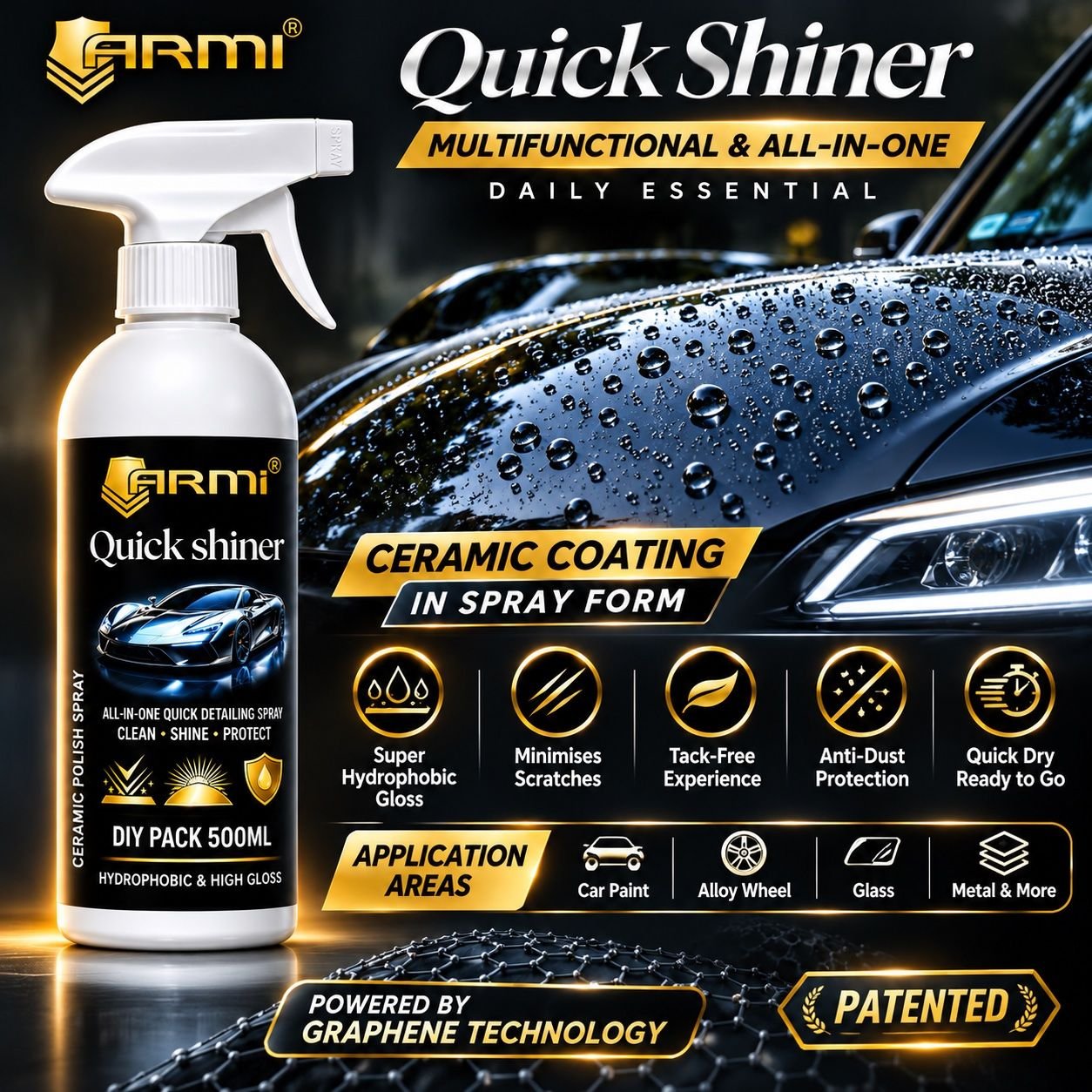
Water beading is an easy visual demonstration, but it is not the same as self-cleaning in every real-world condition. A droplet may roll away and carry some loose contamination with it when the surface has a suitable combination of chemistry, texture and inclination. Fine dust, oily road film, mineral deposits and strongly adhered dirt may remain. A hydrophobic treatment can make routine rinsing easier, but it does not eliminate the need to wash the vehicle.
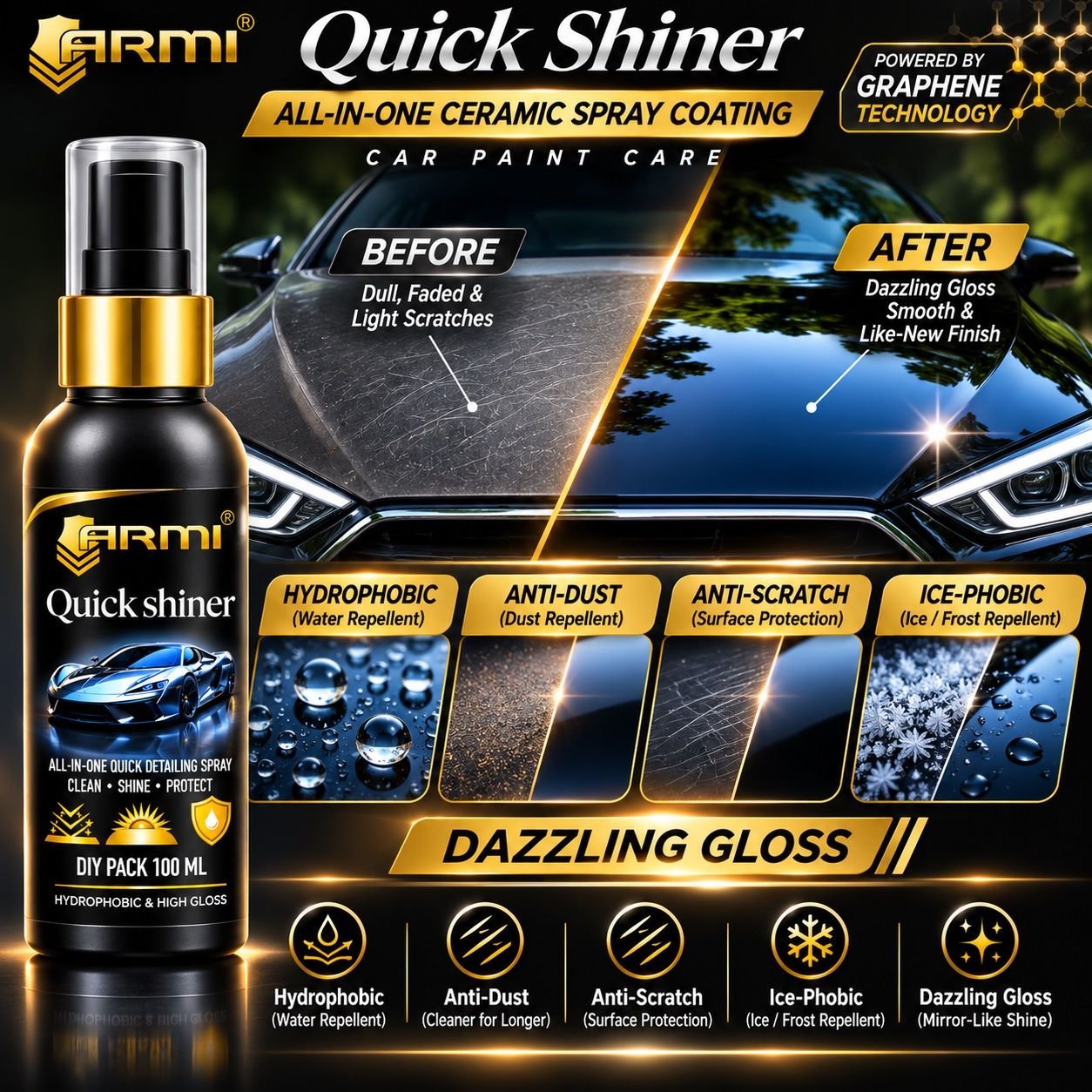
The surface energy of the outermost molecular groups influences how water interacts with the treated panel. Low-surface-energy organic groups, wax-like components or suitable siloxane structures can reduce water spreading. Surface roughness can amplify apparent hydrophobicity, but excessive roughness may harm gloss and clarity. In automotive detailing, the goal is a visually smooth surface with useful water behaviour, not a rough lotus-leaf imitation that scatters light.
Anti-Dust, Tack-Free Feel and Gloss
Why a surface can look cleaner and feel smoother
Dust attraction is influenced by several factors: surface texture, static charge, humidity, contamination, air movement and the surface’s chemical character. A smooth film may reduce the microscopic texture that traps particles. Some surface treatments also reduce the tendency of dust or oily contaminants to adhere strongly. However, “anti-dust” should be interpreted as helping a treated surface remain cleaner-looking or easier to maintain, not as preventing dust from landing on a vehicle.
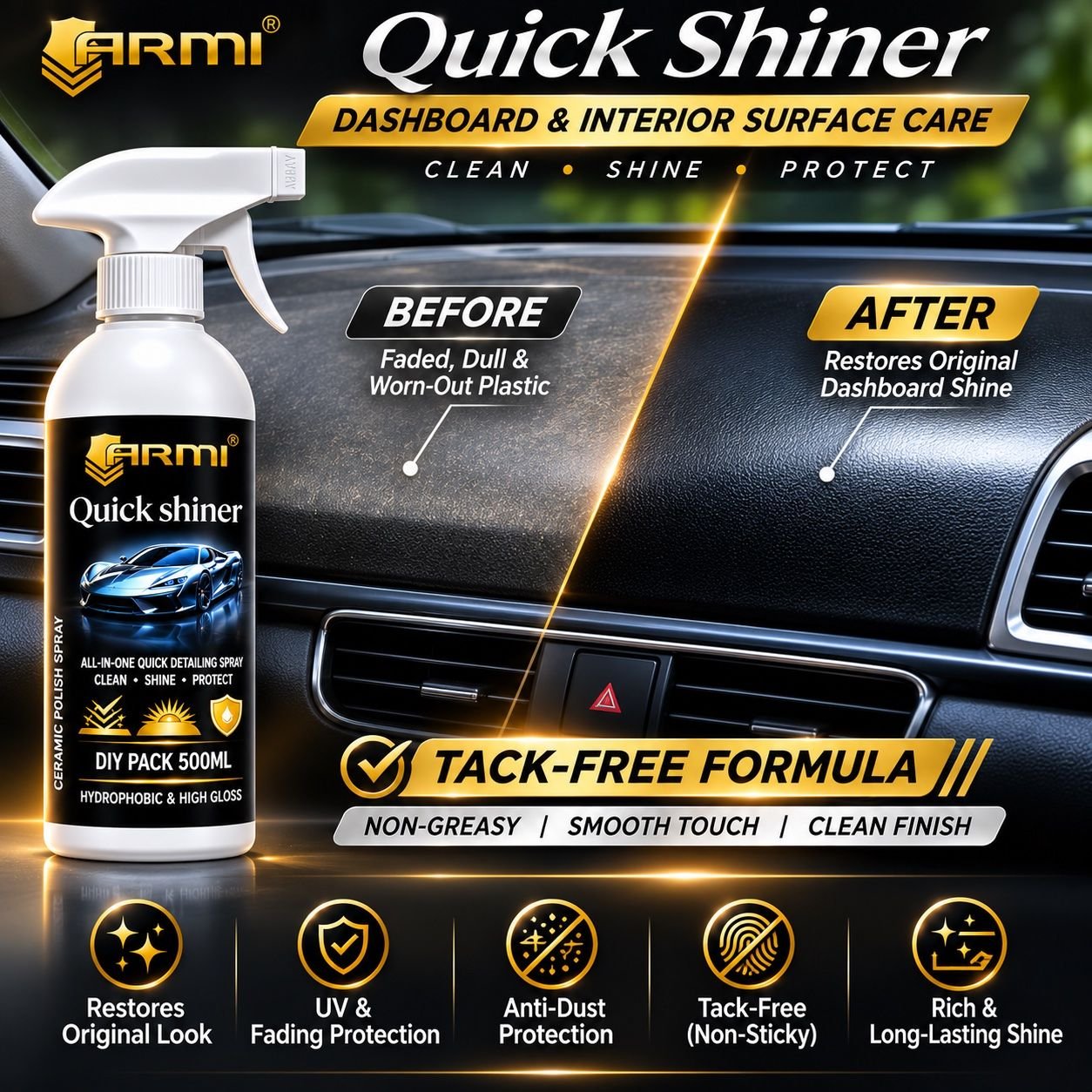
A tack-free finish means that, after correct application and drying, the surface should not feel sticky under the specified conditions. Tack can arise from excess product, incomplete drying, incompatible layers, high humidity, low temperature or an unsuitable application method. A tack-free result is therefore partly a formulation property and partly a user-process outcome. Applying more product than needed does not necessarily create more protection; it can create more residue.
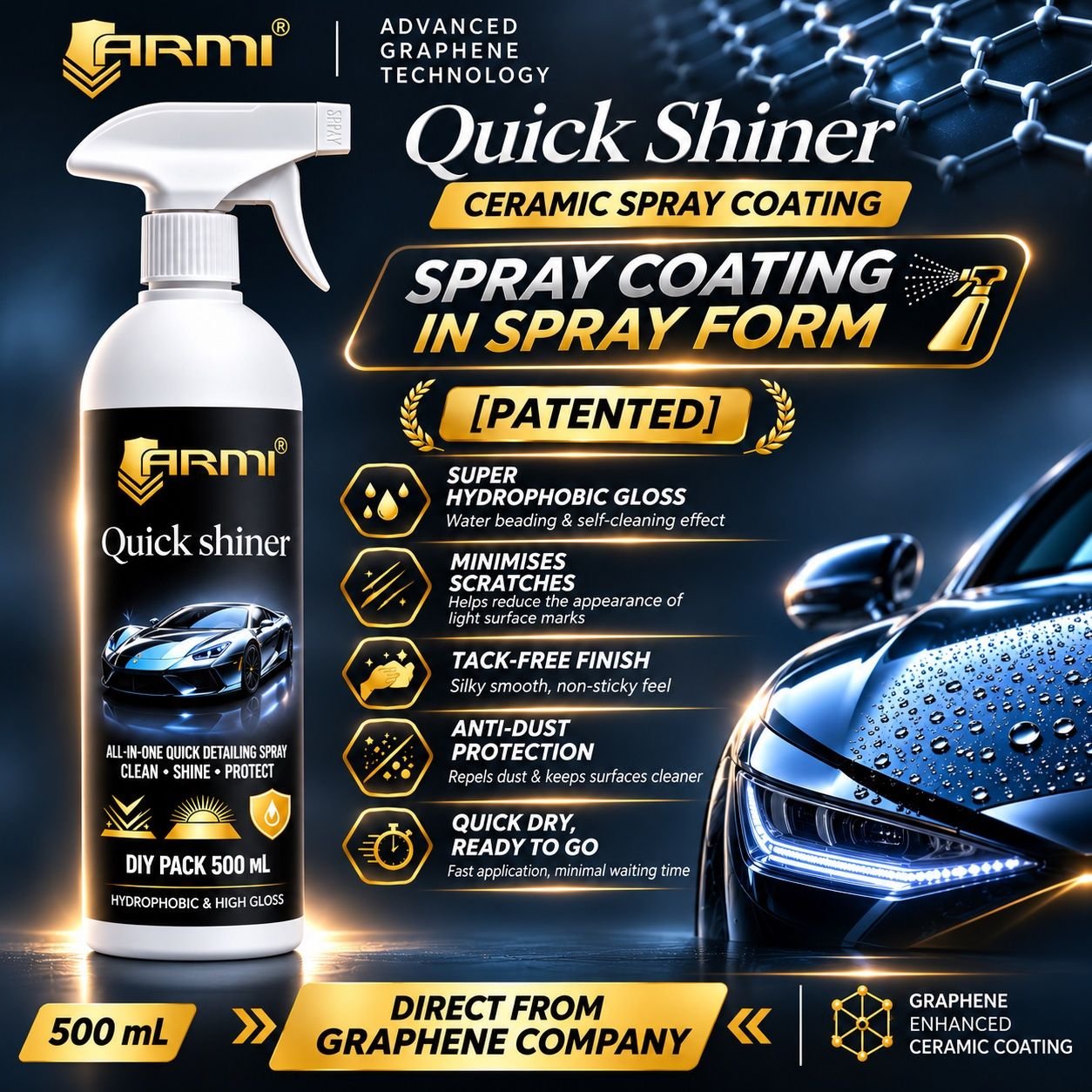
Gloss is an optical effect. A surface appears glossy when reflected light is concentrated in a relatively orderly direction. Micro-scratches, haze, dirt and uneven residues scatter light and make the finish appear dull. A thin, uniform treatment may improve apparent gloss by filling or smoothing very small surface irregularities, changing refractive behaviour or improving surface cleanliness. It cannot restore missing clear coat or permanently level deep scratches.
Ice-Phobic and Frost-Repellent Behaviour
What the claim can and cannot mean
Ice-phobicity describes a surface’s tendency to resist ice formation or reduce ice adhesion. It is a demanding property because ice behaviour depends on surface chemistry, roughness, temperature, humidity, water state, freezing rate and mechanical stress. A water-repellent surface may reduce the amount of water that remains on a panel, but hydrophobicity alone does not prove low ice adhesion or prevent frost under all conditions.
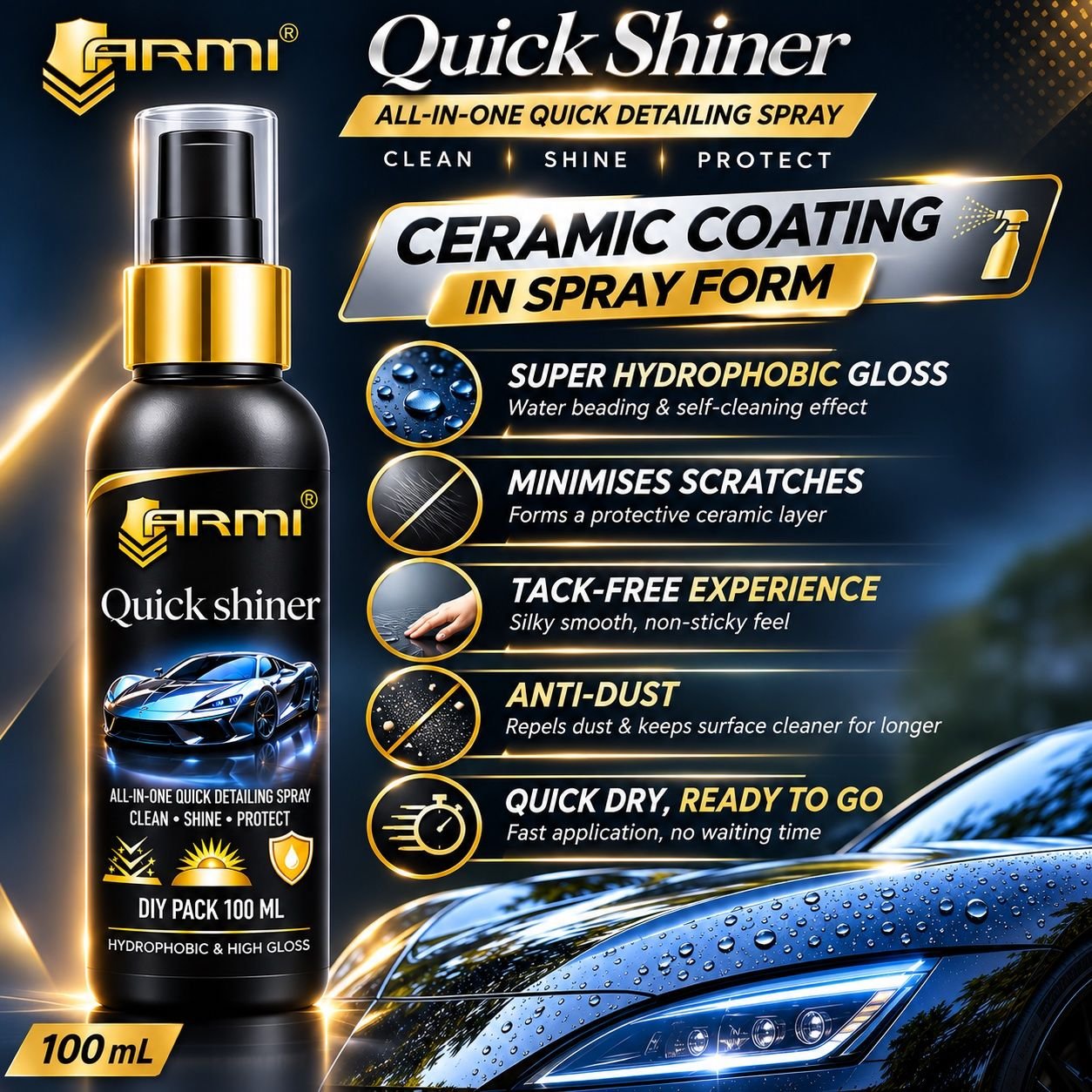
The product brief describes ice-phobic performance and frost repellency. To substantiate a strong technical claim, a manufacturer would ideally use a defined test method: controlled substrate, water quantity, temperature profile, freezing duration, ice-removal force or adhesion measurement, number of repeats and comparison control. If no such test data is available, the public wording should remain conservative: “designed to support water and frost repellency under suitable conditions,” rather than “prevents ice formation.”
For users, the sensible interpretation is that surface water behaviour may be improved, but the treatment is not a de-icing chemical, winter safety device or substitute for clearing ice from windscreens, mirrors, lights or critical vehicle components. Never drive with obstructed glass or rely on a detailing product to make frozen surfaces safe.
Application Areas and Material Compatibility
One product concept, different substrates
Alloy wheels are exposed to brake dust, road grime, heat and aggressive cleaners. The surface may be painted, powder-coated, clear-coated, polished or anodised. Test compatibility on a small inconspicuous area and avoid applying a product to hot wheels. Do not use a detailing treatment on brake discs, pads, tyre tread or other safety-critical friction surfaces.
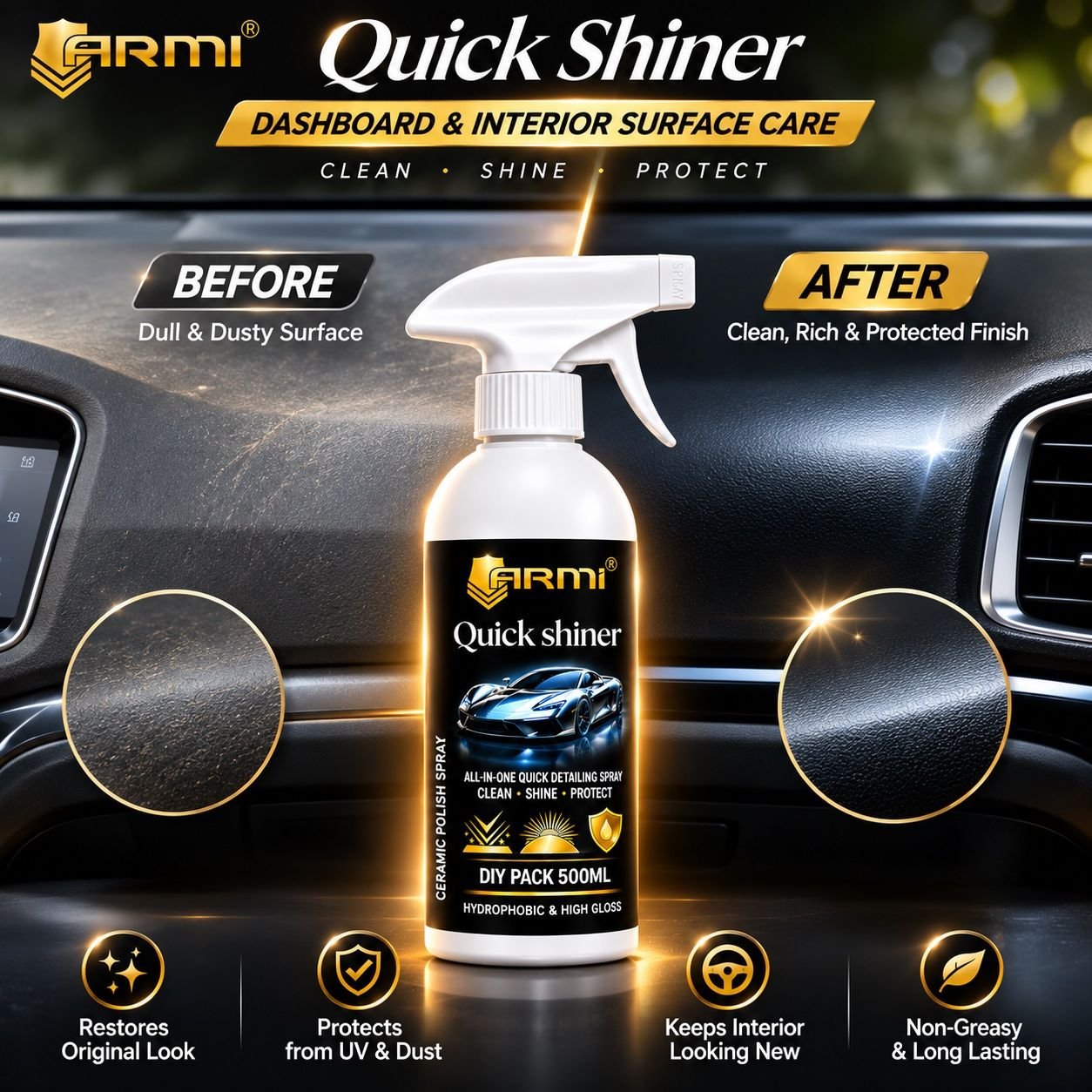
Dashboard and interior plastics may be textured, soft-touch coated, painted or UV-treated. Interior surfaces can become slippery if over-applied. Avoid steering wheels, pedals, gear selectors, touchscreens, instrument lenses and any control surface where grip, visibility or tactile feedback is essential. A product intended for compatible plastics should be used only on the interior materials listed on its label.
Glass and chrome require separate consideration. A hydrophobic treatment may be suitable for some glass or exterior trim, but windscreen use can create smear, wiper judder or optical distortion if not specifically approved. Never apply to the windscreen, camera lenses or sensor windows unless the label explicitly permits it. Modern vehicles rely on cameras, radar covers and optical sensors; residues can interfere with visibility or sensor performance.
Motorcycles and scooters contain painted panels, plastics, metal, chrome, glass and rubber. The same safety exclusions apply. Keep product away from tyres, brake rotors, brake pads, grips, foot pegs and seat surfaces where loss of traction could create risk. Apply in small sections and buff completely. For helmets, only use on exterior surfaces if the helmet manufacturer permits the chemistry; never apply to visor interiors or optical surfaces unless specifically approved.
Step-by-Step Use: A Better Result Starts Before the Spray
A practical routine for vehicle owners and detailers
Step 1 — read the current label. Confirm the product is intended for the surface you plan to treat. Check any warnings, temperature range, ventilation advice, patch-test instruction and exclusions. If the product is new to a particular trim or coating, test a small hidden area first. The package instructions take priority over any generic blog guidance.
Step 3 — wash first. Remove loose dust and road grime using a suitable automotive wash process. Do not use the spray as a substitute for washing a heavily soiled vehicle. Wiping grit across paint can cause scratches. Rinse thoroughly and dry with a clean, soft microfibre towel. If bonded contaminants remain, use an appropriate decontamination process compatible with the paint system.
Step 4 — shake only if the label instructs you to. Some dispersions need mixing before use; others should not be shaken aggressively because that can introduce foam. Follow the product’s actual instructions. Do not dilute or mix with another chemical unless BTCORP has explicitly approved that procedure.
Step 5 — apply sparingly to a small section. Use the recommended number of sprays and distribute evenly with a clean applicator or microfibre cloth. Avoid spraying into air intakes, electrical connectors, screens, sensors or hot components. For large panels, work in manageable sections so the material does not dry unevenly before buffing.
Step 7 — allow the finish to settle. Respect any drying or curing time specified by the manufacturer. Avoid washing or exposing the treated surface to water during any stated initial cure period. The exact time is product-specific and is not disclosed in the supplied brief, so it should not be invented in this article.
How to Evaluate Performance Scientifically
From marketing language to measurable tests
A credible surface-care product should be evaluated through repeatable tests, not a single dramatic photograph. The test plan should identify the substrate, preparation method, environmental conditions, product quantity, application technique, curing interval, control sample, measurement instrument and number of replicates. Results should be reported with averages and variation where possible. This makes performance claims more meaningful to distributors, detailing studios and technically informed customers.
Gloss can be measured with a calibrated gloss meter. Surface appearance can also be documented through controlled photography, but camera auto-exposure and reflections can mislead. Tack or feel can be assessed using a defined method rather than informal finger-touch alone. Drying time should be measured under recorded temperature and humidity. Abrasion or wash durability requires a repeatable cycle protocol and should specify the cleaner, media, load and number of cycles.
Chemical resistance testing may expose coated panels to defined substances for a specified time, followed by visual inspection, gloss measurement or other analysis. Corrosion protection testing is relevant only if the product is intended and validated for the substrate and claim. Ice adhesion requires a controlled freezing and removal test. No single “water beading” video proves all these properties.
A useful internal test matrix for ARMI® QUICK SHINER would compare untreated and treated panels across the approved surface types. It could include initial gloss, water contact angle, wipe-off, streaking, dust deposition, wash-cycle retention and storage stability. The final claim set should be limited to the properties supported by the test data and should specify any conditions or limitations.
Traditional Wax, Sealant, Ceramic and Graphene-Enhanced Sprays
Understanding the categories without oversimplifying
Graphene-enhanced coatings add graphene or a graphene derivative to a coating matrix. Their purpose is to combine the matrix’s film-forming and surface properties with the functional characteristics of the graphene material. The result is not automatically superior to every ceramic coating. Dispersion, loading, binder compatibility, film formation and testing determine whether the additive produces a meaningful improvement.
ARMI® QUICK SHINER is positioned as a convenient all-in-one spray for cleaning, gloss enhancement and surface protection. It is best compared with products in the same use category: quick detailing sprays and spray-applied hybrid surface treatments. It should not be marketed as a direct replacement for paint protection film, paint correction, a full professional ceramic coating or a dedicated interior cleaner unless the manufacturer’s evidence and instructions support that comparison.
A fair buyer comparison asks practical questions: How easy is the product to apply? Does it streak on dark paint? What surfaces are approved? What is the measured water behaviour? How many wash cycles does it withstand? What is the storage life? Is the spray head reliable? What documentation and support are available? These questions are more valuable than relying on a single buzzword.
Durability: Why “Up to Six Months” Needs Context
The real-world factors that affect service life
A vehicle parked outdoors in intense sunlight and heavy monsoon exposure experiences a different environment from a garage-kept vehicle used occasionally. A daily commuter encounters more road film, washing and abrasion than a weekend car. A motorcycle exposed to dust and rain may need a different maintenance schedule from a car stored indoors. Durability claims should therefore identify the test conditions and avoid implying that every user will achieve the maximum period.
The best way to substantiate a duration claim is to conduct a defined durability study. Apply the product to specified panels, cure it under controlled conditions, then expose it to a documented wash or weathering protocol. Measure the relevant property at intervals. If the claim is based on water repellency, report how that property changes over time. If the claim is based on gloss, measure gloss retention. Do not infer six-month scratch protection from a six-month water-beading result.
Market Demand: Why Advanced Surface Care Is Getting Attention
Convenience, premiumisation and the detailing ecosystem
Industry research illustrates the broader market context. Grand View Research estimates the global car detailing services market at US$43.5 billion in 2025 and projects US$45.9 billion in 2026, with a forecast of US$70.8 billion by 2033. The same source identifies exterior detailing as a major segment and notes the role of vehicle appearance and maintenance preferences in market growth. These are estimates for the overall detailing services market, not sales figures for graphene sprays or ARMI® QUICK SHINER.
The wider ceramic coatings market is also forecast to expand. Grand View Research reports an estimated global ceramic coatings market value of US$13.0 billion in 2025 and US$14.1 billion in 2026, with a projection of US$24.5 billion by 2033. This market covers ceramic coatings across applications and is not a direct measure of automotive spray-coating demand. It is useful as an adjacent materials-market indicator, not as proof of product-specific demand.
For automotive detailing, Mordor Intelligence highlights growth in paint correction and ceramic coating services, along with expanding mobile and on-demand formats. Its market estimates are research-provider projections and should be described as such. The broad direction is clear: consumers and service providers are interested in higher-value surface care, but the exact pace varies by region, price point, vehicle ownership patterns and professional service penetration.
Why B2B Buyers Look Beyond the Bottle
Retailers, detailers, distributors and private-label partners
A consumer may judge a product by its application experience and visible finish. A distributor must evaluate a wider set of commercial factors: margin structure, repeat purchase potential, pack sizes, shelf life, packaging robustness, regulatory documentation, language requirements, export paperwork, product liability, claims substantiation and supply continuity. A detailing studio may also need training, demonstration panels, usage guidance and a predictable result across different operators.
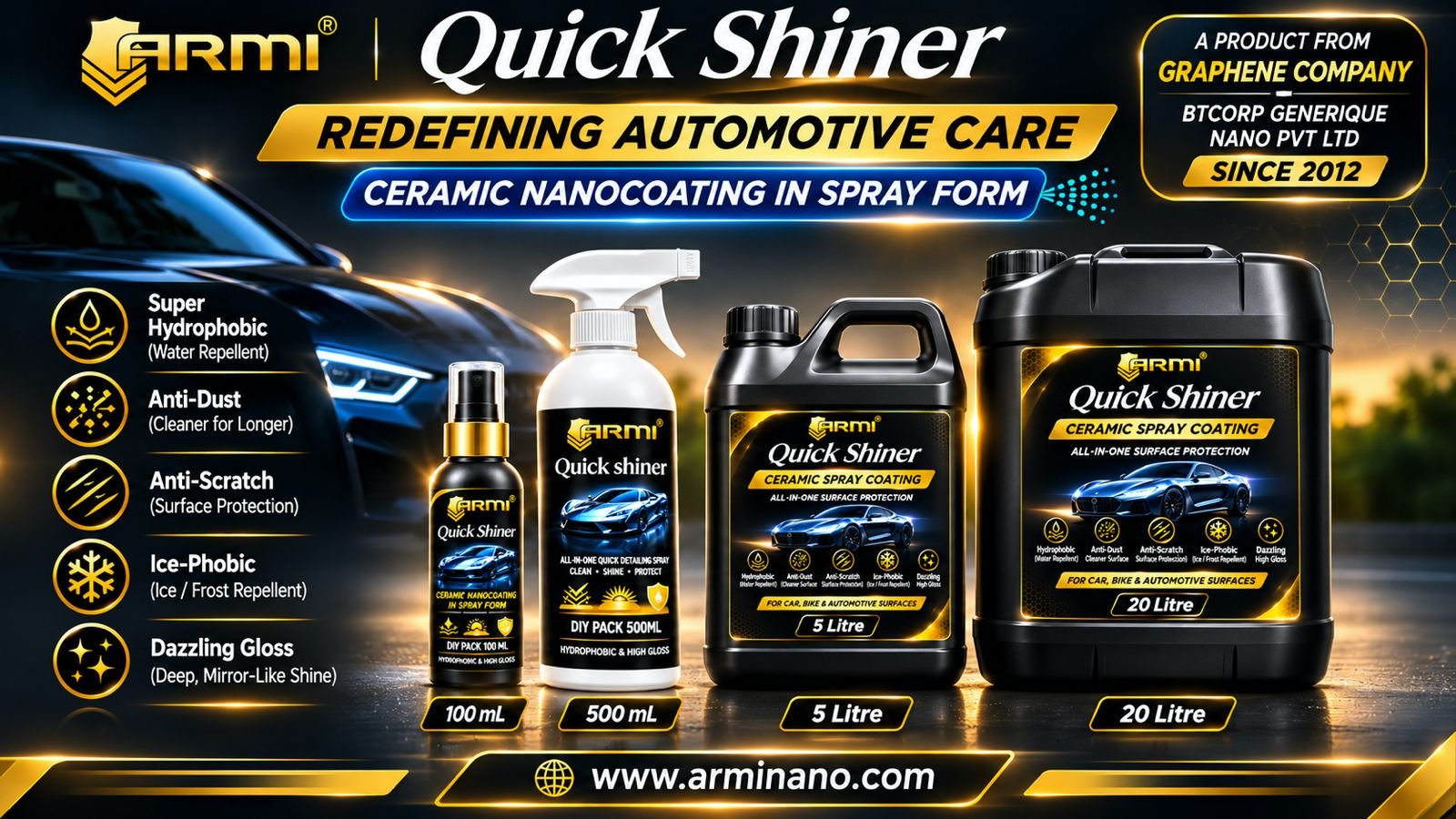
The supplied ARMI® product visual shows multiple pack formats, including 100 mL, 500 mL, 5 L and 20 L presentations. These sizes suggest a route from consumer trial packs to workshop or bulk supply. Actual availability, minimum order quantities, custom packaging and export configurations should be confirmed directly with BTCORP. The visual should not be treated as a binding commercial catalogue.
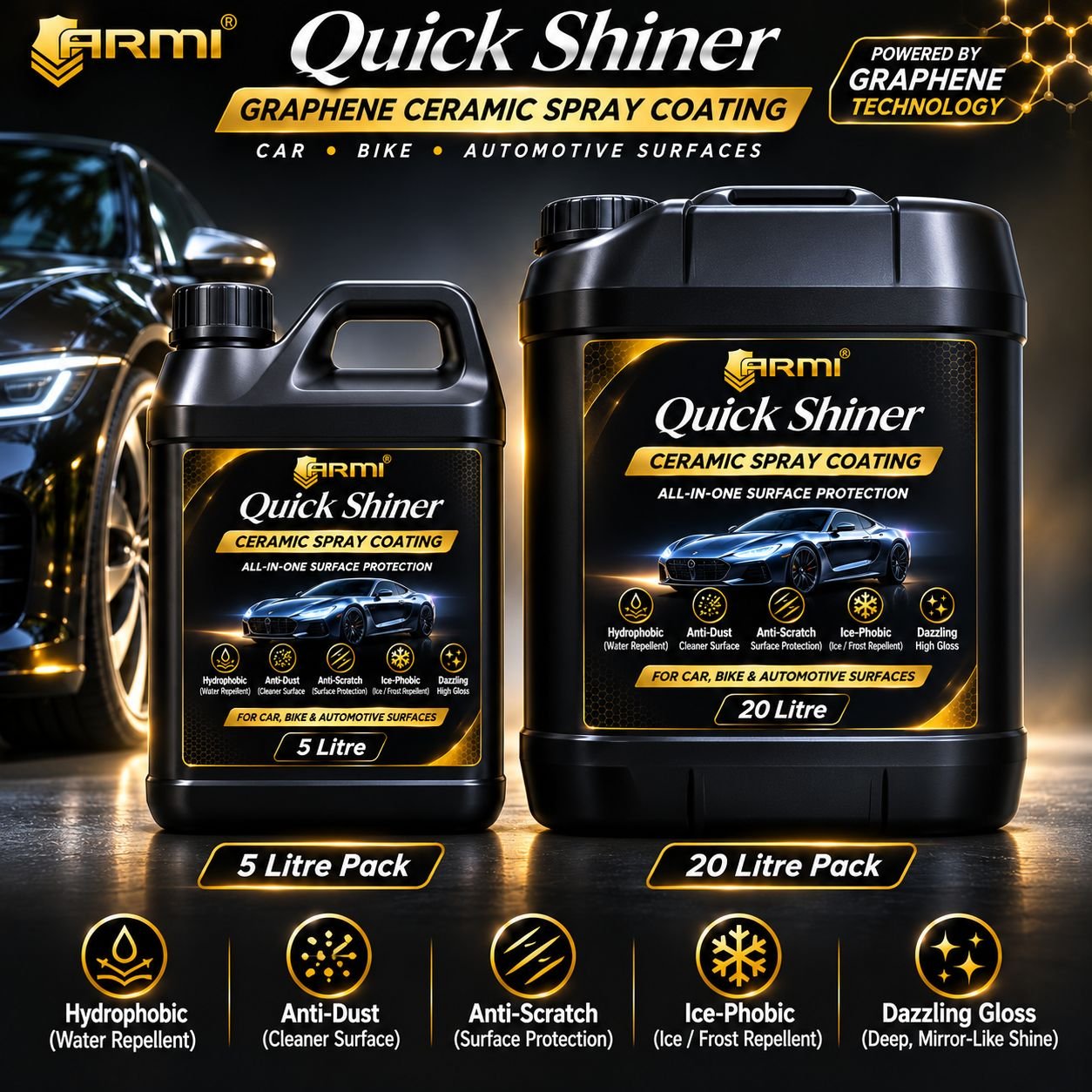
Retailers benefit from clear positioning: what the product is, which surfaces it is approved for, how it is applied, what result users can reasonably expect and which surfaces must be avoided. Distributors need consistent product naming, high-resolution product images, technical descriptions, safety documents and reliable lead times. Professional studios value repeatability, clear dilution or application instructions where applicable, and a support channel for technical questions.
BTCORP GENERIQUE NANO: From Graphene Technology to Automotive Applications
The manufacturer story and what global supply requires
According to the company information supplied for this article, BTCORP GENERIQUE NANO PVT LTD is a Bengaluru, Karnataka-based graphene technology company whose journey dates back to 2012. The company presents ARMI® QUICK SHINER as an automotive surface-care application emerging from its graphene and materials-technology experience. This is the manufacturer’s stated background and should be supported on the live website with company profile information, facility details, certifications and relevant technical credentials wherever available.
A materials-technology company brings a different perspective to automotive care. It must understand not only the visible finish but also raw-material behaviour, dispersion science, compatibility, stability and the relationship between formulation design and application conditions. Translating that knowledge into a retail spray requires another layer of engineering: ease of use, repeatable spray output, packaging compatibility, clear instructions and a performance story that ordinary users can understand.
Global supply is more than shipping a carton overseas. It begins with a product specification and a defined market. Each destination may have different requirements for chemical classification, safety labelling, language, packaging, transport, customs documentation and claims. The manufacturer and importer should determine the applicable rules before shipment. The correct safety data sheet, technical data sheet, invoice, packing list, certificate of origin where relevant and other documents depend on the destination and transaction.
Quality Assurance and Responsible Product Stewardship
The unseen work behind a dependable spray
A professional product should be supported by controlled specifications and traceable records. Raw materials should be approved before use. Equipment should be maintained and calibrated. Operators should follow documented instructions. Batch records should capture quantities, lot numbers, process stages, checks and deviations. Finished goods should be released against defined criteria. These practices reduce variability and help investigate complaints if a customer reports separation, leakage, spray failure, streaking or unexpected performance.
Stability testing should consider the product in its final packaging, not only in a laboratory beaker. The bottle, liner, cap, pump, dip tube, gasket and label adhesive may interact with the formulation. A product can remain chemically stable yet fail because the sprayer clogs or the package leaks. Conversely, a robust package cannot correct a formulation that separates or loses performance during storage.
Environmental responsibility includes reducing unnecessary packaging, selecting suitable materials, preventing spills, managing production waste and communicating disposal guidance. Claims such as biodegradable, non-toxic, VOC-free or environmentally friendly need a clear definition and supporting evidence. The manufacturer should avoid broad green claims that cannot be substantiated.
What the Customer Actually Gets
A practical value proposition, not just a technology name
For a vehicle owner, the value of a maintenance spray is measured in practical outcomes: Does it apply without a complicated process? Can the user achieve an even finish? Does the surface look glossier? Does water behaviour improve? Is the finish smooth rather than greasy? Can the treated area be maintained with normal washing? Does the product work on the surfaces that matter to the user? These questions make the technology relevant to everyday life.
For a professional detailer, time and consistency matter. A spray treatment may offer an additional maintenance step or an accessible service tier, provided the product’s approved use and performance are clear. The studio should test the product on its own substrates, establish a repeatable application method and explain realistic expectations to customers. It should not promise deep scratch removal, permanent protection or a guaranteed service life unless the product evidence supports those claims.
Common Mistakes That Reduce Results
Avoiding streaks, poor adhesion and unrealistic expectations
Applying to a hot panel is a frequent cause of rapid flash-off and streaking. Working in direct sun can make the product difficult to level. Applying too much product can leave residue. Using a dirty cloth can spread grit or contamination. Applying over road film can trap dirt beneath the treatment. These are not necessarily formulation failures; they are process errors that can often be prevented through preparation and controlled application.
Mixing the product with another cleaner, solvent, wax or coating without approval can destabilise the formulation or create an unpredictable surface. Using an abrasive compound after application may remove or alter the film. Washing with an aggressive chemical can reduce the treatment’s performance. The user should follow the product label and avoid improvising combinations based on assumptions about ingredient compatibility.
A water-beading test immediately after application can be misleading if the panel still contains residual product or is contaminated with another dressing. A meaningful test starts with a properly cleaned substrate, a controlled application and a documented waiting period. Compare treated and untreated panels under the same conditions. Repeat after washing to understand retention rather than relying on a single fresh application demonstration.
The Science in One Minute
A simplified explanation for a first-time reader
Imagine a clean car panel as a landscape of microscopic peaks and valleys. Dirt and water interact with this landscape according to the surface’s chemistry and texture. A spray treatment places a very thin liquid layer across the surface. As the carrier flashes off, selected ingredients remain. Depending on the formulation, those ingredients can form a smoother-feeling film, change the outermost surface chemistry and create a surface that water wets less readily. The result may be a more reflective appearance and droplets that bead or roll more readily.
The most important point is that no single ingredient does everything. Performance comes from the complete formulation, its manufacturing process, the surface it is applied to and the way the user applies and maintains it. That is why a credible technical product needs more than a list of fashionable materials: it needs a controlled specification and relevant test evidence.
Frequently Asked Questions
Clear answers for vehicle owners and trade buyers
Q: Does graphene mean the product is scratch-proof? A: No. Graphene is a functional material, not a guarantee of scratch-proof performance. The product brief describes scratch-minimising or surface-protection benefits. These claims should be interpreted as helping with surface maintenance or the appearance of light marks where supported by test data, not preventing all scratches or repairing deep damage.
Q: Does it create a permanent ceramic layer? A: No permanent protection should be inferred. The supplied brief describes performance of up to six months under suitable application and exposure conditions. Actual durability depends on preparation, substrate, climate, washing and use. Follow the label and manufacturer guidance.
Q: Can it be used on every surface inside and outside a vehicle? A: No universal compatibility should be assumed. The brief lists paint, motorcycles, wheels, dashboard plastics, compatible leather and trim. Always check the current label, patch test and avoid safety-critical or optical surfaces unless explicitly approved.
Q: Is it suitable for professional detailers? A: The spray format and multiple pack formats shown in the supplied visuals may be relevant to professional users. Detailers should evaluate the product on their own substrates, establish a consistent method and use only the approved claims and instructions.
Q: What is the exact chemical formula? A: The complete proprietary formula and ingredient percentages were not included in the supplied public brief. A precise formula should only be shared by BTCORP through approved technical or regulatory documentation. This article explains representative chemistry and does not disclose a confidential recipe.
Q: What does the six-month claim mean? A: The brief says up to six months under suitable application and exposure conditions. It is not a guarantee for every vehicle. The manufacturer should provide the supporting test conditions and maintenance guidance.
Q: How can a distributor enquire about bulk supply? A: Contact BTCORP GENERIQUE NANO PVT LTD through the official contact details provided in the product brief. Share the destination market, expected volume, preferred pack size, channel and any documentation requirements so the enquiry can be assessed properly.
A Practical Technical Checklist for Trade Enquiries
What to request before placing a bulk order
Before a commercial purchase, ask for the latest technical data sheet, safety data sheet, approved label artwork, pack-size list, shelf-life statement, storage conditions, batch traceability details and available test reports. Ask which substrates are approved and which are excluded. Confirm application quantity, wipe-off method, drying or curing time, wash restrictions and reapplication guidance. If the product is being imported, ask the importer or regulatory adviser to review the documentation for the destination market.
The ARMI® QUICK SHINER Proposition
One pack. Multiple applications. Clean. Shine. Protect.
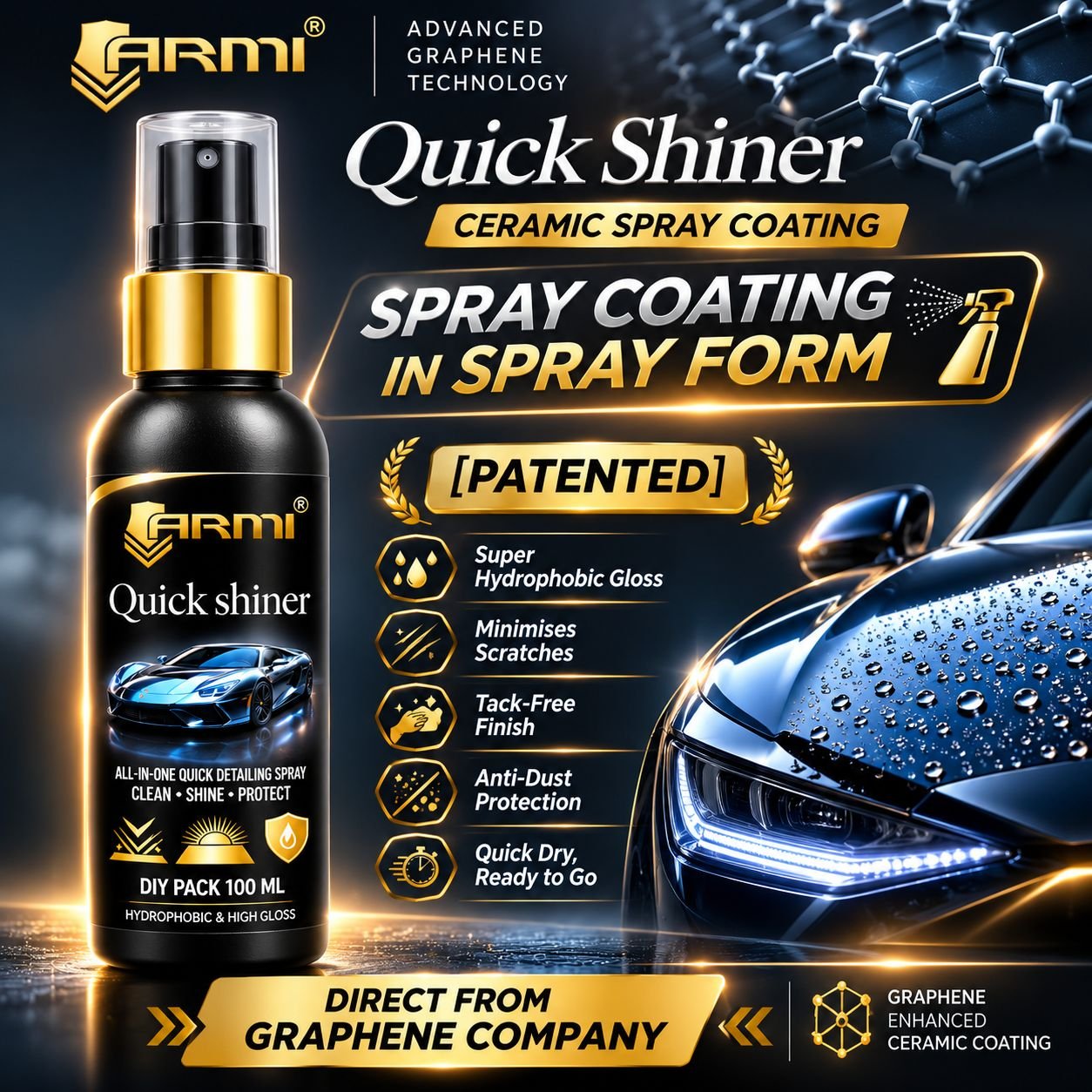
ARMI® QUICK SHINER brings a graphene-powered ceramic spray-coating concept into a format designed for convenient automotive surface care. Its stated proposition is straightforward: clean compatible surfaces, enhance appearance and leave a treatment designed to support water repellency and everyday protection. The supplied product material highlights hydrophobic gloss, a tack-free finish, anti-dust behaviour, ice/frost repellency and a fast spray-and-buff application.
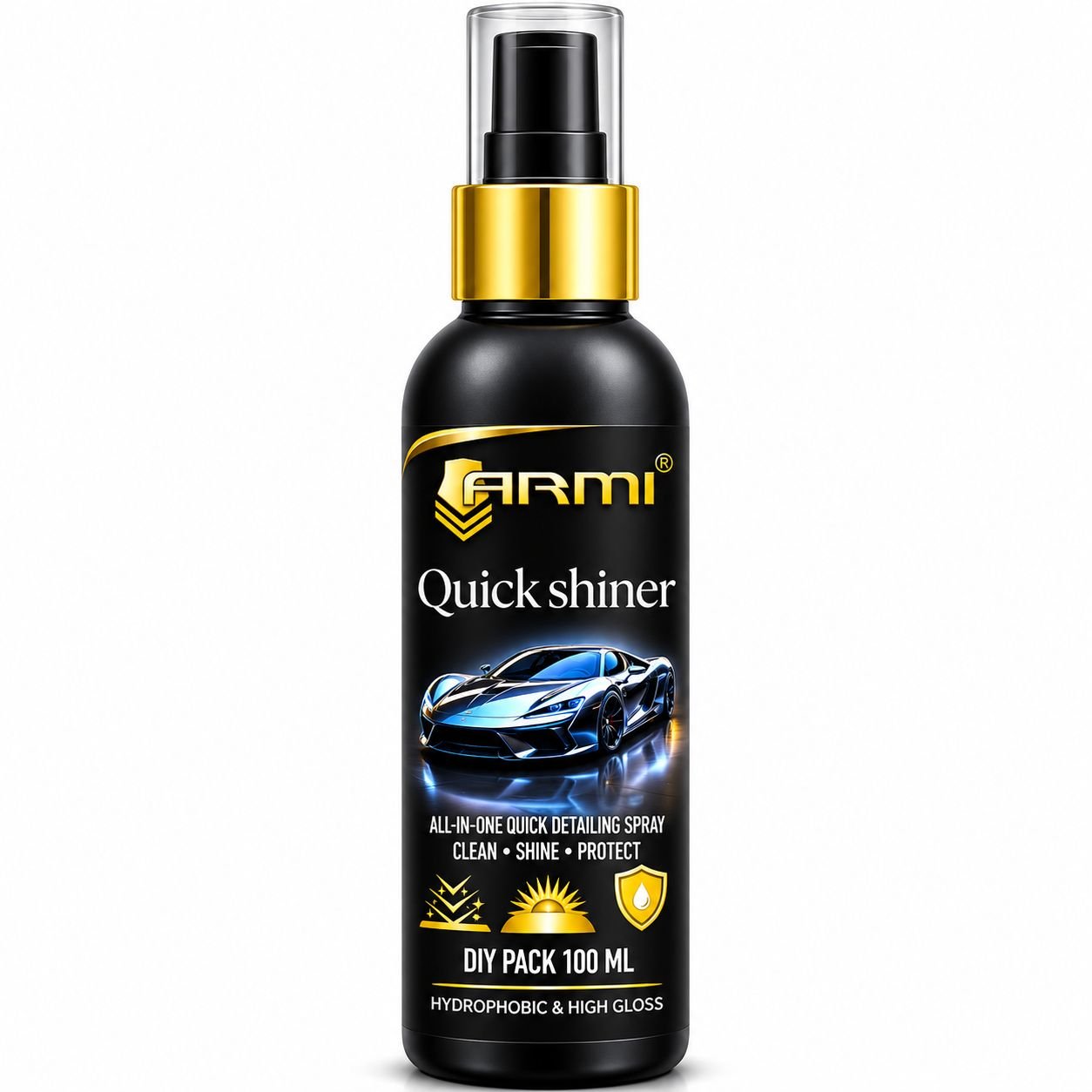
The product story is strongest when technology and usability are presented together. Graphene and ceramic-related chemistry explain the materials direction. The spray format explains convenience. Multiple pack sizes shown in the product visuals create options for individual users and trade channels. BTCORP’s stated graphene-technology background provides the manufacturer context. Test evidence, clear instructions and consistent supply complete the story.
For vehicle owners, the invitation is to make surface maintenance easier. For detailing studios, it is an additional product to evaluate within a responsible service menu. For retailers and distributors, it is an automotive-care category with consumer and professional pack formats to discuss. For bulk and private-label buyers, the next step is a technical and commercial conversation with the manufacturer.
Animated manufacturing workflow
A conceptual process map — not the confidential BTCORP production recipe.
Representative silane chemistry — simplified
Where hydrolysable organosilanes are used, hydrolysis can create silanol groups, followed by condensation into siloxane linkages. The equations below explain a general materials-science pathway; they are not a disclosure of the proprietary ARMI® formula.
Reaction rates and final film structure depend on precursor chemistry, water, pH, solvent, catalyst, temperature and ageing.
Explore ARMI® QUICK SHINER with BTCORP
For technical documentation, pack-size confirmation, bulk supply, distribution or private-label enquiries, contact the manufacturer with your destination market, expected volume and preferred packaging format.
Visit ARMINANO Email BTCORPManufactured by: BTCORP GENERIQUE NANO PVT LTD · Bengaluru, Karnataka, India
Website: https://www.arminano.com · Email: btc@bt-corp.co
Technical references and market context
The chemistry discussion below draws on general published research and technical references. Market numbers are third-party estimates, not BTCORP sales data or ARMI® product-specific forecasts.
- Merck / Sigma-Aldrich — Sol-Gel Science for Ceramic Materials: overview of hydrolysis and condensation in sol-gel systems.
- Materials (2022) — Silane Coatings for Corrosion and Microbiologically Influenced Corrosion Resistance: organosilane hydrolysis, condensation and substrate interaction.
- Corrosion Science (2023) — Review of graphene-based protective coatings: barrier mechanisms and the influence of dispersion, orientation, size and content.
- Grand View Research — Car Detailing Services Market: third-party market estimates and forecast.
- Grand View Research — Ceramic Coatings Market: broad ceramic coatings market estimate, not automotive spray-only data.
- Mordor Intelligence — Car Detailing Services Market: market outlook and service-segment trends.