
Beyond the shine.
Into the science.
A visual field guide to graphene ceramic nano coating: what it is, why paint needs protection, how the coating forms a protective film, how these products are developed, and what to look for before choosing one.
A practical guide for curious owners, detailers and product buyers
Modern automotive paint protection is no longer just about making a vehicle look glossy under showroom lights. It is about managing the everyday contact between a painted surface and its environment: sunlight, rainwater, road film, dust, mineral deposits, insects, bird droppings, washing tools and the small marks that gradually change the way a finish looks. Graphene ceramic coatings sit in this evolving category of surface-protection products. The name sounds futuristic, but the decision to use one should be grounded in chemistry, preparation, application and honest performance expectations.
What is Graphene Ceramic Nano Coating?
It is a liquid surface-protection formulation designed to leave a thin, bonded film on a suitable, properly prepared surface. In a graphene-ceramic hybrid, the formulation combines a ceramic-forming or silica-based system with graphene-derived material and other ingredients selected to help the liquid apply, level and cure.
Think of the coating as a carefully engineered finishing layer rather than a magic shield. The clear coat already present on a modern car is the primary transparent protective layer above the colour coat. A nano coating is applied over that finish to add a sacrificial surface layer. Once the liquid has been spread and allowed to flash or cure according to its instructions, it can make the surface feel slicker, look glossier and become easier to clean.
The word ceramic commonly points to silicon-containing chemistry, often involving silica, silanes or related resin systems. These ingredients can form a relatively hard, chemically resistant network as the product cures. The word graphene refers to a carbon nanomaterial family. Commercial coatings may use graphene oxide, reduced graphene oxide, graphene nanoplatelets, functionalised graphene or a dispersion containing one of these forms. The exact grade, concentration and compatibility with the binder matter more than the word on the label.
That distinction is important. A bottle of automotive graphene ceramic coating is not a bottle of pure, single-layer graphene. Raw graphene is a solid nanomaterial; it does not simply dissolve into a ready-to-use liquid and independently attach itself to a car. A finished coating is a formulated system: active materials, binders, carriers, additives and stabilising components work together to produce a usable product.
A designed liquid system
The ingredients must remain compatible and sufficiently stable in the bottle, spread evenly on the surface and form a consistent film during drying and curing.
A thin, controlled layer
Preparation, applicator technique, temperature, humidity and timing influence the finish. A good formula cannot compensate for a dirty or poorly prepared panel.
A surface film develops
As the carrier evaporates and the reactive components cure, the coating develops its intended surface characteristics. Exact chemistry differs by product.
One phrase worth remembering: graphene is an ingredient family, not a complete performance guarantee. The real product is the entire formulation plus the quality system behind it.
Why combine graphene and ceramic?
Ceramic chemistry provides the film-forming foundation; graphene-derived materials may be introduced to influence selected properties of the cured layer. The result depends on how well the materials are dispersed, stabilised and matched to the binder.
Graphene is a carbon material arranged in a two-dimensional honeycomb lattice. Its remarkable properties have made it interesting across composites, electronics, energy storage, sensors, paints and coatings. Yet the behaviour of graphene in a real product is not identical to the headline properties measured on a pristine laboratory flake. A coating contains a particular graphene grade, at a particular loading, in a particular liquid and binder system. Its practical performance depends on those details.
Graphene oxide contains oxygen-bearing functional groups that can help compatibility with some liquids and polymers, although those groups also influence electrical, chemical and moisture-related behaviour. Reduced graphene oxide has fewer oxygen-containing groups and different surface characteristics. Graphene nanoplatelets are another form, with their own size, layer count and dispersion requirements. These materials are not interchangeable, and the best choice is the one suited to the coating’s intended chemistry and performance target.
Ceramic coating systems often rely on silicon-based chemistry to create a cross-linked or network-like film. Depending on the formulation, this may help improve gloss, water repellency, resistance to certain contaminants and ease of maintenance. In a hybrid, graphene-derived material may be used as a functional additive. It is not enough to add a fashionable ingredient: poor dispersion can create agglomerates, haze, uneven application or instability. Formulation engineering is what turns a raw nanomaterial into a repeatable consumer product.
Surface energy
Hydrophobic behaviour is related to how water interacts with the cured surface. A water-repellent finish can encourage droplets to bead and move, but beading alone does not prove long-term protection.
Film integrity
Binder chemistry, curing and uniformity help determine whether the film performs consistently. The complete formulation matters more than an isolated ingredient claim.
Dispersion quality
Nanomaterials need to be distributed through the liquid system. Particle size, surface chemistry, mixing energy and stabilisation can all influence consistency.
Science check: do not assume that every product marketed as “graphene” contains the same graphene derivative, concentration or coating architecture. Ask the manufacturer for the technical data sheet (TDS), safety data sheet (SDS) and test methods relevant to the exact product.
Why does your vehicle need paint protection?
A vehicle spends its life outdoors and on the move. Paint protection is about making routine contamination easier to manage and helping preserve the appearance of the finish—not making paint invincible.
1. Sunlight and environmental exposure
Ultraviolet radiation contributes to the ageing of exterior materials. Paint systems are designed with protective layers, but prolonged exposure, poor maintenance and environmental conditions can gradually affect appearance. A coating may add a sacrificial layer and help the surface stay easier to clean. It should not be described as a replacement for sound paintwork, covered parking or regular care.
2. Water, minerals and spotting
Rainwater, sprinkler water and wash water can leave mineral deposits when droplets dry. The risk is influenced by water hardness, surface temperature, exposure time and the minerals present. Hydrophobic coatings can change the way water sits on a panel, which may make drying and cleaning easier. However, droplets can still dry and leave spots. Do not allow water to bake onto a hot panel, and remove deposits using paint-safe methods.
3. Dust, road film and everyday dirt
Dust, traffic film, oily residues and organic contamination gradually dull a vehicle’s appearance. A slicker, easier-to-clean surface can reduce the effort required during maintenance. It does not mean that the vehicle becomes self-washing. Dirt still needs to be removed safely with suitable shampoo, clean wash media and proper drying technique.
4. Bird droppings, insects and tree contamination
Bird droppings, insect remains and tree sap can be chemically aggressive, particularly when left in heat. A coating may provide a sacrificial barrier that makes prompt cleaning easier, but it cannot guarantee that acidic or alkaline contaminants will never mark paint. The best response is still quick, careful removal with a paint-safe cleaner and a soft microfibre towel.
5. Wash-induced swirls and micro-marring
Many fine marks come from contact: dirty wash mitts, gritty towels, automatic brushes, dry wiping or poor drying habits. A coating can improve slickness and add a sacrificial film, but it is not equivalent to a paint protection film and should not be represented as a guarantee against scratches. Deep scratches, stone chips and physical abrasion can still damage the paint.
The practical reason to coat: a quality coating can make the vehicle easier to maintain and help preserve a freshly detailed appearance. Its value is strongest when paired with good washing habits, shade where possible and timely removal of contaminants.
How does Graphene Ceramic Nano Coating work?
The application is a sequence: prepare the substrate, spread a controlled amount, allow the product to flash as directed, level the residue and protect the new film while it cures.
Before application, the vehicle’s surface must be free of loose dirt, oils, wax residues and contaminants that interfere with bonding. If the paint has bonded contamination, it may need a clay treatment. If it has swirls or oxidation, polishing may be appropriate before coating. A coating generally preserves the condition of the surface beneath it; it does not hide defects. This is why professional detailers often spend more time on preparation than on the actual coating step.
After preparation, the product is shaken if instructed. A few drops are placed on the supplied applicator pad. The installer works a small section at a time, spreading the liquid in overlapping straight or cross-hatch passes. The aim is even coverage, not a thick wet layer. The product’s flash time changes with formula, temperature, humidity, panel size and airflow. Follow the bottle and current instruction sheet rather than copying another coating’s timing.
During flashing, the liquid carrier begins to evaporate and the surface appearance may change. The coating is then levelled or buffed with a clean, suitable microfibre towel before residue becomes difficult to remove. Use a second towel if required for the final wipe. Inspect the panel under good lighting from multiple angles. High spots—areas where excess coating has cured unevenly—can appear as dark smears, rainbow patches or streaks.
Once the coating has been levelled, it needs a protected curing period. Avoid water, washing, dust-heavy work and unnecessary contact for the time specified by the manufacturer. Some products permit careful driving after an initial set while requiring a longer period before water exposure or full cure. These timings are product-specific. Do not turn a general rule into a universal instruction.
Why the “thin and even” rule matters
More liquid does not automatically mean more protection. Excess product can be harder to level, may leave streaks and can waste material. A measured spread rate helps the installer control coverage and repeatability. The ARMI product information supplied for this article states an approximate spread rate of 2 ml per square foot. Treat this as the brand’s stated guidance for the product and verify it against the current pack instructions, panel condition and actual working conditions.
Manufacturing process: from graphene to finished coating
A finished graphene ceramic coating is not made by simply pouring graphene powder into a bottle. It requires material selection, dispersion, binder compatibility, formulation development, quality checks, filling and packaging.
Manufacturing details vary from one company and product to another. The sequence below describes a typical development framework for a graphene-enabled coating. It is a technical overview, not a claim that every step or exact recipe is used in the ARMI formulation. A manufacturer should confirm product-specific chemistry and process details through its technical documentation.
Raw material selection
Choose a graphene grade and ceramic/binder chemistry suited to the intended substrate, liquid carrier and performance target. Supplier specifications, purity indicators, morphology and batch traceability matter.
Incoming inspection
Review certificates and identity, inspect packaging and evaluate incoming material against defined acceptance criteria. The right checks depend on the material and its risk profile.
Pre-dispersion
Prepare the nanomaterial in a compatible liquid or concentrate. Wetting and controlled mixing help reduce agglomeration and support a uniform dispersion.
Dispersion engineering
Mixing energy, order of addition, temperature and stabilising chemistry are tuned. The objective is a stable, workable system—not simply the highest possible graphene loading.
Binder integration
Introduce the ceramic-forming resin or binder system and compatible additives. Check that the graphene dispersion does not destabilise the coating or interfere with curing.
Formulation optimisation
Adjust flow, wetting, levelling, flash behaviour, working time, appearance and cured-film properties through controlled trials.
Quality evaluation
Evaluate appearance, viscosity, stability, application behaviour and relevant cured-film tests using defined methods and acceptance limits.
Filling and packaging
Fill into compatible, clean containers. Check closure integrity, label accuracy, batch coding and pack presentation before dispatch.
Batch documentation
Maintain records for raw materials, process parameters, test outcomes, packaging and release decisions so a batch can be traced.
1. Choosing the graphene grade
Graphene is available in several forms: graphene nanoplatelets, graphene oxide, reduced graphene oxide, functionalised grades and dispersions. Each has different surface chemistry, morphology, layer structure and compatibility. A coating developer needs to identify which form can be incorporated into the intended resin system without causing sedimentation, agglomeration or unacceptable changes in viscosity and application.
2. Building a stable dispersion
Nanomaterials have a high surface area and can attract one another, forming clusters. The dispersion process aims to separate and distribute the material through the carrier. It may involve controlled mechanical mixing, suitable dispersing agents and carefully selected solvents. The choice of process depends on the graphene type and the formulation. Excessive processing can also be undesirable if it changes the material or heats the batch beyond its limits.
3. Integrating the ceramic system
The ceramic or silane-based portion needs to form the intended film and remain compatible with the graphene dispersion. Water content, solvent choice, catalyst level, pH where relevant, and the sequence of additions can influence shelf stability and cure behaviour. A formulation may look uniform immediately after mixing but separate during storage, so stability checks are essential.
4. Testing the finished product
Testing should match the claims. A hydrophobicity claim can be evaluated with a defined water contact-angle or water-behaviour method. Gloss can be measured using an appropriate gloss meter. Chemical resistance needs specified chemicals, exposure time, concentration and rating criteria. Abrasion and scratch-related claims require a stated test method and conditions. A hardness number such as “10H” is meaningful only when the test method, substrate, film build, cure conditions and result interpretation are disclosed.
It is also important to distinguish a liquid’s quality-control checks from a cured coating’s performance tests. A viscosity check can help confirm batch consistency, but it does not prove scratch resistance. A clear bottle does not prove long-term stability. A strong water-beading demonstration does not establish a multi-year service life. Reliable product development connects each marketing statement to a test that actually measures the stated property.
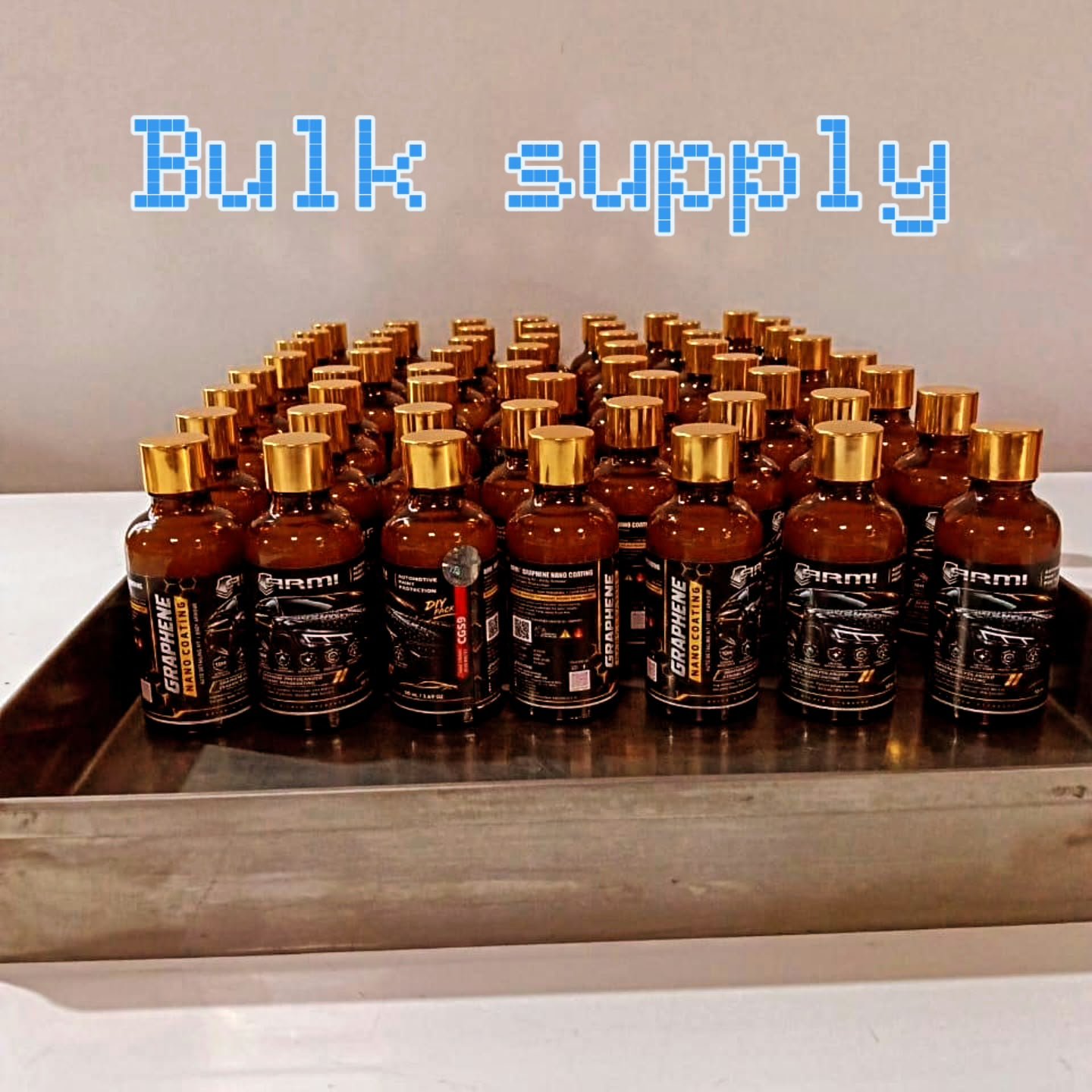
What a responsible manufacturer should be ready to explain: which graphene grade is used, how it is dispersed, what the binder system is designed to do, what tests are conducted, how batches are traced, and what handling precautions apply.
How to choose the best Graphene Ceramic Nano Coating
Choose by evidence and suitability—not by the biggest number on the label, the most dramatic water-beading video or the word “graphene” alone.
The best coating for one owner may not be the best for another. A professional detailer may prioritise predictable flash time, a forgiving wipe-off window and repeatable results. A DIY user may need clear instructions, a manageable working time, enough product for the vehicle and support if something goes wrong. A distributor may care about packaging, shelf stability, documentation, supply capacity and after-sales service. Start by identifying the use case.
1. Understand the surface compatibility
Some coatings are designed for painted automotive surfaces only. Others may be suitable for glass, wheels, trim or metal, but that should never be assumed. The ARMI product information supplied for this article describes the product as intended for painted surfaces. Follow that limitation. Do not apply it to glass, matte wraps, unpainted plastics, screens or interior materials unless the manufacturer specifically approves those uses.
2. Read the technical documents
A credible technical data sheet should help you understand the product’s intended use, application conditions, coverage, drying or curing guidance and storage. A safety data sheet should explain hazards, safe handling, personal protective equipment, first aid, fire response and disposal considerations. If the manufacturer makes a hardness, chemical resistance or durability claim, ask for the method and test conditions behind it.
3. Evaluate the application window
Coatings differ in how quickly they flash, how much time they allow for levelling and how sensitive they are to temperature and humidity. A product that is easy to apply in a climate-controlled studio may behave differently in a hot, humid outdoor setting. Look for instructions that describe suitable conditions and section size. Beginners should practise the process and avoid attempting an entire vehicle at once.
4. Look beyond the “H” rating
Hardness labels are often used in marketing, but the number can be misunderstood. Pencil hardness, nanoindentation and other hardness tests are different methods. A 10H pencil-hardness result does not mean a vehicle becomes immune to key scratches, stone chips or abrasion. Ask for the test standard and the exact substrate and cure conditions. Compare only like-for-like results.
5. Check realistic durability
Service life depends on formulation, preparation, film build, cure, climate, parking, washing chemistry and frequency of use. A stated “1–3 years” should be understood as a product claim or expected range under defined conditions, not a promise for every vehicle. Ask what maintenance is required and what would shorten the life. A coating that is washed with harsh chemicals or neglected may not behave like one maintained according to the manufacturer’s instructions.
6. Verify the company behind the bottle
Find out whether the seller is the actual manufacturer, a brand owner, an importer or a reseller. Each role can be legitimate, but it affects who controls formulation, production, batch release and technical support. A manufacturer with material science and application-development capability may be able to explain the product beyond its label. Ask for the manufacturing entity’s details, address, support contact and product documentation.
| What to compare | Useful evidence | Red flag |
|---|---|---|
| Hardness | Named test method, substrate, cure and result report | “10H” with no method or conditions |
| Hydrophobicity | Defined contact-angle or water behaviour test and maintenance context | One water-beading clip presented as proof of lifetime |
| Durability | Field or controlled testing with exposure and wash conditions | Guaranteed years without conditions |
| Coverage | Stated spread rate, vehicle-size guidance and net volume | Coverage claims that do not state application assumptions |
| Safety | Current SDS, label warnings and ventilation/PPE guidance | No safety information or vague handling advice |
| Support | Traceable company, batch information and responsive technical team | No manufacturer identity or after-sales contact |
BTCORP Generique Nano Pvt. Ltd.
A nanotechnology company with a focus on graphene materials, manufacturing, application development and contract research—an important context when evaluating a finished graphene-enabled coating.
BTCORP Generique Nano Pvt. Ltd. presents itself as an Indian nanotechnology company working across graphene production, application development and contract research. Its company information describes a journey beginning in 2012 and a focus on bringing graphene and other nanomaterials into practical industrial applications. Its published manufacturing information refers to in-house quality-control measures, packaging operations, process protocols and the ability to develop graphene-based intermediates and finished products.
This matters because the path from raw graphene to a dependable coating is not just a branding exercise. It involves understanding the nanomaterial, making it compatible with a liquid system, controlling the process and designing the finished product for a particular use. A company active in both material supply and application development can potentially connect these stages more closely than a business that only sources a finished bottle for resale. Buyers should still verify the product-specific evidence and the actual manufacturing responsibilities for the exact SKU they intend to purchase.
BTCORP’s published information describes graphene in multiple forms and applications, including dispersions, conductive inks and paints, polymer nanocomposites and coating-related products. The company also describes application-development and contract-research work. Those capabilities are relevant to graphene ceramic coatings because nanomaterial selection, dispersion stability and binder compatibility are central formulation challenges.
Graphene knowledge
Published product information covers graphene variants and related nanomaterial formats. This creates a technical foundation for application-led formulation work.
Manufacturing focus
The company describes manufacturing operations, in-house quality checks and packaging processes. Ask for the exact quality checks applicable to the coating you are buying.
Application engineering
Its stated application-development and contract-research services are relevant to adapting nanomaterials for practical coating and industrial needs.
For a buyer, the most useful question is not simply “Does the company manufacture graphene?” It is: “Can the company demonstrate how its material knowledge translates into this specific coating, this pack, these instructions and these performance claims?” A credible supplier should be able to discuss the formulation at an appropriate level, provide current safety and technical documents, identify the intended surface and explain what the user should and should not expect.
BTCORP’s company website lists its manufacturing and application-development activities, while its company profile gives background on its nanotechnology focus. For current product, batch and commercial information, users should contact the company directly rather than relying on old brochures or third-party listings.
What is good about ARMI® Graphene Ceramic Nano Coating?
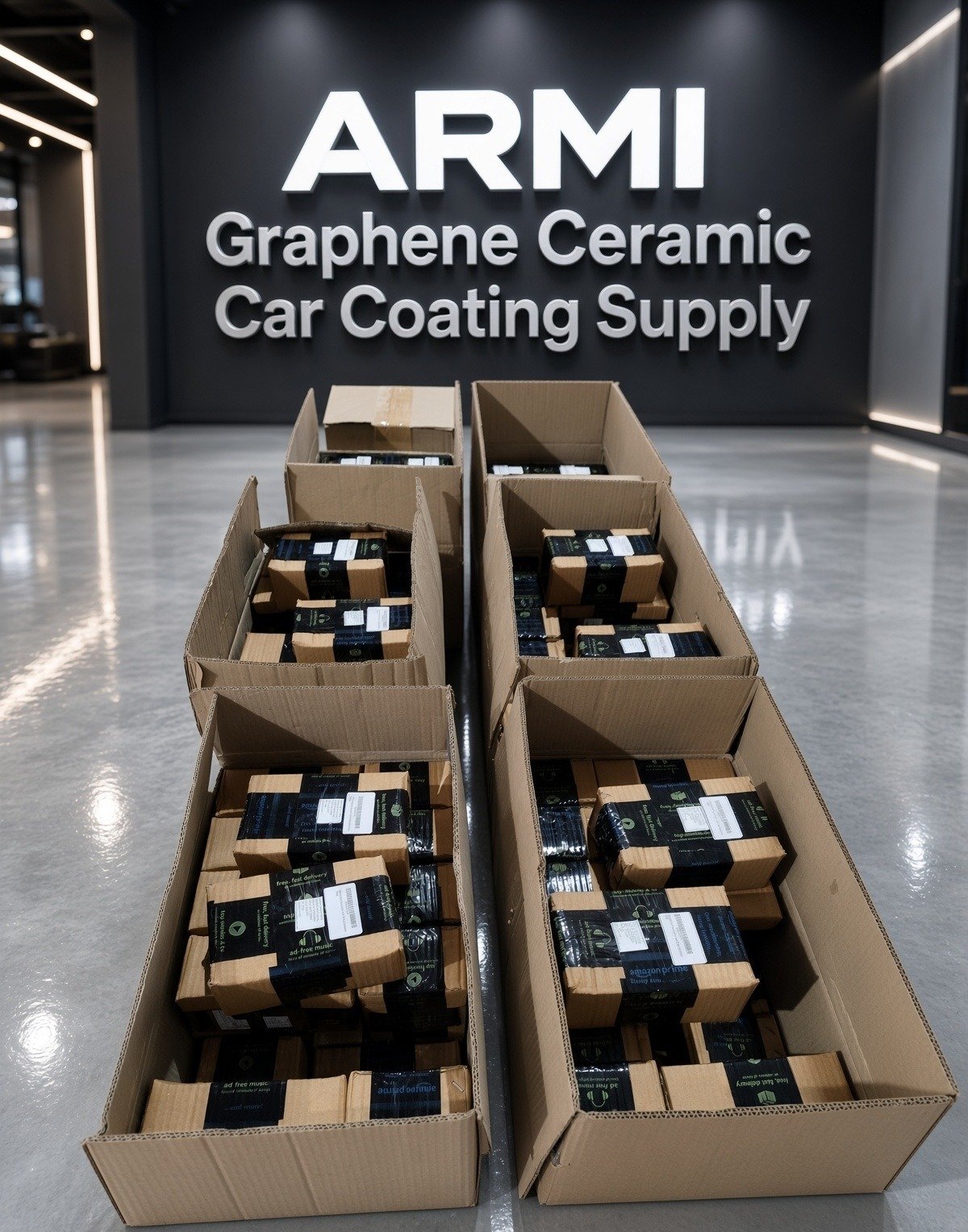
ARMI® positions this product as a DIY-friendly automotive paint-protection kit combining graphene-ceramic coating with a compact set of application essentials.
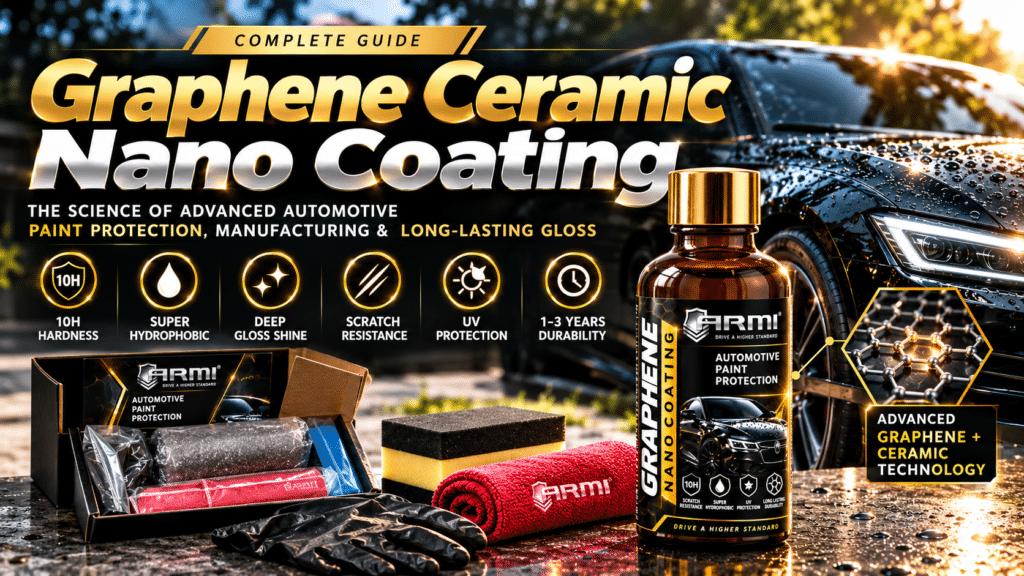
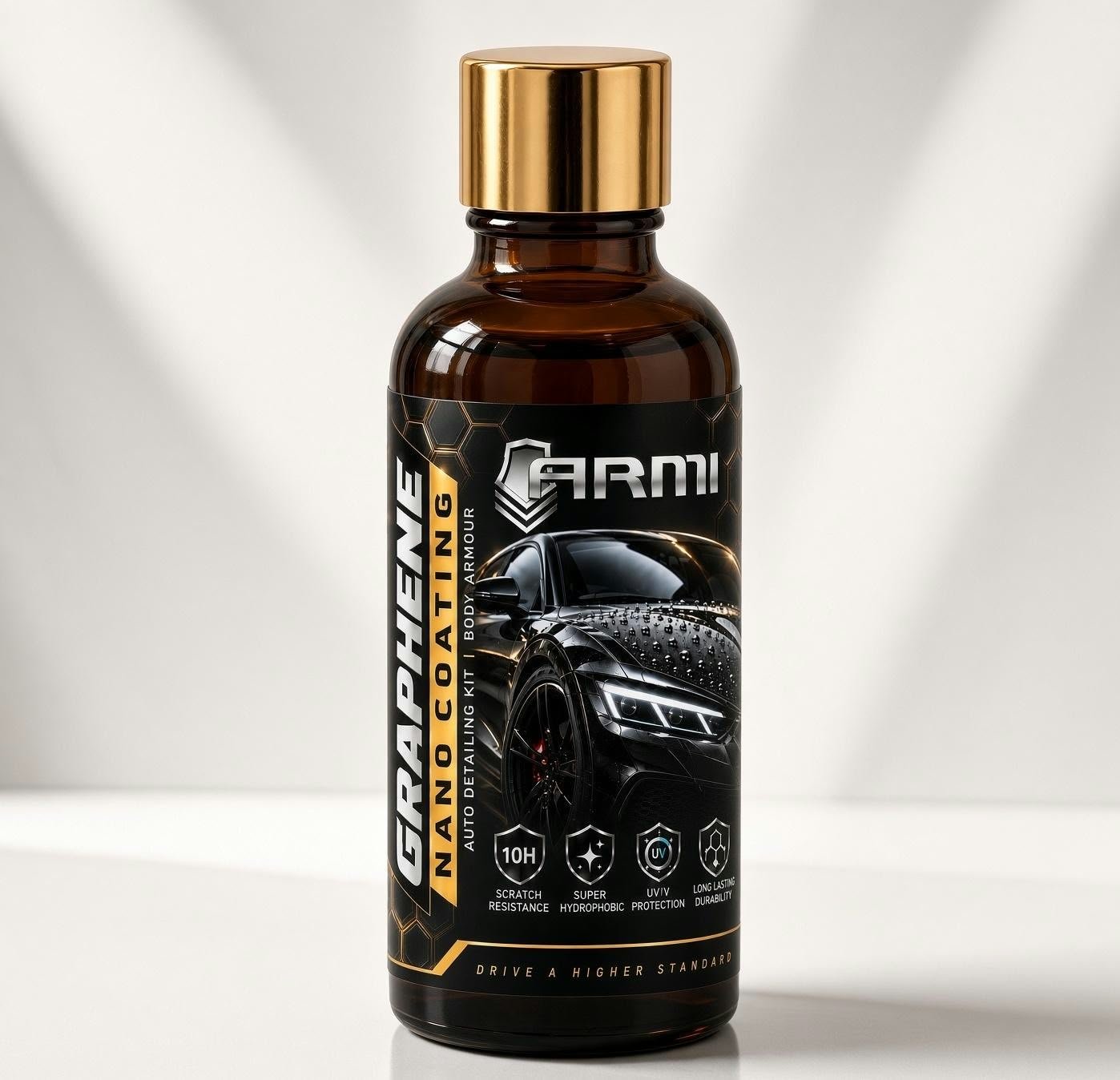
Based on the product information supplied for this article, ARMI® Graphene Ceramic Nano Coating is presented as a 50 ml DIY kit for painted automotive surfaces. The listing describes a graphene-ceramic hybrid formulation, a 10H hardness claim, an extreme-gloss finish, hydrophobic behaviour and UV and scratch-protection benefits. It also states a spread rate of approximately 2 ml per square foot and says that one 50 ml vial is sufficient for a full-size SUV. These are the brand’s stated product details; actual coverage and results depend on the vehicle, paint condition, application technique and working conditions.
The product’s appeal is the combination of a ready-to-use coating and a kit intended to make the application process more approachable. Instead of asking the buyer to source every accessory separately, the pack is described as including a foam applicator pad, a premium microfibre towel, acrylic gloves, a user manual and a QR-code video guide. A complete kit can make it easier for a first-time user to gather the basic items before beginning, provided the user also follows the safety information and prepares the vehicle correctly.
What the product claims—and how to read those claims
10H hardness
The product is marketed with a 10H hardness claim. Ask for the test standard and conditions. Hardness ratings do not mean that the coating prevents all scratches or stone chips.
Hydrophobic finish
The product is designed to encourage water repellency and beading. The visible effect will vary with surface preparation, cure, contamination and maintenance.
Gloss enhancement
A coating can enhance the visual clarity and reflective appearance of well-prepared paint. The condition of the paint underneath remains a major factor.
UV and environmental protection
The brand describes UV and contaminant protection. Treat this as a protective-support claim, not a substitute for paint care or a guarantee against fading.
DIY kit format
The supplied applicator, towel, gloves and video guide are intended to support a home application. A careful, patient approach is still essential.
50 ml pack
The listed volume is 50 ml. The product page states that this can cover one full-size SUV, subject to the stated spread rate and real-world application conditions.
Why a kit format is useful
A coating project is easier to manage when the user knows what tools are required before opening the bottle. A foam applicator pad gives a controlled surface for spreading a small quantity. A clean microfibre towel is used to level excess residue. Gloves help reduce direct skin contact. The instruction manual and video guide can show the intended sequence and product-specific timing. Users should check that the supplied accessories are clean, undamaged and appropriate for the task.
The 50 ml size is also a practical format for a single vehicle or a limited number of applications, depending on vehicle size and consumption. The stated 2 ml per square foot spread rate is a useful planning reference, but users should not force the product to cover more area than it can evenly wet. If the applicator begins to drag, coverage looks patchy or the product flashes too quickly, pause and review the instructions rather than applying a thick layer.
ARMI’s product information identifies the intended surface as painted surfaces only. This is a useful boundary: owners should not assume the coating is a universal treatment for every exterior material. Always verify suitability for the vehicle’s exact finish, especially matte paint, wraps, repainted panels or surfaces with unusual aftermarket coatings.
The complete DIY pack
A simple kit can make a technical process more accessible—but only when each item is used for the correct job and the work area is prepared in advance.
50 ml glass vial
The coating container. Keep it closed when not in use and follow the label’s storage and handling directions.
Foam applicator pad
Used to distribute a small quantity in controlled, overlapping passes across a manageable panel section.
Microfibre towel
Used to level coating residue. Use clean, dry towels and replace them if they become saturated or contaminated.
Acrylic gloves
Included as a handling accessory. Check the SDS for the recommended glove material and protection level.
User manual
Provides product-specific instructions. The current label and technical documents take priority over generic online advice.
QR video guide
A visual walkthrough can help the user understand the sequence, but it does not replace safety information or practice.
How to apply ARMI® Graphene Ceramic Nano Coating
The following overview reflects the product instructions supplied for this article. Always check the current packaging and product guide before use; timings and conditions can change between formulations or batches.
Step 1 — Surface preparation
Wash the vehicle thoroughly using a suitable automotive shampoo. Remove loose dirt before making contact with the paint. Dry the surface with a clean microfibre drying towel. The supplied product guide recommends a final wipe with isopropyl alcohol to help remove residues. Use an appropriate panel-preparation product and follow its safety instructions. Inspect the paint under good lighting. It should be smooth, clean and free of remaining contamination. If polishing or decontamination is needed, complete it before coating.
Step 2 — Application
Work in a clean, dust-free, well-ventilated area and ensure the vehicle surface is cool. Shake the bottle well if the product label instructs you to do so. Dispense a few drops onto the foam applicator pad. Work in small sections—approximately one square foot at a time is the supplied guidance—and spread in straight or cross-hatch strokes. Keep the application even and controlled. Avoid flooding the panel with product.
Step 3 — Flash time
The supplied guide indicates an approximate flash time of 30 seconds. This is a product-specific reference, not a universal coating rule. Temperature, humidity, airflow and panel conditions can change the working window. Watch the product’s appearance and follow the current instructions. Do not leave residue to cure for longer than recommended.
Step 4 — Buffing and inspection
Use a clean microfibre towel to gently remove residue and reveal an even finish. Work with light, overlapping motions. Inspect the surface from different angles under suitable lighting to identify streaks or high spots. Use a second clean towel for a final wipe if the instructions recommend it. Avoid using a towel that has collected grit or become saturated.
Step 5 — Initial set and full cure
The product guide supplied for this article advises avoiding water or touching the surface for at least 12 hours and states that maximum durability develops after approximately 5–7 days. It also mentions that the vehicle may be used for a trip after one hour while avoiding water contact for the next five days. Because cure and exposure guidance is formulation-specific, follow the current product label and manual if they differ. Keep the vehicle protected from rain, washing, dust and unnecessary contact during the stated cure period.
Application discipline beats speed. A clean surface, small working sections, correct flash timing and careful towel management are more important than rushing to finish the vehicle.
Common mistakes to avoid
- Applying coating in direct sunlight or on a hot panel.
- Skipping decontamination or applying over wax, oils or polishing residue.
- Using too much product or covering an area that is too large to level in time.
- Using a dirty or saturated microfibre towel.
- Ignoring high spots, streaks or uneven patches after buffing.
- Exposing the freshly coated surface to water before the specified time.
- Applying to unapproved surfaces or ignoring ventilation and PPE instructions.
Maintenance: what happens after application?
A coating is the beginning of a maintenance routine, not the end of one. Gentle washing and prompt contamination removal help preserve the surface’s appearance.
Allow the coating to complete its initial cure according to the manufacturer’s instructions. During this period, avoid washing, unnecessary wiping and exposure to contaminants. After the cure window, use a pH-appropriate automotive shampoo and clean wash media. A two-bucket wash method or another safe wash process can help reduce the amount of grit transferred across the paint. Rinse thoroughly and dry with a clean, soft towel rather than allowing mineral-rich water to evaporate on the surface.
Do not use aggressive household cleaners, abrasive pads or strong solvents unless the manufacturer confirms compatibility. If the vehicle is exposed to bird droppings, insect remains, tree sap or road tar, remove the contamination promptly using a suitable paint-safe product. Avoid scraping hardened deposits with fingernails, blades or rough cloths. If a water spot or stain remains, seek advice from a professional detailer before using a strong chemical or abrasive polish.
Hydrophobic behaviour may change over time as the surface accumulates traffic film, mineral deposits and other contamination. A reduction in water beading does not always mean the coating has completely failed; the surface may simply need proper cleaning. Equally, strong beading does not prove that every protective property is still at its original level. Evaluate the surface through its overall condition, ease of cleaning and maintenance history rather than one visual test.
Good habits
- Wash regularly with paint-safe products.
- Use clean mitts and microfibre towels.
- Dry gently and avoid wiping a dusty car.
- Remove bird droppings promptly.
- Park in shade or under cover when practical.
Habits to avoid
- Dry dusting or aggressive rubbing.
- Harsh chemicals without compatibility guidance.
- Dirty brushes and contaminated towels.
- Leaving mineral-rich water to dry in sunlight.
- Assuming the coating prevents every form of damage.
What a coating can—and cannot—do
Good product education is specific about benefits and equally clear about limitations. A coating can be useful without being described as indestructible.
| It may help with | It does not guarantee |
|---|---|
| Water repellency and visible beading | A permanently water-spot-free surface |
| Improved gloss and slickness | Correction of scratches or paint defects |
| Easier removal of many everyday contaminants | Protection from every chemical or stain |
| A sacrificial surface layer | Immunity to stone chips, deep scratches or collision damage |
| Reduced effort during routine washing | A vehicle that never needs cleaning |
| Support for paint appearance over time | Guaranteed multi-year life in every climate and use case |
It is also worth separating ceramic coating from paint protection film (PPF). PPF is a physical film, usually thicker than a liquid coating, and is selected when impact and abrasion protection are priorities. A liquid ceramic or graphene-ceramic coating is a thin surface treatment intended to improve surface behaviour and maintenance. Some owners choose to combine them, applying a compatible coating over PPF, but compatibility should be confirmed with both manufacturers.
Similarly, a coating is not a substitute for paint correction. If a panel has swirl marks, oxidation or scratches before application, those defects may remain visible beneath the coating. A coating can enhance the appearance of a well-prepared surface, which is why inspection and preparation are so important.
Safety, storage and responsible use
Automotive coatings can contain volatile carriers and reactive ingredients. Treat the bottle as a chemical product, not an ordinary cosmetic.
Ventilation
Use in a well-ventilated area. Avoid breathing vapours or mist. Follow the SDS and product label for any respiratory protection requirements.
Fire safety
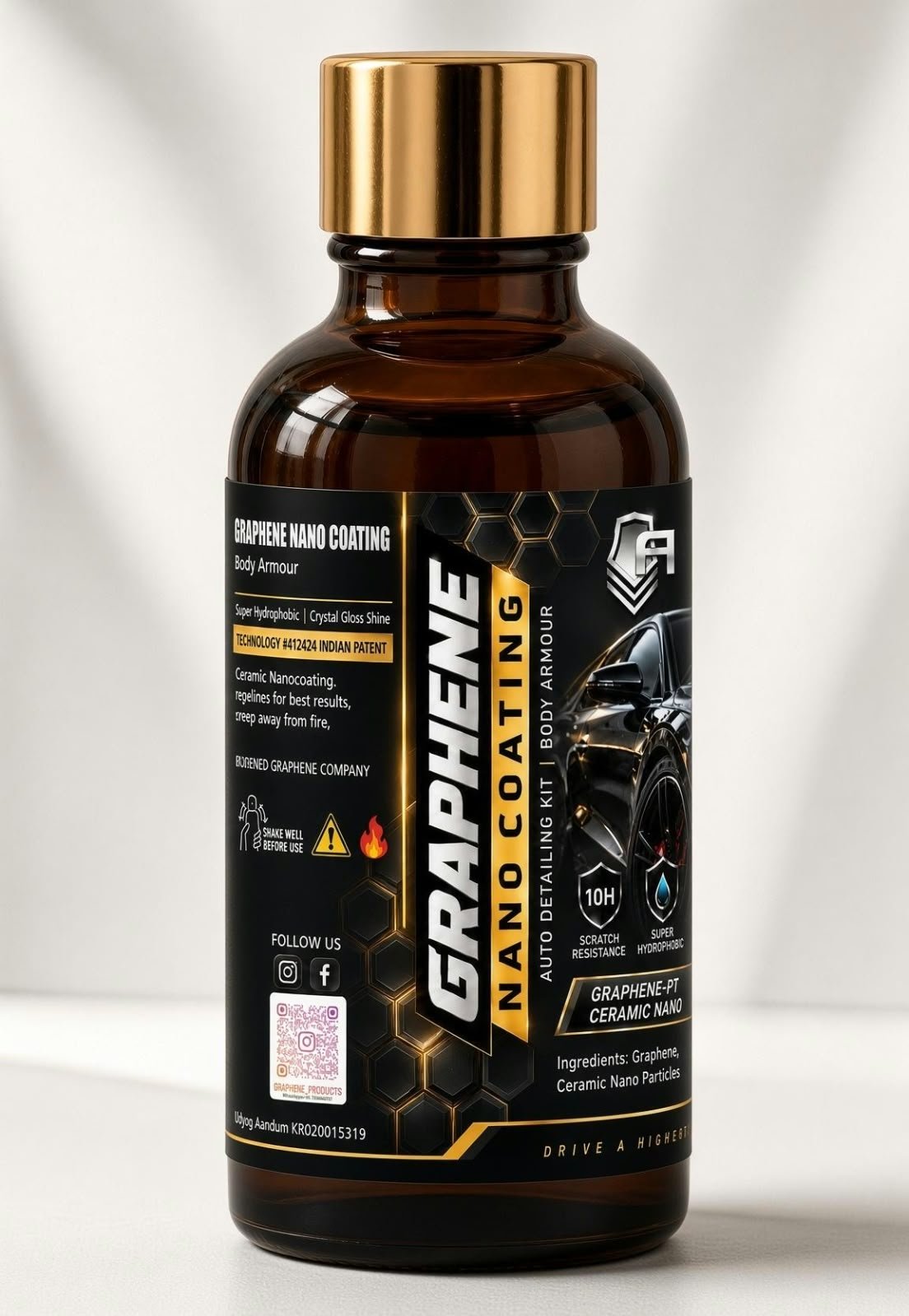
The supplied product information describes the product as volatile and warns to keep it away from flames, sparks and heat sources. Do not smoke during use.
Skin and eyes
Wear the recommended gloves and avoid eye and skin contact. Use the first-aid measures listed in the current SDS if exposure occurs.
Storage
Keep the container tightly sealed in a cool, dry place away from direct sunlight and heat, as directed by the product label.
Children and pets
Keep the product and used applicators out of reach of children and pets. Do not leave an open bottle unattended.
Disposal
Dispose of unused product, towels and packaging according to the SDS and local waste rules. Do not pour chemical residues into drains.
Important: the current Safety Data Sheet and label are the controlling safety references. This article is general educational content and does not replace them. If the label or SDS requires additional PPE, ventilation or emergency precautions, follow those requirements.
Frequently asked questions
The questions buyers and vehicle owners should ask before opening a coating bottle.
Is graphene ceramic coating the same as pure graphene?
No. A commercial coating is a formulated liquid that may contain a graphene derivative or graphene-based dispersion together with ceramic-forming binders, carriers and additives. Ask the manufacturer which graphene grade is used.
Does 10H mean the paint cannot be scratched?
No. A hardness claim depends on the test method and conditions. It does not mean the surface is immune to scratches, stone chips, keys, abrasive washing or impact. Request the test standard and report.
Will the coating stop all bird-dropping damage?
No coating should be treated as a guarantee against acidic or alkaline contamination. Remove bird droppings promptly with a suitable paint-safe method.
Can I apply it myself?
The ARMI product is presented as a DIY kit with an applicator, towel, gloves, manual and video guide. DIY application still requires careful preparation, ventilation, correct timing and close attention to the current instructions.
Can it be applied to glass, plastic or matte wraps?
The product information supplied for this article states painted surfaces only. Do not use it on glass, unpainted plastic, matte wraps or other surfaces unless the manufacturer explicitly confirms compatibility.
How long does it last?
The supplied product description refers to 1–3 years of protection. Treat that as a stated product expectation, not a universal guarantee. Actual service life depends on preparation, application, climate, usage and maintenance.
How much product is needed?
The supplied product information gives an approximate spread rate of 2 ml per square foot and says a 50 ml vial can coat one full-size SUV. Actual consumption varies with panel area, paint condition, applicator technique and wastage.
When can I wash the vehicle?
Follow the current ARMI label and guide. The information supplied for this article advises avoiding water for at least 12 hours and avoiding water contact for five days. Confirm the latest instructions before use.
Does water beading prove the coating is still protecting the paint?
Not by itself. Beading is one visible surface behaviour. It does not independently measure chemical resistance, film integrity, durability or every other performance characteristic.
What should I ask a manufacturer before buying?
Ask for the TDS, SDS, intended surface, application conditions, cure schedule, batch traceability, test methods behind claims, shelf life, storage requirements and technical support contact.
Choose the science. Respect the process. Enjoy the finish.
A premium finish is not created by a label alone. It is the result of material science, thoughtful formulation, clean preparation, controlled application and consistent care.
Graphene ceramic nano coating represents an interesting meeting point between nanomaterials and everyday automotive care. Its value lies in a properly engineered formula that can create a useful surface film, improve water behaviour, enhance gloss and make routine cleaning more manageable. The word graphene may attract attention, but the questions that matter are practical: what material is used, how is it dispersed, what does the binder do, how was the product tested, and what instructions will help the user achieve a repeatable result?
For buyers considering ARMI®, the supplied product information outlines a 50 ml DIY kit, an approximate spread rate, a step-by-step application process and a set of stated performance benefits. BTCORP’s published company information adds context about its graphene and nanotechnology activities, manufacturing and application-development work. The sensible next step is to review the current technical and safety documents for the exact product, confirm the intended surface and follow the pack instructions carefully.
When the science is respected and expectations remain realistic, a coating becomes more than a quick shine. It becomes part of a considered vehicle-care routine—one that starts with a clean surface, continues with careful application and lasts through regular, gentle maintenance.
BTCORP Generique Nano Pvt. Ltd.
Company website · About BTCORP · Manufacturing · Application Development
ARMI® product information: Graphene Ceramic Nano Coating product page · ARMINANO
Editorial note: Company capabilities and product benefits in this article are based on published company/product information and details supplied for this brief. Performance statements are presented as product claims unless a specific independent test result is cited. Always consult the latest TDS, SDS and product label.