
Graphene Oxide Supplier in India – High-Quality GO Powder for Advanced Materials
Graphene oxide is a versatile two-dimensional carbon-based nanomaterial increasingly studied for research, polymer composites, protective coatings, energy materials, surface engineering and advanced nanotechnology.
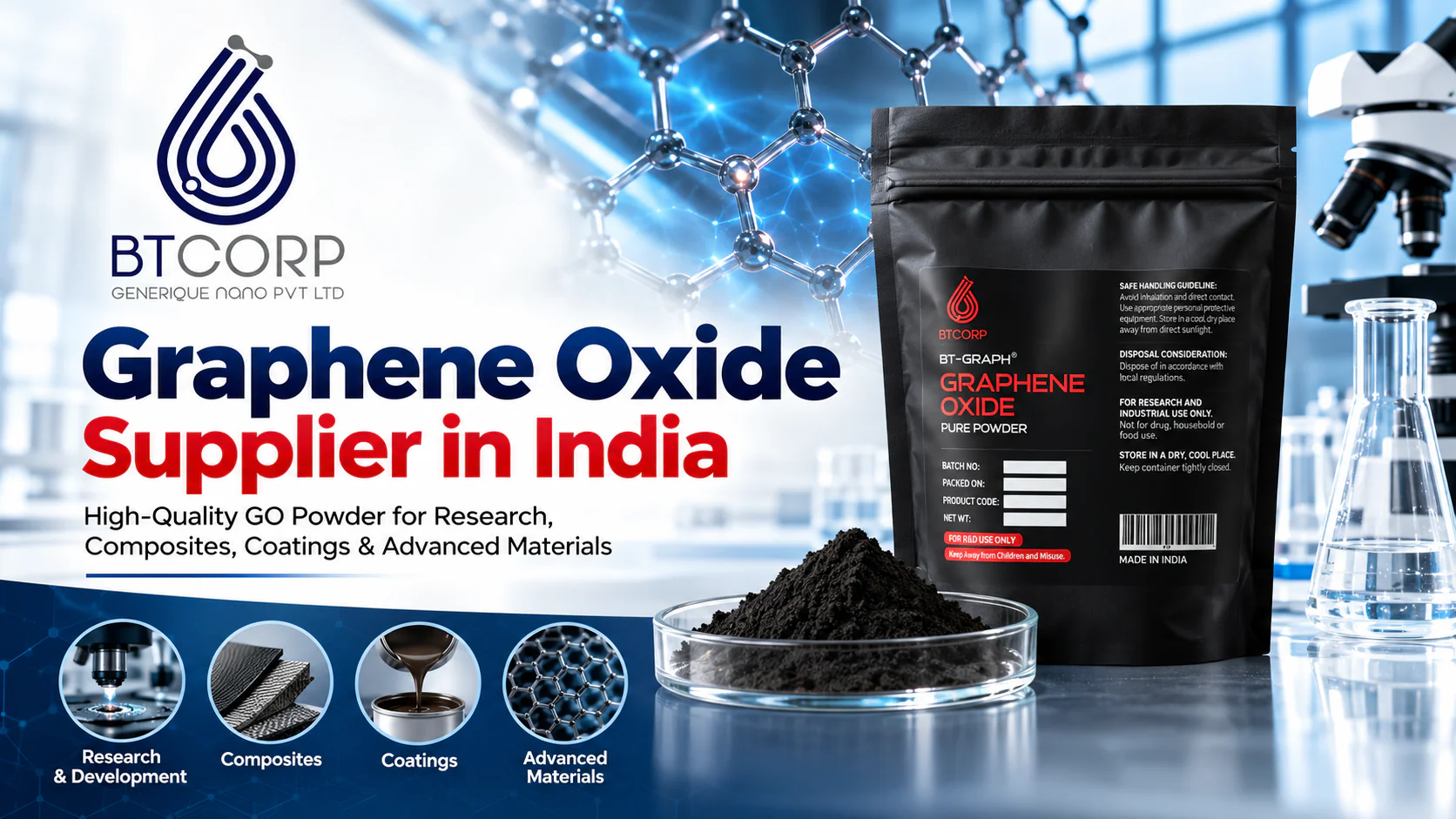
Graphene oxide (GO) has emerged as one of the most versatile carbon-based nanomaterials for modern materials science, nanotechnology, polymer engineering, coatings, energy storage research and advanced material development. Its importance comes from the combination of a two-dimensional sheet structure and oxygen-containing functional groups that give graphene oxide characteristics substantially different from those of pristine graphene.
As industries and research institutions continue exploring next-generation nanomaterials, graphene oxide is being investigated for applications where surface chemistry, nanoscale morphology, dispersion and interaction with surrounding materials are important. This makes the quality and specification of the graphene oxide powder particularly relevant when developing a new formulation, composite, coating, membrane or functional material.
For researchers, manufacturers, R&D laboratories, universities and industrial users, choosing a reliable graphene oxide supplier in India requires more than simply comparing prices. Important technical parameters include oxidation level, layer count, lateral sheet size, morphology, dispersion behaviour, surface chemistry and material purity.
BTCORP Graphene Oxide (GO) is a few-layer graphene oxide material produced through controlled oxidation and exfoliation of high-purity natural graphite, designed for research and advanced material development applications.
Few-Layer GO Nanosheets
The material is specified as 2–5 layer graphene oxide, providing a nanoscale sheet structure suitable for research into composites, coatings and functional nanomaterials.
Oxygen-Rich Surface Chemistry
Oxygen-containing groups on graphene oxide surfaces influence its chemical behaviour and provide opportunities for interaction, modification and functionalization.
According to the listed product specifications, BTCORP Graphene Oxide is supplied as a fine nano powder with 2–5 graphene oxide layers, approximately 30% oxygen content, more than 98% carbon-based material, a lateral sheet size of approximately 300–800 nm, and an interlayer distance of approximately 0.80 nm. These parameters provide useful reference points for researchers evaluating GO for specific technical applications.
The nanosheet structure is especially important because graphene oxide is not simply a conventional bulk powder. Its behaviour is influenced by the size, thickness, surface chemistry and distribution of the individual nanosheets. For this reason, buyers looking for a graphene oxide powder supplier in India should evaluate technical specifications together with the intended application.
How Graphene Oxide Characteristics Influence Material Performance
The properties of graphene oxide originate from its structure and chemistry. Oxidation introduces oxygen-containing functional groups into the carbon framework. Subsequent exfoliation separates the oxidized graphite structure into thin graphene oxide sheets. The resulting nanoscale architecture can then interact with polymers, resins, solvents and other functional materials.
This structural transformation is one of the reasons graphene oxide is different from pristine graphene. While pristine graphene is characterized by a highly continuous sp² carbon network, oxidation modifies that network and introduces oxygen-rich regions. These changes can influence electrical, chemical and surface properties, making GO particularly interesting for applications where chemical interaction and functionalization are important.
Graphene oxide is also valuable because its oxygen-rich surface provides potential interaction sites for different material systems. Functional groups such as hydroxyl, epoxy and carboxyl groups are associated with graphene oxide chemistry and can contribute to its ability to interact with surrounding materials.
Why Is Graphene Oxide Important?
The growing interest in graphene oxide comes from the combination of its nanoscale morphology, surface chemistry and functionalization potential. Instead of being limited to a single application, GO can be incorporated into different material platforms depending on the desired outcome.
What Is Graphene Oxide?
Graphene oxide (GO) is an oxidized derivative of graphene and graphite consisting of extremely thin carbon-based sheets containing oxygen-containing functional groups. Its structure can be viewed as a graphene-derived two-dimensional carbon framework that has undergone controlled oxidation, followed by exfoliation into thin nanosheets.
Unlike pristine graphene, which has a largely continuous sp² carbon network, graphene oxide contains oxygenated regions that alter its electronic, chemical and surface behaviour. These changes are particularly relevant when GO is being incorporated into polymers, coatings, membranes or other functional materials.
In Simple Terms
Graphene oxide is a two-dimensional carbon nanomaterial containing oxygen-rich functional groups that can influence its dispersion, chemical interaction and compatibility with different material systems.
One of the major advantages of graphene oxide is the ability to investigate and modify its surface chemistry. Depending on the intended application, researchers can explore functionalization, reduction, polymer integration and other approaches for tailoring the behaviour of graphene-derived materials.
This versatility makes graphene oxide relevant not only to conventional graphene research but also to broader fields such as nanocomposite development, protective coatings, surface engineering, energy-related materials, sensors and advanced material science.
Choosing a Graphene Oxide Supplier in India
When searching for a graphene oxide supplier in India, technical consistency should be considered alongside commercial factors. A research laboratory may require specific layer characteristics and characterization data, while an industrial manufacturer may place greater emphasis on repeatability, dispersion, processing behaviour and scalable supply.
Important parameters to evaluate include layer count, oxygen content, purity, lateral sheet size, morphology, surface area and dispersion behaviour. These factors can influence how graphene oxide behaves during formulation and processing.
Graphene oxide should therefore not be considered a one-size-fits-all nanomaterial. The appropriate grade depends on the target application, processing method and desired material characteristics. A dependable graphene oxide powder supplier in India should provide clear technical information so that researchers and manufacturers can evaluate whether the material matches their specific requirements.
For advanced material development, understanding the relationship between graphene oxide’s nanosheet structure, oxygen-containing surface chemistry, dispersion and host-material interaction is essential. These characteristics form the foundation for exploring GO in composites, coatings, membranes, energy materials and other emerging technologies.
Graphene Oxide Powder Supplier in India
When companies, universities, laboratories and research organizations search for a reliable graphene oxide powder supplier in India, the requirement is usually much more specific than simply finding a carbon-based powder. Depending on the intended application, buyers may need graphene oxide for laboratory experiments, formulation development, polymer composites, protective coatings, surface engineering, membrane research, electrochemical studies or other advanced material applications.
In these applications, the technical characteristics of the graphene oxide powder can have a direct influence on how the material behaves during processing. Parameters such as layer count, oxygen content, purity, lateral sheet size, interlayer distance, morphology, surface area and dispersion behaviour can all be important when evaluating a GO material.
BTCORP Graphene Oxide is listed as a fine nano powder consisting of few-layer graphene oxide sheets. The published specifications provide a useful technical profile for researchers and industrial users who want to understand the material before incorporating it into their own formulation or experimental system.
Published Product Specifications
The following specifications are associated with the referenced BTCORP Graphene Oxide product. They should be understood as product-specific specifications and not as universal values for every graphene oxide material available in the market.
| Parameter | Listed Specification |
|---|---|
| Product | Graphene Oxide (GO) |
| Physical Form | Fine Nano Powder |
| Structure | Few-layer Graphene Oxide Sheets |
| Layer Count | 2–5 Layers |
| Oxygen Content | Approximately 30% |
| Purity | >98% Carbon-Based Material |
| Lateral Sheet Size | Approximately 300–800 nm |
| Interlayer Distance | Approximately 0.80 nm |
| Morphology | Wrinkled Sheet-Like Nanosheets |
| BET Surface Area | ~70 m²/g |
| Specific Surface Area | Up to ~350 m²/g |
| Dispersion | Listed as excellent in water and most polar solvents |
Understanding 2–5 Layer Graphene Oxide Nanosheets
One of the most important specifications to examine when purchasing graphene oxide is its layer count. Graphene is fundamentally associated with an extremely thin, two-dimensional carbon sheet. When several sheets are stacked or associated together, the number of layers becomes an important structural parameter.
A few-layer graphene oxide material contains a relatively small number of graphene-derived sheets. The BTCORP product discussed here is specified as having 2–5 layers. This specification provides buyers with a clearer understanding of the nanoscale architecture of the supplied material.
Why Does Layer Count Matter?
The thickness and number of nanosheet layers can influence the way graphene oxide interacts with its surrounding environment. For example, layer characteristics can affect surface exposure, dispersion, interfacial interaction and the morphology of a resulting composite or film.
However, layer count should never be evaluated in isolation. A useful technical assessment should also consider sheet dimensions, oxidation level, surface chemistry, purity, morphology and processing conditions.
The listed lateral sheet size of approximately 300–800 nm is another useful specification. Along with layer count, lateral dimensions help describe the physical architecture of the nanosheets. Researchers working on polymer nanocomposites, coatings or functional films may therefore evaluate both thickness and sheet dimensions when selecting a graphene oxide grade.
For buyers searching for few-layer graphene oxide suppliers in India, this is an important distinction. A supplier should ideally provide clear information about the layer structure rather than using the term “graphene oxide” as if every grade has identical characteristics.
Graphene Oxide vs Graphene: Understanding the Difference
Graphene and graphene oxide are closely related carbon-based materials, but they should not be considered interchangeable. Their different chemical structures result in different material characteristics and therefore different potential applications.
Graphene
- Predominantly carbon-based two-dimensional structure.
- Highly continuous sp² carbon network.
- Known for high electrical conductivity.
- Relatively limited oxygen-containing surface functionality.
- Surface modification may require specific functionalization approaches.
- Used in research involving electronics, composites and advanced materials.
Graphene Oxide (GO)
- Graphene-derived structure containing oxygen-rich regions.
- Contains oxygen-containing functional groups.
- Native electrical conductivity is significantly lower than pristine graphene.
- Offers greater chemical functionality for selected applications.
- Can be investigated for chemical functionalization and composite integration.
- Widely studied in coatings, composites, membranes and advanced material research.
The key distinction is therefore the relationship between structure, oxidation and function. Pristine graphene is valued for its highly conjugated carbon structure, while graphene oxide introduces oxygen-containing functionality that can change its surface chemistry, dispersion behaviour and interaction with other materials.
This difference is especially important when selecting a nanomaterial for a specific research or manufacturing process. A material selected for its surface functionality may require graphene oxide, while an application prioritizing native electrical conductivity may call for a different graphene-derived material.
Selecting Graphene Oxide Based on the Application
A reliable graphene oxide powder supplier in India should provide enough technical information for the buyer to evaluate the material against the intended application. Layer count is an important starting point, but it should be considered together with oxygen content, purity, sheet size, interlayer distance, morphology, surface area and dispersion behaviour. This application-focused approach helps researchers and manufacturers make a more informed technical comparison between different graphene oxide grades.
Graphene vs Graphene Oxide
Graphene
Pristine graphene consists predominantly of carbon atoms arranged in a two-dimensional honeycomb-like lattice. This distinctive structure gives graphene its remarkable combination of electrical, mechanical and thermal characteristics.
In a simplified structural representation, the carbon atoms form a highly organized network in which the carbon-carbon bonding creates a largely continuous sp² carbon framework. This structure is closely associated with graphene’s well-known electronic and mechanical behaviour.
Because of these characteristics, graphene has attracted significant interest in areas such as advanced composites, conductive materials, sensors, electronics, thermal-management systems and other nanotechnology research. However, the properties of pristine graphene also mean that its interaction with solvents, polymers and other materials can differ considerably from that of oxidized graphene derivatives.
Graphene Oxide
Graphene oxide (GO) is an oxidized derivative of graphite/graphene-derived carbon structures. During oxidation, oxygen-containing groups are introduced into the carbon framework. This changes the chemical environment of the carbon sheets and consequently changes several of the material’s physical and chemical characteristics.
Rather than viewing graphene oxide simply as “graphene with oxygen,” it is more useful to understand GO as a chemically modified two-dimensional carbon material. The oxidation process creates oxygen-containing regions and functional groups that can interact with surrounding molecules, solvents, polymers and other materials.
| Feature | Graphene | Graphene Oxide |
|---|---|---|
| Carbon structure | Highly conjugated | Oxidized / disrupted |
| Oxygen-containing groups | Very Low | High |
| Surface chemistry | Relatively less functional | Highly functional |
| Water interaction | Generally limited | Typically much better |
| Chemical functionalization | Possible | Particularly versatile |
| Native electrical conductivity | High | Significantly reduced |
| Composite compatibility | Application-dependent | Can be improved through functional groups |
The supplier specifically notes that native graphene oxide is electrically insulating because oxidation interrupts the continuous sp² carbon network. It also states that electrical conductivity can be improved through suitable chemical or thermal reduction processes.
This distinction is critical when selecting a carbon nanomaterial. If an application requires the chemical functionality and dispersion characteristics associated with GO, pristine graphene may not provide the same behaviour. Conversely, where high native electrical conductivity is the primary requirement, pristine graphene or a reduced graphene oxide material may be considered depending on the formulation and intended application.
Why Oxygen Functional Groups Matter in Graphene Oxide
One of the defining characteristics of graphene oxide is its oxygen-containing surface chemistry. The oxidation of graphite-derived carbon structures introduces different oxygen-containing functional groups across the nanosheet surface and, depending on the material, at sheet edges.
Three commonly discussed functional groups associated with graphene oxide are hydroxyl, epoxy and carboxyl groups. Their distribution and relative abundance can vary according to the oxidation process and subsequent treatment of the material.
Hydroxyl Groups
Hydroxyl functionality contributes to the polar character of graphene oxide and can participate in interactions with surrounding molecules and material systems.
Epoxy Groups
Epoxy groups are associated with the oxidized basal-plane regions of GO and contribute to the chemical functionality of the nanosheet surface.
Carboxyl Groups
Carboxyl groups are commonly discussed in relation to graphene oxide edges and contribute to its surface chemistry and functionalization possibilities.
These functional groups contribute to the chemical reactivity of GO and allow researchers to investigate different approaches to surface modification and functionalization. They can also influence how GO interacts with surrounding materials.
For example, when graphene oxide is incorporated into a polymer matrix, its surface chemistry can influence interfacial adhesion, dispersion, load transfer, composite morphology, moisture interaction, barrier behaviour and chemical compatibility. The exact effect depends on the chemistry of both the GO and the host polymer, along with processing conditions.
Graphene Oxide and Water Dispersion
Another important reason researchers investigate graphene oxide is its interaction with water and polar solvents. GO contains oxygenated functional groups alongside graphitic carbon domains, producing a combination of hydrophilic and hydrophobic characteristics that contributes to its distinctive dispersion behaviour.
The BTCORP product specifications list excellent dispersion in water and most polar solvents as a product characteristic. For formulation development, this can be an important consideration because the ability to distribute nanosheets throughout a liquid phase can affect subsequent processing and the final morphology of a material.
Good dispersion can be especially important during polymer formulation, coating preparation, membrane fabrication, composite manufacturing, research experiments, surface functionalization and solution processing.
Poor dispersion can result in aggregation of nanosheets. When GO particles or sheets form larger agglomerates, the effective surface area and nanoscale distribution within the host material may differ from the intended formulation.
Therefore, graphene oxide dispersion is not simply a purchasing specification; it can be an important processing consideration when developing a GO-based formulation.
Graphene Oxide for Polymer Composites
One of the major research and industrial areas for graphene oxide is polymer nanocomposites. In these systems, GO can act as a nanoscale reinforcement or functional filler within a polymer matrix.
The oxygen-rich surface of graphene oxide provides opportunities for interaction with suitable polymer systems. Depending on the chemistry of the polymer, GO loading, dispersion state and processing method, researchers can investigate changes in mechanical, thermal, barrier, tribological, electrical and other material characteristics.
The relationship between GO and the polymer matrix is particularly important. A well-dispersed nanosheet network can create a different composite structure from one in which the nanosheets have strongly aggregated. Consequently, GO loading, dispersion, surface chemistry, polymer compatibility and processing conditions should all be considered together.
Polymer Reinforcement
GO can be investigated as a nanoscale filler for selected polymer matrices where interfacial interaction and dispersion are important.
Engineering Composites
Researchers can study GO-containing composites for mechanical and functional material development.
Protective Coatings
GO is investigated in coating systems where nanosheet morphology and barrier characteristics are relevant.
Functional Materials
Its surface chemistry makes GO useful for research into functionalized and hybrid material systems.
Membrane Research
GO nanosheets are studied in membrane and separation-related material research because of their two-dimensional structure and surface chemistry.
Advanced R&D
GO provides researchers with a versatile platform for studying nanocomposites, surface engineering and functional carbon materials.
Why Graphene Oxide Selection Depends on More Than the Name
The term graphene oxide describes a broad family of oxidized graphene-derived materials rather than a single material with identical properties. Layer count, oxidation level, oxygen-containing functional groups, sheet dimensions, morphology, purity, surface area and dispersion characteristics can vary between grades and suppliers. Therefore, researchers and manufacturers evaluating a graphene oxide powder supplier in India should compare the technical specifications of the actual product against the requirements of their application. For BTCORP Graphene Oxide, the published product profile identifies a few-layer structure, approximately 30% oxygen content, more than 98% carbon-based material, approximately 300–800 nm lateral sheet size and listed dispersion characteristics in water and most polar solvents. These parameters provide a technical starting point for evaluating the material for research, composite development, coating formulation and other advanced material applications.
Graphene oxide is not limited to a single application. Its two-dimensional nanosheet structure, oxygen-containing functional groups, high surface activity and ability to undergo chemical modification make it a versatile material for research and development across composites, coatings, energy systems, membranes, sensors and other advanced material technologies.
The practical performance of graphene oxide depends strongly on the material grade, oxidation level, layer structure, sheet dimensions, surface chemistry, dispersion, loading and processing conditions. For this reason, GO is generally evaluated as part of a complete formulation rather than as an isolated additive.
Epoxy Composites
Graphene oxide can be investigated as a reinforcement and functional filler in epoxy systems. Epoxy resins are widely used in coatings, adhesives, structural materials, electrical components and engineering composites. Introducing a nanoscale filler such as GO provides researchers with an opportunity to study how nanosheet morphology and surface chemistry influence the behaviour of the resulting composite.
The oxygen-containing groups present on GO can interact with suitable resin chemistries and may influence the interface between the graphene oxide nanosheets and the surrounding epoxy matrix. This interface is particularly important because nanoscale fillers can only contribute effectively when they are appropriately distributed and interact with the host material.
Mechanical Reinforcement
Researchers can investigate whether appropriately dispersed GO nanosheets influence the mechanical response of an epoxy matrix. The outcome depends on filler loading, nanosheet characteristics, interfacial bonding and processing conditions.
Interfacial Bonding
GO’s oxygen-containing surface groups can provide sites for interaction with suitable epoxy chemistry. The quality of this interface can affect stress transfer and the overall morphology of a nanocomposite.
Barrier Characteristics
The sheet-like structure of GO can be investigated in epoxy formulations where the movement of selected molecules through the composite is an important consideration.
Coating Performance
GO-containing epoxy systems can be researched for protective coating applications where adhesion, barrier behaviour, surface characteristics and environmental resistance are relevant.
Surface Modification
Graphene oxide can also be chemically modified or combined with other components to develop epoxy systems with application-specific surface characteristics.
Formulation Development
GO can be evaluated at different concentrations to determine the relationship between dispersion, loading level, processing and final composite properties.
Engineering Plastics
Graphene oxide can also be studied in thermoplastics and engineering polymer systems. Engineering plastics are selected for applications where combinations of mechanical performance, dimensional stability, thermal behaviour, chemical resistance or electrical characteristics are required.
The addition of GO provides researchers with a platform for investigating how a two-dimensional functional nanomaterial interacts with a polymer matrix. Because the surface chemistry of GO is different from pristine graphene, the interaction between GO and a polymer can be influenced by hydrogen bonding, polar interactions, chemical functionalization and other matrix-dependent mechanisms.
Mechanical Characteristics
GO can be investigated as a nanoscale filler for modifying strength, stiffness and other mechanical responses of selected polymer systems.
Barrier Properties
Researchers can study whether well-distributed nanosheets influence the movement of selected gases, vapours or molecules through a polymer.
Surface Behaviour
GO surface chemistry can influence the interaction of polymer composites with surrounding environments and other material interfaces.
Thermal Characteristics
GO-containing polymer systems can be studied for changes in thermal response depending on composition and processing.
Electrical Properties
GO is naturally much less conductive than pristine graphene. Electrical behaviour can be investigated through suitable reduction or functionalization.
Functional Fillers
GO can act as a platform for developing polymer systems with additional chemical or surface functionality.
Lightweight Composite Materials
Graphene-derived nanosheets have attracted attention in lightweight composite research because their very large aspect ratio can allow researchers to study changes in composite behaviour at relatively low filler concentrations.
A nanosheet with a large lateral dimension relative to its thickness can interact with a comparatively large region of the surrounding matrix. This is one reason two-dimensional nanomaterials are investigated for lightweight reinforcement and functional composite design.
However, more graphene oxide does not automatically mean better performance. Excessive loading can increase viscosity, promote agglomeration or interfere with processing. The optimum GO concentration is therefore formulation-specific and should be established experimentally.
Graphene Oxide for Protective Coatings
Protective coatings represent another important research area for graphene oxide. GO can be incorporated into coating formulations to investigate barrier properties, surface characteristics and interactions within coating matrices.
The BTCORP product description lists applications including anti-corrosion coatings, barrier coatings and functional hybrid coating systems. These applications take advantage of the sheet-like morphology and chemically active surface of graphene oxide.
One concept investigated in GO-based barrier systems is the creation of more tortuous pathways. Instead of allowing certain molecules to travel directly through a coating, well-distributed nanosheets may increase the effective path that molecules need to follow through the matrix.
The actual performance of a GO-containing coating, however, depends on the complete formulation. Important variables include:
- GO dispersion within the coating matrix
- Nanosheet orientation and distribution
- GO loading level
- Resin and binder chemistry
- Coating thickness
- Surface preparation
- Curing conditions
- Environmental exposure
Therefore, graphene oxide should be evaluated as part of the complete coating system rather than as an isolated ingredient. Laboratory testing under the intended exposure conditions remains important for determining actual coating performance.
Graphene Oxide for Energy Storage Research
Graphene oxide is also extensively investigated in energy-related materials research. Its surface chemistry, nanoscale morphology and ability to undergo reduction make it useful as a precursor, functional intermediate or component in different experimental electrode architectures.
Lithium-Ion Research
GO and its derivatives are investigated in electrode materials and composite architectures for lithium-ion battery research.
Supercapacitors
Graphene-derived materials are studied for electrochemical energy-storage systems, including supercapacitor-related research.
Electrochemical Systems
Surface functionality and nanosheet morphology make GO useful for investigating different electrochemical material architectures.
A critical technical distinction is that native graphene oxide is not the same as conductive graphene. Oxidation interrupts the continuous conjugated carbon network, substantially reducing electrical conductivity.
Through appropriate chemical or thermal treatment, some of the oxygen functionality can be removed and the carbon network can be partially restored. The resulting material is commonly referred to as reduced graphene oxide (rGO).
For this reason, researchers may use GO as a precursor or functional intermediate and subsequently reduce or otherwise modify it according to the target application.
Graphene Oxide for Sensors and Electronics
The combination of nanoscale structure and chemical functionality makes graphene oxide attractive for sensor and electronics research. Researchers have investigated GO and graphene-derived materials in systems where interaction between a material surface and surrounding molecules is important.
Chemical Sensors
Surface functionality can provide sites for interaction with selected chemical species during sensor development.
Biosensors
Functionalized graphene-derived surfaces are investigated for biosensing interfaces and molecular detection research.
Flexible Electronics
GO and reduced graphene derivatives are studied in flexible and solution-processable electronic material systems.
Optical Systems
GO-containing materials are investigated in optical and photonic research where surface and electronic properties can be engineered.
Electronic Interfaces
Functionalized GO can be investigated as an interface material within selected electronic architectures.
Smart Sensing
The tunable chemistry of graphene-derived materials supports research into responsive and smart sensing systems.
Graphene Oxide for Membranes and Filtration Research
The two-dimensional nature of graphene oxide allows individual nanosheets to be assembled into thin films and membrane structures. Combined with its oxygen-rich surface, this makes GO an interesting material for membrane and filtration research.
Researchers have explored GO-based membranes for applications involving molecular transport, separation and selective barrier behaviour. The hydrophilic and chemically functional surface of GO can be particularly relevant when designing membrane systems that interact with aqueous environments.
Water Treatment
GO-based membranes are researched for water-related separation and filtration systems.
Separation Membranes
Interlayer structures can be investigated for controlling molecular transport through nanoscale membrane architectures.
Functional Barriers
GO films can be studied as functional barriers where surface chemistry and nanosheet arrangement influence transport.
The performance of a GO membrane depends on several interconnected variables, including interlayer spacing, surface chemistry, membrane thickness, functionalization, water chemistry, pressure and pore structure.
Consequently, information about interlayer distance and nanosheet morphology can be particularly relevant when researchers are evaluating a graphene oxide material for membrane development.
Graphene Oxide for Adsorption Applications
The combination of nanoscale morphology, active surface chemistry and oxygen-containing functional groups makes graphene oxide an interesting platform for adsorption research.
Depending on the surface chemistry and experimental environment, researchers can investigate interactions between GO-based materials and different chemical species.
Potential Adsorption Research Targets
- Organic molecules
- Metal ions
- Dyes
- Selected pollutants
- Other chemical species
The BTCORP product description identifies its active surface area as suitable for adsorption applications. However, adsorption capacity should always be established experimentally for the specific target molecule and operating conditions. Surface area alone cannot determine the adsorption performance of a material.
Graphene Oxide in Advanced Material Research
One of the strongest characteristics of graphene oxide is its role as a platform material. Rather than being restricted to one fixed composition, GO can be chemically modified, reduced, functionalized or integrated with other nanomaterials.
Chemical Functionalization
Researchers can introduce or modify surface chemistry to investigate specific interactions and application requirements.
Polymer Grafting
GO surfaces can be investigated as platforms for attaching or interacting with polymeric structures.
Reduction
Chemical or thermal reduction can alter the oxygen content and electrical characteristics of GO-derived materials.
Nanoparticle Integration
GO can be combined with selected nanoparticles to develop hybrid nanomaterials with application-specific characteristics.
Composite Formation
Its nanosheet structure allows GO to be incorporated into polymer, ceramic or hybrid material systems for research.
Surface Engineering
GO provides a chemically active surface for investigating advanced interfaces and functional materials.
How Is Graphene Oxide Produced?
Graphene oxide is commonly produced by chemically oxidizing graphite followed by exfoliation. The oxidation stage introduces oxygen-containing groups into the carbon structure, while exfoliation helps separate the oxidized graphite into thin graphene oxide sheets.
The BTCORP product information states that its graphene oxide is produced using Modified Hummers’ Oxidation with Advanced Exfoliation Technology.
At a high level, the manufacturing pathway can be represented as:
Natural Graphite
Carbon starting material
Oxidation
Oxygen functionality introduced
Expanded Oxide
Oxidized graphite structure
Exfoliation
Thin nanosheets separated
Graphene Oxide
Purification & quality control
The oxidation process changes the original carbon structure and introduces oxygen-containing groups. Subsequent exfoliation separates the oxidized material into nanosheets whose thickness and lateral dimensions depend on processing conditions.
Manufacturing parameters can therefore influence important characteristics such as oxidation level, sheet dimensions, defect density, functional group distribution, layer count, dispersion and surface chemistry.
Why Manufacturing Consistency Matters
For research laboratories and industrial developers, consistency between batches can be an important consideration. If the material’s oxidation level, sheet dimensions, morphology or dispersion characteristics change substantially between batches, it can become difficult to reproduce experimental or formulation results.
This is why a technical evaluation of a graphene oxide supplier in India should consider more than the product name. Researchers may need to review available information on layer count, oxygen content, purity, lateral sheet size, interlayer distance, surface area, morphology, dispersion and the intended application.
For advanced materials development, the most useful approach is to match the actual GO grade and its documented specifications with the requirements of the final formulation, followed by application-specific testing and validation.
What Should You Check Before Buying Graphene Oxide Powder?
If you are searching for a graphene oxide supplier in India, price should not be the only factor used to compare products. Graphene oxide is a technically sensitive nanomaterial, and its behaviour can vary depending on layer count, nanosheet dimensions, oxidation level, purity, surface area, morphology, dispersion and surface chemistry.
For research laboratories, universities, R&D teams, composite manufacturers and coating developers, understanding these parameters before purchasing can make it easier to select a GO grade that matches the intended application.
Layer Count
One of the first questions to ask a graphene oxide powder supplier is how many graphene-derived layers are present in the material.
- Single-layer graphene oxide
- Few-layer graphene oxide
- Multi-layer graphene oxide
BTCORP specifies a 2–5 layer structure for this graphene oxide product.
Sheet Size
Lateral sheet dimensions can influence dispersion, interfacial contact, composite morphology and the behaviour of graphene oxide inside a formulation.
The listed BTCORP specification gives an approximate 300–800 nm lateral sheet size.
- Check the reported lateral dimensions
- Consider the requirements of the target formulation
- Compare sheet dimensions with the intended application
Oxygen Content
Oxidation level is one of the most important characteristics of graphene oxide because oxygen-containing functional groups influence surface chemistry, dispersion, chemical reactivity and electronic behaviour.
The listed BTCORP specification gives approximately 30% oxygen content.
- Check the reported oxygen content
- Understand its relevance to your formulation
- Consider surface chemistry along with oxidation level
Purity
Purity becomes especially important when graphene oxide is being used in research, analytical experiments, advanced composites or carefully controlled formulations.
The product information lists more than 98% carbon-based material.
- Ask how purity is defined
- Review available characterization data
- Consider possible impurities relevant to your application
Surface Area
Surface area can be particularly relevant in applications involving adsorption, surface interactions, catalysis, composite interfaces and chemical functionalization.
The product information lists approximately 70 m²/g BET surface area and up to approximately 350 m²/g specific surface area.
- Check which surface-area measurement is being reported
- Review the test method where available
- Match the parameter with the intended application
Dispersion Behaviour
Dispersion is a critical consideration when graphene oxide is incorporated into polymers, coatings, membranes or solution-based formulations.
The supplier lists excellent dispersion in water and most polar solvents for this product.
- Check compatibility with the processing medium
- Evaluate aggregation behaviour
- Consider dispersion under actual formulation conditions
Why Do Sheet Size and Surface Area Matter?
Graphene oxide is a two-dimensional nanomaterial, so its performance is strongly connected with the amount of accessible surface available for interaction with surrounding materials. Lateral dimensions, layer thickness, aggregation and surface chemistry can all influence how GO behaves inside a formulation.
Large Active Interface
A nanosheet provides a broad surface through which it can interact with a surrounding polymer, coating matrix, solvent or other material.
Application-Specific Behaviour
Surface area should not be evaluated in isolation. The actual outcome depends on morphology, chemistry, dispersion, loading and the conditions under which the material is used.
7. Characterization Data
For advanced R&D, purchasing graphene oxide only on the basis of a product name or headline specification may not provide enough technical information. Buyers can ask suppliers for appropriate characterization data that helps verify morphology, structure, chemistry, thermal behaviour and surface characteristics.
The exact analytical methods required depend on the intended application, research objective and level of material qualification.
Which Graphene Oxide Tests Should You Request?
Surface Morphology
Scanning electron microscopy can provide information about the surface morphology and general structure of the material.
Nanosheet Structure
Transmission electron microscopy can be useful for investigating nanoscale morphology and sheet structures.
Sheet Topography
Atomic force microscopy can help investigate nanosheet topography and thickness-related characteristics.
Raman Spectroscopy
Raman spectroscopy is commonly used to study structural characteristics and disorder-related features of carbon-based materials.
FTIR Analysis
FTIR can be useful for investigating chemical bonds and functional groups associated with the graphene oxide surface.
XRD Analysis
X-ray diffraction can provide structural information and is particularly useful when evaluating changes associated with oxidation and interlayer structure.
XPS Analysis
XPS can provide information about elemental composition and chemical states at the material surface.
TGA Analysis
Thermogravimetric analysis can be used to study thermal behaviour and mass changes of the material under controlled conditions.
Surface Area Analysis
BET analysis can be relevant when surface area is an important parameter for adsorption, interfaces or other surface-dependent applications.
Graphene Oxide Buying Checklist
The specifications mentioned above are product-specific values listed for BTCORP Graphene Oxide and should not be treated as universal specifications for every graphene oxide powder available in the market. Characterization requirements and suitable specifications may vary according to the intended application.
Graphene Oxide Price in India
The price of graphene oxide in India can vary considerably depending on the technical specification and commercial requirements of the material. Graphene oxide is a specialized nanomaterial, and two products sold under the same general name may differ in purity, layer count, nanosheet dimensions, oxidation level, characterization, packaging and intended application.
Important factors that can influence the quoted price include purity, layer count, sheet size, oxygen content, production scale, characterization requirements, packaging, grade, application and order quantity.
Why kilogram price alone is not enough
Because graphene oxide grades can differ significantly in specification, comparing only the price per kilogram can produce an incomplete comparison.
A technical buyer should also consider whether the supplied material actually matches the required application, characterization and consistency requirements.
Why Choose a Graphene Oxide Supplier in India?
For Indian research laboratories, manufacturers, universities and R&D organizations, working with a domestic graphene oxide supplier in India can provide practical procurement advantages. These may include easier communication, domestic commercial coordination and simpler repeat-order planning.
Domestic sourcing can be particularly useful when a project requires technical discussions about specifications, packaging, documentation, repeat supply or application-specific requirements.
BTCORP Generique Nano Pvt. Ltd. lists its address in Hoskote, Bengaluru, Karnataka, India, with business contact details available through its product information.
Before placing an order, industrial and research buyers should discuss the exact technical specification, quantity, packaging, documentation, characterization data and intended application with the supplier.
BTCORP Graphene Oxide – Product Overview
BTCORP Graphene Oxide (GO) is positioned as a high-purity, few-layer graphene oxide material for research and industrial applications. Its published product information provides multiple technical parameters that can help buyers evaluate whether the material is suitable for their intended use.
The supplier identifies potential application areas including protective coatings, polymer composites, energy storage, electronics, sensors and advanced material research.
Who Can Use Graphene Oxide Powder?
Graphene oxide powder can be relevant to a wide range of research and industrial users. The appropriate grade and specification should be selected according to the formulation, process and performance objectives of the particular project.
Research Laboratories
Useful for fundamental graphene and nanomaterial research.
Universities
- Nanocomposites
- Surface chemistry
- Materials science
- Membranes
- Electrochemistry
Polymer Manufacturers
Potentially useful for developing and evaluating graphene oxide-polymer composite systems.
Coating Manufacturers
Can be investigated in protective, barrier and functional coating formulations.
Battery & Energy R&D
Can be evaluated as a precursor, functional additive or research material in energy-related systems.
Electronics & Nanotechnology
Potential research areas include sensors, flexible devices and functional electronic materials.
Graphene Oxide Safety and Handling Considerations
Graphene oxide is supplied as a fine nanomaterial, so appropriate laboratory and industrial handling practices are important. Users should follow the product-specific documentation and workplace safety procedures applicable to their operating environment.
Fine powders should not be casually handled or dispersed in uncontrolled environments. The appropriate handling procedure depends on the product form, concentration, application and workplace conditions.
How Graphene Oxide Can Improve Composite Development
One of the important characteristics of GO is its ability to interact with other materials. A successful composite is not simply a physical mixture of two ingredients. The interface between the nanofiller and the surrounding matrix can strongly influence the resulting material behaviour.
GO contains oxygen-containing groups that can participate in chemical or physical interactions with compatible polymer systems. This makes GO a subject of extensive research in polymer nanocomposites. The final outcome, however, depends on formulation, filler concentration, dispersion, surface chemistry, processing and compatibility.
Why Dispersion Is Critical
One of the major challenges in graphene-based composite development is aggregation. Graphene-derived sheets can interact with one another and form agglomerates, potentially reducing the effective surface area and changing the expected behaviour of the composite.
Uniform Distribution
A sufficiently uniform distribution of nanosheets can increase the opportunity for interaction between GO and the surrounding matrix.
Processing Optimization
Depending on the formulation, researchers may investigate mixing speed, sonication, solvent selection, surfactants, functionalization, polymer compatibility, filler concentration, temperature and curing conditions.
The objective is generally to achieve a stable and sufficiently uniform distribution of nanosheets under the actual processing conditions of the composite system. Therefore, the powder specification and the processing method should be evaluated together.
Graphene Oxide for Industrial Innovation
The broader significance of graphene oxide lies in its flexibility as a platform material. Instead of being restricted to one application, GO can be modified, functionalized, reduced or incorporated into different material architectures.
→ Nanocomposite
→ Functional Composite
→ Protective Coating
→ Reduced GO
→ Modified Nanomaterial
→ Separation Research
→ Functional Interfaces
→ Advanced R&D
Frequently Asked Questions About Graphene Oxide
1. What is graphene oxide?
2. Where can I buy graphene oxide in India?
3. Is graphene oxide electrically conductive?
4. What are graphene oxide nanosheets?
5. What does 2–5 layer graphene oxide mean?
6. What is the oxygen content of this graphene oxide?
7. What is the purity of BTCORP Graphene Oxide?
8. Can graphene oxide be used in epoxy?
9. Can graphene oxide be used in coatings?
10. Can graphene oxide be dispersed in water?
11. What is the difference between GO and rGO?
12. What are the applications of graphene oxide?
13. What is graphene oxide used for in research?
14. What is the graphene oxide price in India?
15. What should I ask a graphene oxide supplier before ordering?
How to Select the Right Graphene Oxide Grade
There is no single graphene oxide specification that is automatically ideal for every application. The most appropriate material depends on what the researcher or manufacturer is trying to achieve.
Therefore, before purchasing graphene oxide powder in India, define the application first and then evaluate the material specification against the requirements of that application.
Why BTCORP Graphene Oxide Is Suitable for Advanced Material Development
BTCORP Graphene Oxide is positioned around controlled oxidation, exfoliation and few-layer nanosheet engineering. Its published specification provides several parameters that can help technical buyers evaluate the material.
These characteristics make the material relevant to multiple R&D pathways, including polymer nanocomposites, epoxy systems, protective coatings, barrier materials, membrane research, sensors, energy-storage research, surface engineering and functional nanomaterials.
The correct application should always be validated through the user’s own formulation, processing conditions and performance testing.
Conclusion: Graphene Oxide Supplier in India for Research & Industrial Applications
Graphene oxide is more than simply an oxidized form of graphene. Its combination of two-dimensional nanosheet morphology, oxygen-containing functional groups, high surface activity and tunable chemistry makes it an important material for modern nanotechnology and advanced materials research.
From polymer composites and protective coatings to membranes, sensors and energy-storage research, graphene oxide provides a versatile platform for developing and testing advanced material systems.
For buyers searching for a graphene oxide supplier in India, technical specifications should be evaluated carefully. Layer count, oxygen content, purity, sheet size, surface area, morphology, dispersion and characterization data can all influence the suitability of GO for a particular application.
The BTCORP Graphene Oxide product referenced here is listed as a 2–5 layer graphene oxide powder, with approximately 30% oxygen content, >98% carbon-based material, 300–800 nm lateral sheet size and approximately 0.80 nm interlayer distance, together with high surface-area characteristics.
For research institutions, R&D teams, coating manufacturers, polymer developers and advanced-material companies, a well-characterized graphene oxide material can provide a useful foundation for developing and testing new nanocomposite and functional-material technologies.
If you are looking to buy graphene oxide powder in India, evaluate the material according to your exact application, required specification and supporting characterization data rather than price alone.

Get High-Quality Graphene Oxide Powder
For Research, Composites, Coatings & Advanced Materials
Explore graphene oxide powder for laboratory research, polymer composites, protective coatings, membranes, surface engineering, energy-related research and advanced material development.
Choose Your Preferred Buying Option
Buy from Official Website
View product specifications, technical information and graphene oxide powder details directly from ARMI.
View Product →Buy on Amazon India
Purchase the ARMI Graphene Oxide product through Amazon India with convenient online ordering.
Buy on Amazon 🛒Buy on Flipkart
Find ARMI Graphene Oxide Powder on Flipkart and choose a convenient marketplace buying option.
Buy on Flipkart 🛒