

Graphene Manufacturing: A Comprehensive Guide to Industrial Synthesis and Strategic Innovation with BTCORP
Graphene: The Molecular Engineering Paradigm

Fig 1.0: Atomic visualization of the sp² lattice evolution during industrial synthesis.
Graphene, an allotrope of carbon consisting of a single layer of atoms arranged in a two-dimensional honeycomb lattice, is frequently heralded as the definitive “wonder material” of the 21st century. However, for the industrial innovator, the transition from raw graphite—a stack of billions of such layers—to high-performance, single-layer graphene is a challenge of molecular thermodynamics, structural fidelity, and precision manufacturing.
The Thermodynamics of Exfoliation and Growth
To synthesize graphene, one must overcome the van der Waals interlayer adhesion energy, which is approximately 2.0 J/m². Industrial synthesis methods must balance this energy input against the preservation of the sp² hybridization network. If the process is too aggressive, the lattice incurs sp³ hybridized defects; if too gentle, the yield of monolayer material drops significantly.
1. Chemical Vapor Deposition (CVD)
The gold standard for large-area electronic integration. CVD relies on the catalytic decomposition of methane (CH₄) on transition metal surfaces like Copper (Cu).
Synthesis Insight: At 1000°C, the limited solubility of carbon in copper ensures a self-limiting monolayer formation.
2. Liquid Phase Exfoliation (LPE)
Focuses on high-shear forces to overcome interlayer adhesion. By using solvents with surface energy matching that of graphene, we suppress restacking via π-π interactions.
Synthesis Insight: Efficiency is dictated by the Gibbs free energy of exfoliation, stabilized via Hansen solubility parameters.
3. Chemical Reduction (rGO)
Scalable for bulk composites. Oxidation of graphite introduces oxygen functional groups, followed by chemical/thermal reduction to restore conductivity.
Synthesis Insight: The degree of reduction defines the restoration of the sp² network.
The Metrology of Perfection
For the industrial OEM, graphene is not a monolithic entity. We quantify structural perfection through Raman Spectroscopy, monitoring the intensity ratio of the D-peak (1350 cm⁻¹) to the G-peak (1580 cm⁻¹).
- D-Peak: Corresponds to sp³ hybridized defects and structural disorder.
- G-Peak: Corresponds to the in-plane vibrational mode of sp² bonded carbon atoms.
A low I(D)/I(G) ratio (< 0.1) is the industry benchmark for high-crystalline perfection.
As we bridge the chasm between atomic synthesis and industrial ubiquity, the role of materials engineering intensifies. The future of the graphene value chain rests on the systemic, rigorous, and expert-driven mastery of these synthesis methodologies.
The Manufacturing Architecture: From Graphite to Graphene
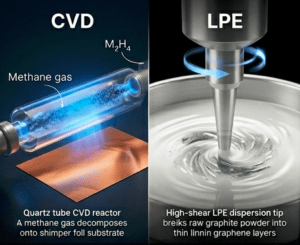
Fig 2.0: Structural evolution during industrial synthesis workflows.
Graphene synthesis is not merely a mechanical reduction of graphite; it is the strategic manipulation of atomic-scale forces. To move from the bulk 3D allotrope—characterized by interlayer van der Waals forces of ~2.0 J/m²—to a high-performance 2D monolayer requires a fundamental transition from sp³ hybridized carbon to a pristine sp² honeycomb lattice. Below, we dissect the manufacturing pipeline, exploring the thermodynamics and kinetics that define modern industrial production.
Process Visualization: The Atomic Transition
1. CVD: Surface Catalysis
Mechanism: The catalytic decomposition of methane (CH₄) on Copper (Cu) or Nickel (Ni) substrates. At 1000°C, the copper surface acts as a template for self-limiting monolayer growth.
Technical Note: The solubility of Carbon in Copper is negligible, ensuring growth halts after a single monolayer forms.
2. LPE: Shear Dynamics
Mechanism: Overcoming interlayer van der Waals forces using liquid-phase sonication. The efficiency is determined by the enthalpy of mixing between the solvent and graphene nanosheets.
Technical Note: By matching the Hildebrand solubility parameters (δ), we inhibit restacking, producing high-concentration dispersions for industrial coatings.
3. rGO: Chemical Reduction
Mechanism: Oxidative exfoliation produces Graphene Oxide (GO), disrupting the sp² network. Subsequent reduction restores electronic conductivity.
Technical Note: Restoring the graphitic structure requires precise control over thermal annealing or chemical agents like Hydrazine.
Quality Assurance Metrics
For the industrial OEM, graphene is not a monolithic entity; it is a high-precision material characterized by its structural perfection. Our laboratory standard mandates strict characterization protocols:
- Raman Spectroscopy (ID/IG Ratio): A ratio < 0.1 signifies minimal structural defects (sp³ sites).
- Transmission Electron Microscopy (TEM): Visual confirmation of atomic layer counts. Achieving true monolayer status (0.335 nm thickness) is the prerequisite for “pristine” classification.
- Surface Area Analysis (BET): Validating the effective surface area for energy storage and catalytic applications.
The distinction between commodity graphite powder and high-performance graphene lies in these metrics. Whether you are engineering next-gen supercapacitors or high-modulus polymers, the systemic control over these atomic-scale parameters is what transforms laboratory synthesis into commercial reality.
Quality Assurance: The Metrology of Material Perfection
In industrial graphene production, the transition from “lab-scale synthesis” to “OEM-grade material” is exclusively gated by metrological validation. Material consistency is the paramount requirement for high-performance applications; without quantitative structural data, graphene is merely a disordered carbon allotrope. To achieve industrial reliability, we deploy a hierarchical characterization pipeline, ensuring that every batch exhibits the required lattice fidelity, electronic mobility, and morphological purity.
The QC Characterization Workflow
1. Raman Spectroscopy (Fingerprinting)
The definitive non-destructive technique for assessing graphene quality. It allows for the precise measurement of structural defects within the sp² network.
Technical Deep Dive: The D-band (~1350 cm⁻¹) signifies the presence of sp³ hybridized atoms or structural disorders. Conversely, the G-band (~1580 cm⁻¹) represents the pristine in-plane vibrational modes. A low ratio indicates high crystallinity—essential for high-mobility semiconductors.
2. TEM/SEM (Structural Morphology)
Direct visualization of atomic layers. While Raman provides spectroscopic averages, microscopy provides real-space confirmation of the lattice count.
Technical Deep Dive: Transmission Electron Microscopy (TEM) enables the identification of monolayer versus multilayer stacks. For OEM-grade material, achieving a uniform 0.335 nm thickness across the substrate confirms the success of the exfoliation or CVD growth process.
3. BET Analysis (Specific Surface Area)
Quantifying the effective surface area for adsorption-based applications, critical for supercapacitors and catalyst substrates.
Technical Deep Dive: Brunauer-Emmett-Teller (BET) theory is applied to gas adsorption data to calculate the specific surface area (m²/g). High-performance graphene typically exhibits surface areas nearing the theoretical limit (~2630 m²/g), essential for high-energy-density batteries.
Consistency as the Industrial Standard
Scientific validation is the only objective language in the graphene value chain. The distinction between commodity-grade carbon powder and high-performance graphene is measured by the Raman I(D)/I(G) ratio, the atomic resolution in TEM, and the precise porosity in BET analysis. At the professional manufacturing level, these metrics aren’t just data points—they are the warranty of performance. For the researcher and the OEM, this level of characterization ensures that the material you integrate into your product will perform with the exact physical, electronic, and structural properties specified at the design stage.
BTCORP Generique Nano: The Architectural Cornerstone of Global Graphene
Since our inception in 2012, BTCORP Generique Nano Pvt. Ltd. has transcended the traditional role of a material supplier to become an essential strategic partner in the global nanomaterials ecosystem. In the high-stakes environment of material science, where structural fidelity is the primary barrier to commercial success, we have spent over a decade refining the empirical and theoretical foundations of graphene synthesis. Our evolution from a niche technology provider to an industrial powerhouse is marked by a relentless commitment to R&D and the precise, scalable manufacturing of high-performance carbon allotropes.
The Three Pillars of BTCORP Excellence
Empirical R&D
Decade-long mastery of carbon kinetics.
50+ Engineered Materials
Optimized for specific matrix integration.
Ecosystem Integration
Bridging the gap: Academia to OEM.
Pristine Graphene: The Standard of Perfection
Our Pristine Graphene is engineered for applications where structural integrity is non-negotiable. Using high-vacuum CVD pathways, we ensure minimal sp³ hybridization.
- High Mobility: Ideal for high-frequency field-effect transistors.
- Thermal Conductivity: Superior heat dissipation for micro-electronics.
- Batch Consistency: Validated by Raman spectroscopy standards.
Graphene Oxide (GO): Functional Versatility
GO represents the high-surface-area frontier. Our proprietary oxidation protocols allow for precise control over the density of oxygen-containing functional groups.
- Solution Processing: Easily dispersible in aqueous media.
- Chemical Anchoring: Ideal base for ligand conjugation.
- Membrane Innovation: Optimized pore size for filtration systems.
Reduced Graphene Oxide (rGO)
rGO is the cornerstone for high-energy density storage. We utilize thermal and chemical reduction to maximize conductivity while maintaining structural robustness.
- Anode Performance: High cycle stability for Li-ion batteries.
- Conductive Additives: Lower percolation thresholds in polymers.
- Industrial Scalability: Engineered for multi-kilogram production.
Strategic Synergy: Beyond Material Supply
BTCORP’s leadership is defined by the depth of our integration within the global scientific ecosystem. We do not view our products as commodities; we view them as the molecular foundation for next-generation technology. By maintaining active collaborative pipelines with premier research institutions—including IIT Delhi, CSIR, and IIT-BHU—we ensure that our manufacturing parameters remain at the absolute vanguard of innovation.
Whether you are an emerging startup conducting proof-of-concept testing or an established OEM executing high-volume industrial rollouts, our expertise acts as a force multiplier. We handle the technical complexity of atomic-scale manufacturing, enabling your organization to focus on market-defining performance. At BTCORP, we don’t just engineer materials; we engineer the bridge between theoretical breakthrough and industrial reality.
From Graphene Curiosity to Commercial Reality
Graphene has transcended the laboratory, establishing itself as the paramount advanced material of the 21st century. Its tribological advantages, EMI shielding capabilities, and thermal conductivity are unparalleled. Yet, the chasm between a breakthrough in a beaker and an industrialized product is vast. At BTCORP Generique Nano, we specialize in bridging this gap, transforming abstract potential into market-dominant reality.
The BTCORP Consultancy-First Approach
1. Formulation Optimization
Mastering the percolation threshold. We engineer stable dispersions within your specific polymer or solvent matrix, ensuring that graphene loading levels are optimized for cost and performance.
2. Scalability Assessment
Transitioning from gram-scale synthesis to metric-ton production. We analyze your process flow to identify bottlenecks and engineer a seamless path to industrial mass production.
3. Customized Material Design
Tailored functionalization. Whether it’s covalent or non-covalent modification, we design the graphene surface chemistry to meet your unique performance criteria, ensuring peak interfacial bonding.
Strategic Industrial Applications
Energy Storage
Optimizing conductive additives for Li-ion electrodes, cycle life extension, and high-rate capability performance.
Polymers & Composites
Mechanical reinforcement, EMI shielding, and thermal management for high-modulus lightweight engineering materials.
Construction Materials
Graphene-infused cement for crack resistance, durability, and reduced permeability in advanced infrastructure.
Lubricants & Coatings
Tribological formulations reducing friction and enhancing load-carrying capacity in automotive and specialty oils.
Waste-to-Graphene: The Circular Economy
We empower manufacturers to convert industrial by-products into high-value assets. Our Contract Research team evaluates carbon-rich residues, biomass derivatives, and polymer waste streams to assess graphene conversion feasibility. We don’t just innovate for product performance; we innovate for sustainable industrial growth. From characterization to pilot-scale trials, we transform liabilities into market-leading, circular-economy products.
Why Industry Leaders Partner with BTCORP
Ready to Accelerate Your Innovation?
Whether you are exploring captive manufacturing, process optimization, or performance-enhanced product development, BTCORP is your technical backbone.
Explore Our Full Consultancy ServicesEmpowering the Global Graphene Ecosystem
True innovation in material science does not occur in a vacuum; it thrives on synergy. At BTCORP Generique Nano, we recognize that the path to commercial dominance for graphene-enabled products requires bridging the historically isolated domains of academic fundamental research and industrial mass-manufacturing. We operate as the connective tissue—the industrial backbone—for the entire graphene community. By synchronizing the brilliance of premier research institutions with the rigor of commercial engineering, we transform theoretical potential into tangible market performance.
The Triad of Innovation: Academia, Industry, and BTCORP
Fig 4.0: The Translational Research Cycle: Bridging the gap between conceptual breakthrough and commercial scale.
Strategic Alliances: The Academic-Industrial Bridge
Our deep-rooted partnerships with leading institutions—including IIT Delhi, CSIR, and IIT-BHU—are not merely symbolic. They are functional pipelines. We translate fundamental academic insights into material solutions that adhere to stringent industrial specifications.
For Emerging Startups: Agility & Risk Mitigation
Startups thrive on rapid iteration and lean resource management. BTCORP provides the infrastructure that allows you to bypass the multi-year “Valley of Death” in material development. We offer:
- Rapid Prototyping: Small-batch, high-spec material delivery.
- Technical Mentorship: Direct access to material scientists.
- Validation Services: Helping you achieve the credibility needed for venture funding.
For Established OEMs: Compliance & Consistency
For global OEMs, integration is about stability, supply chain resilience, and compliance. We provide the “backbone” of your material strategy so you can dominate your market.
- Standardization: Guaranteed batch-to-batch consistency.
- Process Integration: Engineering graphene that fits your existing production lines.
- Regulatory Alignment: Navigating the standards and quality certifications of your specific industry.
BTCORP as Your Material Strategy Backbone
The complexity of graphene manufacturing—from controlling oxidation kinetics to ensuring precise dispersion—is a technical burden that consumes valuable time and capital. By partnering with BTCORP, you offload this burden. We handle the technical complexity, the thermodynamic puzzles, and the supply chain uncertainties, enabling your internal team to focus entirely on product design, market application, and revenue generation.
We are the silent engine behind your success. Whether you are aiming to enhance battery energy density, reinforce aerospace polymers, or revolutionize cement durability, our ecosystem of expertise supports you from the first spark of an idea to mass-market deployment.
Ready to join the ecosystem?
Let’s align your vision with the global standard in graphene technology.
Collaborate With BTCORP
Technical Specifications
- • Purity: 99.9% Monolayer
- • Scalability: Multi-ton capacity
- • Custom Synthesis: Yes
The Strategic Conclusion: Catalyst for Industrial Dominance
We have traversed the entire graphene value chain—from atomic synthesis and molecular kinetics to rigorous metrological validation and industrial-scale implementation. The evidence is irrefutable: graphene is no longer a material of hypothetical interest; it is the fundamental engine of the next generation of industrial innovation. However, the path to commercial leadership requires more than just possessing the material; it demands the architectural mastery to integrate it reliably, economically, and at scale. Your search for a synthesis partner that operates at the intersection of scientific excellence and industrial practicality ends with BTCORP Generique Nano.
Empirical Expertise
Decades of R&D have allowed us to move beyond trial-and-error. We provide a predictable pathway to material performance, reducing your development risk and accelerating your time-to-market.
Architectural Scalability
Our focus is industrial viability. We don’t just provide grams; we design the protocols that enable multi-ton production, ensuring your supply chain remains resilient and cost-optimized.
Collaborative Backbone
By integrating BTCORP into your innovation cycle, you leverage our academic pipelines, pilot infrastructure, and formulation science, allowing your team to focus exclusively on product dominance.
Partner with BTCORP
Your search for an expert-driven graphene partner concludes here. Let us translate the infinite potential of atomic carbon into the engine of your next product innovation.
Contact Information
BTCORP GENRIQUE NANO PVT LTD
SPL R2, KSIDC, Pillagumpe Industrial Area,
Hoskote, Bengaluru – 562114, India
📧 Email: btc@bt-corp.co 📞 Phone: +91-80-2970-1996
Let’s build the next generation of advanced materials together.
The future of industrial performance is written in the honeycomb lattice. Start your journey today.